

Jun 17, 2024
Miami Real Estate's $2.7 Billion Plan to Prevent Calamitous Floods
Miami is experiencing significant flooding as a result of heavy rains that are expected to deliver up to 10 inches of precipitation through Friday.

Traded Editorial
New Flood Protection Plan
Miami experienced significant flooding as a result of heavy rains that delivered up to 10 inches of precipitation through last Friday. This deluge marks the beginning of summer in South Florida. In response to these challenges, local officials and the Army Corps of Engineers are finalizing a $2.7 billion plan to protect Miami from storm surge. This plan, which has been in the works for over five years, is intended to be submitted to Congress for approval and funding within the year.
Key Objectives
According to Abbegail Preddy, the Army Corps project manager, the plan aims to implement widely accepted measures swiftly while simultaneously progressing on more complex, long-term solutions.
Plan Overview
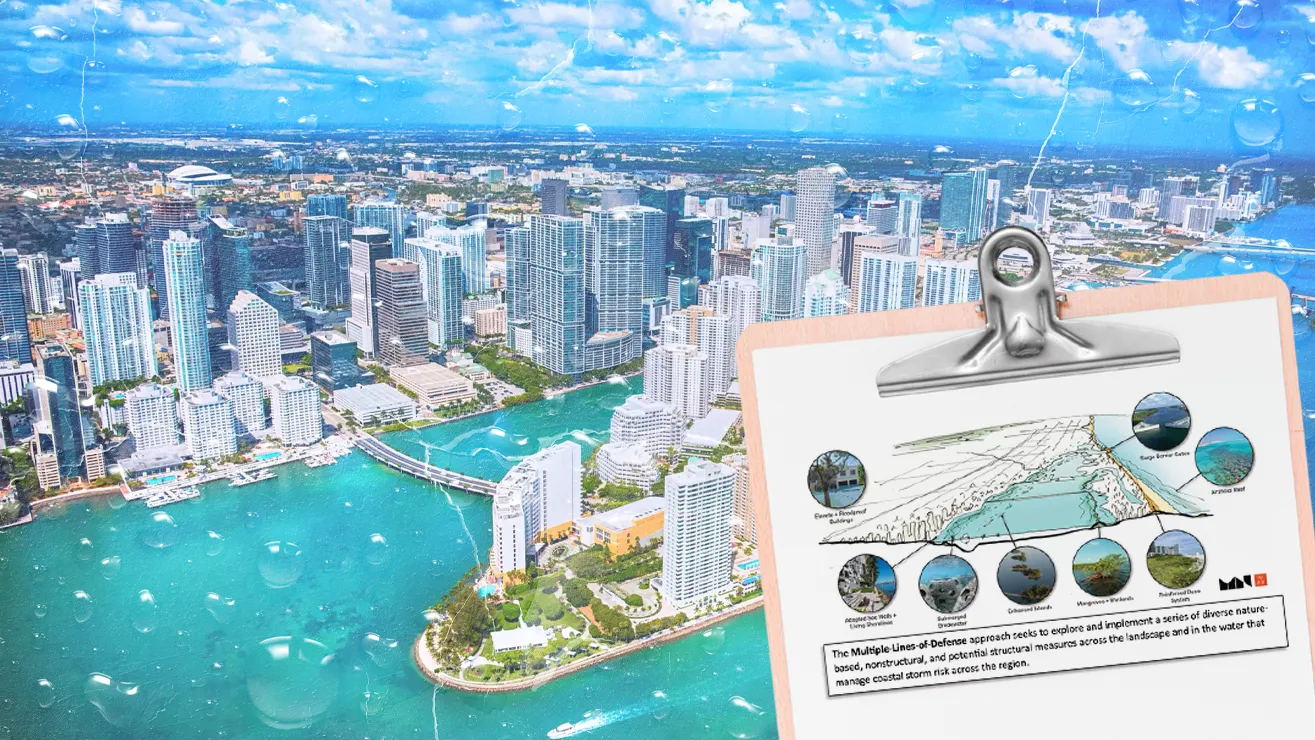
The plan is built around three main pillars: multiple lines of defense, adaptive management, and integration. It focuses on seven key areas prone to flooding and emphasizes environmental justice by prioritizing disadvantaged communities.
Specific Measures
The Army Corps proposes elevating around 2,100 homes and renovating approximately 400 commercial buildings in vulnerable areas, including parts of northern and southern Miami Beach, Little River neighborhood, and areas along the Miami River.
An additional 27 properties identified as critical infrastructure, located both within and outside the focus areas, will also receive flood mitigation measures.
The plan allocates $200 million for nonstructural solutions to protect commercial buildings from flood damage, with $170 million designated for flood-proofing multifamily properties and $30 million for hospitals.
Nature-Based Solutions
A significant portion of the plan, $180 million, is dedicated to a pilot program exploring nature-based solutions to storm surge. This approach includes planting mangrove forests, building reefs, and expanding wetlands to create natural water barriers. This strategy was favored after a previously proposed 20-foot seawall was met with strong opposition.
Financial Breakdown
The $2.7 billion plan includes $1.5 billion for construction, $214 million for engineering and design, $205 million for construction management, and $165 million for real estate acquisition.
Dry Floodproofing
The plan recommends making commercial buildings watertight up to three feet of inundation using techniques like waterproof coatings and impermeable membranes, along with installing sump pumps.
Economic Impact
The plan predicts that Miami could see a $1.2 billion reduction in storm surge damage over 50 years. Without intervention, the expected damage is estimated at $1.7 billion, compared to $518 million if the proposed upgrades are implemented.
Future Steps and Funding
The final version of the plan awaits approval from Army Corps leadership, which is necessary before seeking federal funding. The federal government is expected to cover 65% of the costs, with the remaining funds coming from the county and other sources.
Local Government's Stance
Miami-Dade County Mayor Daniella Levine Cava supports the plan but acknowledges it is not sufficient to fully protect the county from flooding. She emphasizes the need for future studies and phases to address ongoing risks.
Timeline and Future Prospects
The plan is at least two years away from implementation, with the pre-construction, engineering, and design phase slated to start in 2026 and construction completion expected by 2034.
Complementary Initiatives
The Army Corps’ plan aligns with other governmental and academic initiatives aimed at improving Miami's flood resilience. Aaron DeMayo, chair of Miami’s Climate Resilience Committee, views the plan as a necessary first step, though he advocates for more comprehensive solutions in the future.