

May 22, 2025
Fifth Avenue’s $400M Makeover: NYC's Retail Corridor Gets a Real Estate Revival
New York City is placing a $400 million bet on the future of its most iconic retail corridor — and real estate investors should be paying attention.
Traded Media

Traded Editorial
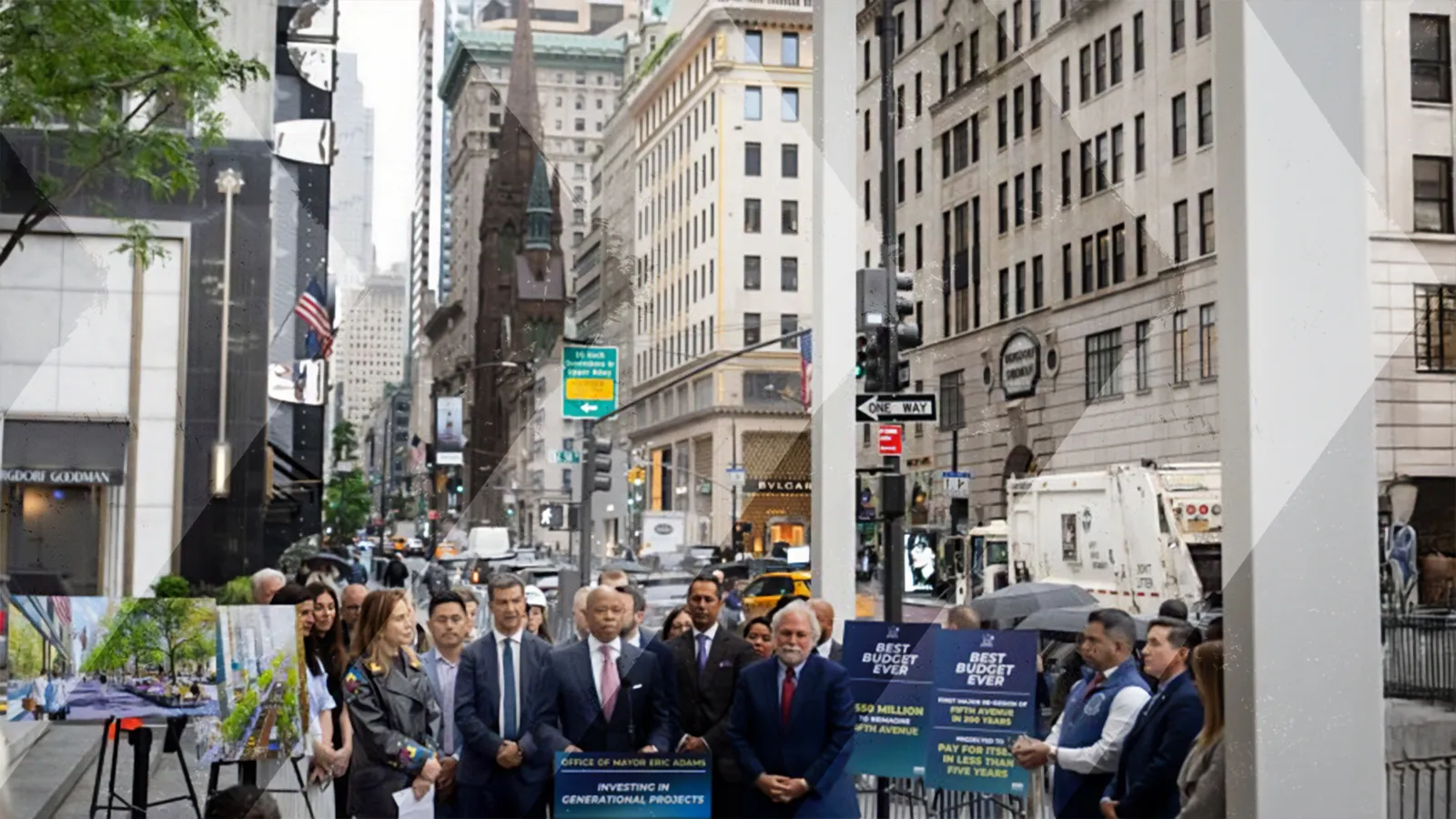
Mayor Eric Adams has officially unveiled a $400M+ public-private investment to transform Fifth Avenue between Bryant Park and Central Park into a pedestrian-first, globally competitive boulevard. The project, spearheaded by the city and the Future of Fifth Partnership, marks the first comprehensive redesign of the avenue in over 200 years — and it's poised to reshape Midtown Manhattan’s commercial real estate landscape.
Led by Arcadis, Sam Schwartz Engineering, and Field Operations, the redesign will widen sidewalks by 46%, reduce car lanes from five to three, and introduce over 230 new trees, improved lighting, and 20,000 square feet of planters and seating — all to make Fifth Avenue more walkable and retail-friendly. The plan includes major underground utility upgrades and is expected to boost foot traffic and tenant demand.
Why It Matters for Real Estate:
-
Retail Reset: The redesign is a catalyst for repositioning aging retail assets and driving higher street-level lease rates. Expect renewed interest from luxury flagships and experiential brands.
-
Property Value Surge: City officials project the redesign will pay for itself in under five years through increased property and sales tax revenue, signaling potential asset appreciation for adjacent buildings.
-
Job Growth = Leasing Demand: Fifth Avenue already supports 313,000 direct and indirect jobs. A more accessible avenue could support more office-to-retail conversions and hybrid-use activations.
-
Tourism and Trophy Assets: Fifth Avenue remains one of the most visited streets globally. This redesign enhances its long-term competitiveness against other global retail corridors like the Champs-Élysées or Oxford Street, increasing the ROI on nearby trophy real estate assets.
Madelyn Wils, CEO of the Fifth Avenue Association, noted that the redesign "will reinvigorate one of the world’s most important streets and set the stage for another triumphant 200 years.”
The schematic phase wraps this summer, with construction to follow. This isn't just an infrastructure announcement for developers, landlords, REITs, and capital markets teams — it’s a signal to start recalculating comps, foot traffic projections, and asset underwriting.