

Apr 3, 2026
Wilton South County Place Plans 63-Unit Affordable Housing Project In Harvard Heights
Traded Media

Traded Editorial
- 63-unit affordable housing project proposed in Los Angeles
- Seven-story building to maximize density on small infill site
- Project leverages incentives to increase allowable height and unit count
What the proposal means for small-lot development
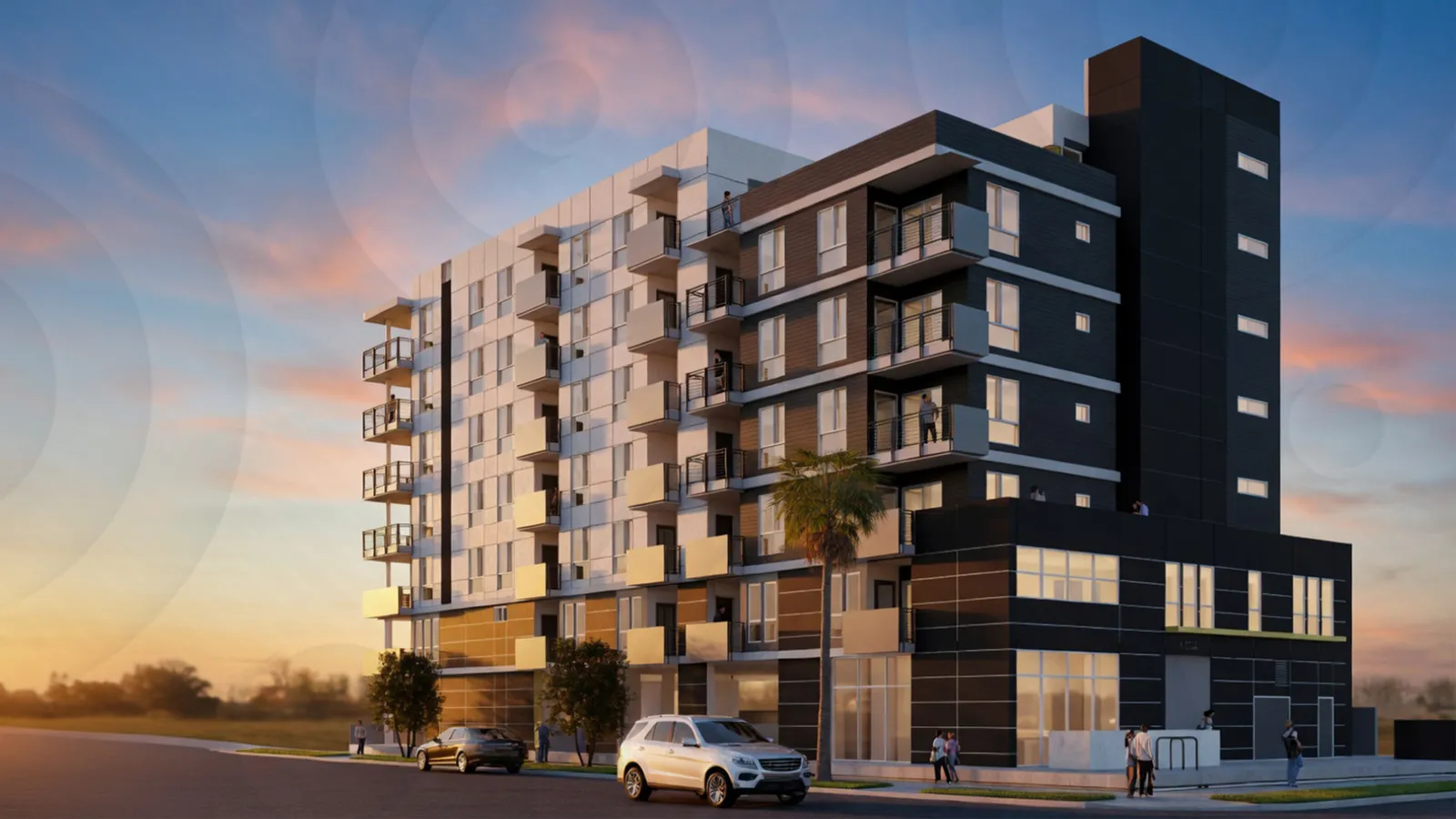
A new affordable housing project is planned at 1504 South Wilton Place in Harvard Heights, continuing the trend of small-lot intensification across Los Angeles. Developed by Wilton South County Place, LLC, the project will transform a modest parcel into a seven-story residential building. Instead of expanding outward, the design stacks units vertically, maximizing density within a tight footprint. This approach reflects how developers are adapting to land constraints in urban neighborhoods.
What the scale means for affordable housing supply
The development will deliver 63 income-restricted units, adding meaningful affordable housing supply in a high-demand area. Units are distributed across multiple floors above a ground level that includes parking and building access. The inclusion of 38 parking spaces balances density with local requirements. Projects like this play a key role in increasing housing inventory without requiring large-scale land assemblages.
What design choices mean for urban infill projects
The building features a podium-style base with lighter residential floors above, creating a clear visual separation between structural and living spaces. Balconies and facade articulation add depth while maintaining a consistent design rhythm. The vertical circulation core helps organize the building’s layout and supports efficient use of space. These design elements are increasingly common in mid-rise infill developments.
What incentives mean for development feasibility
The project utilizes housing incentive programs that allow additional density beyond base zoning limits. These programs are critical in making affordable housing financially viable, especially in high-cost markets like Los Angeles. Without such incentives, projects of this scale would be difficult to deliver on small urban parcels.
What this means for developers and investors
This proposal highlights the growing importance of infill development in addressing housing shortages. For developers, small parcels can still generate strong returns when paired with density bonuses and efficient design. For investors, affordable housing continues to offer stable demand supported by policy incentives. As cities push for more housing, vertical infill projects like this will become increasingly common across urban cores.