

Aug 5, 2025
Where Renting Reigns Supreme: Mapping Household Growth in U.S. Metro Markets

Traded Editorial
Key Points
-
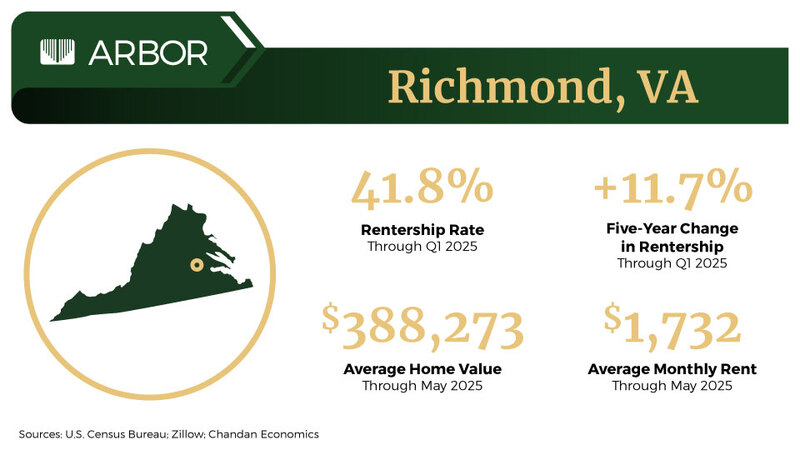
Richmond, VA saw the largest 5-year rentership jump at +11.7 percentage points.
-
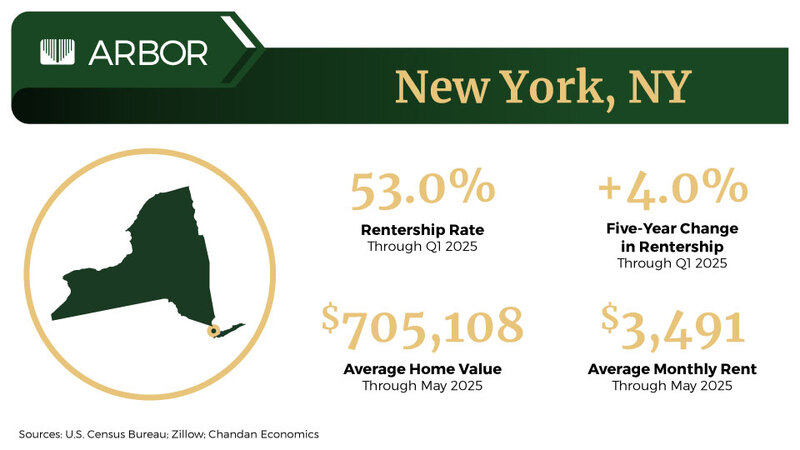
NYC tops the nation with 53% of households renting — driven by high housing costs and density.
-
Tulsa and Charlotte are also experiencing double-digit rentership growth, reflecting migration and affordability trends.
America’s rental map is evolving — and fast. While the nation’s most expensive metros still dominate the renter-heavy rankings, smaller cities like Richmond and Tulsa are seeing major gains. For investors, this means expanding opportunities in both legacy rental hubs and emerging secondary markets.
Fastest-Growing Rental Markets (2019–2024)
-
Richmond, VA: +11.7 percentage points. Attracting young professionals with affordability and a cost advantage over nearby D.C.
-
Tulsa, OK: +10.5 points. Low housing prices plus remote worker incentives have spiked rental demand.
-
Charlotte, NC: +10.1 points. Once affordable, now a booming market where prices have outpaced incomes, pushing residents into rentals.
These cities reflect a broader trend: rising demand for flexible, affordable housing in growing metros — ideal conditions for both multifamily and single-family rental investments.
High-Cost Metros Have Largest Share of Renters
-
New York City leads with 53% renter households — a product of tight supply, sky-high home values, and high mobility.
-
San Francisco and Los Angeles follow closely at 51% rentership. Homeownership remains out of reach for many, with SF home values topping $1.1M and LA facing long-term supply constraints.
-
In all three, rental housing is the default — not just an alternative option.
Be Smart: What This Means for Investors
-
High-barrier markets like NYC, SF, and LA continue to deliver stable demand for rental assets, especially in multifamily.
-
Secondary metros with surging rentership offer stronger yield potential, with lower entry costs and growing renter populations.
-
Investors should watch for policy shifts and infrastructure investment that further shape these trends — e.g., Tulsa’s remote worker push or Charlotte’s tech corridor expansion.
The U.S. rental landscape is both resilient and dynamic — anchored by major cities but reshaped by affordability and migration. Whether you're targeting reliable core markets or rising stars like Richmond and Charlotte, the renter economy is far from static.
Visit Arbor.com or Traded.co to read more of our research articles.