

Jan 30, 2025
What's the Deal? | Spencer Levine on Developing Zero Irving: The Tech Ecosystem of Union Square
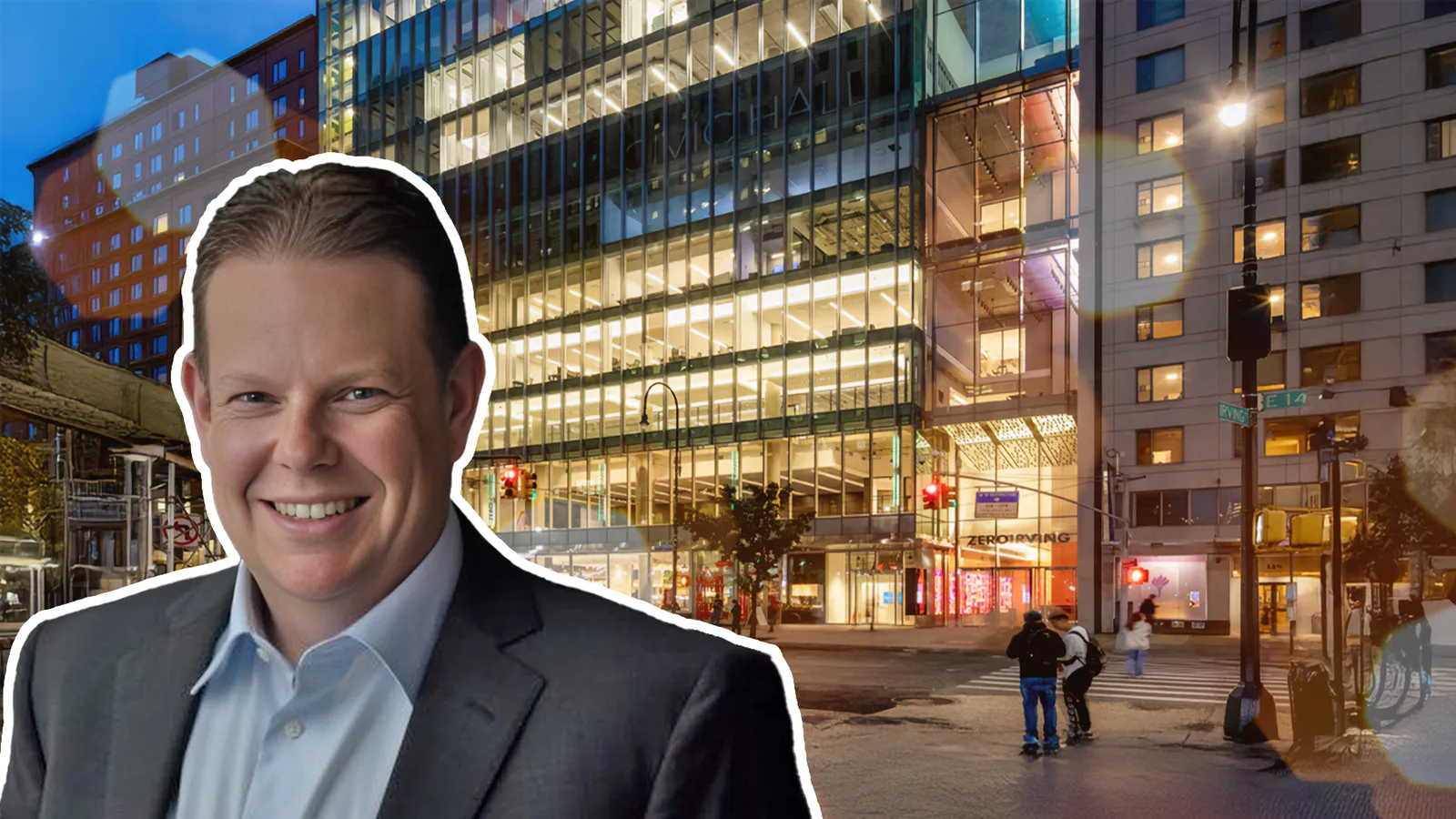

Traded Editorial
Spencer Levine is the President of RAL Companies, focusing on project and construction management. Levine holds degrees in Landscape Architecture from Cornell University and Harvard University, which he leverages to lead the construction and design of over three million square feet of mixed-use developments in the United States and Caribbean. RAL Companies is a New York based development firm with over forty years of experience in luxury residential, hotel, and commercial properties.
What drew you to this deal and the Union Square Market?
RAL Companies began as a family owned and operated architectural firm 45 years ago and has since developed into a full service real estate development and services firm. Considering our architectural and urban planning background, we are very driven by the qualitative aspects of a site. We are focused on areas where we can find ways to support a community and enhance the existing urban fabric and programming. This property in particular is interesting because it was a two story PC Richards appliance store, that while providing an important purpose in the routine of New Yorkers, provided no enhancement to the urban fabric. I always joke that I have yet to run into someone who has lived in New York City that didn't buy an air conditioner from that PC Richards. Everyone knew that store, but it was really an underutilized property that was developed back in the 90s as an accommodation to the city and state to build up the street wall along 14th Street. We have always felt that there was an opportunity to do something more with it, and actually looked at the property way back when it was still owned by the city and under PC Richard's control. Eventually, the property ended up going to RFP (Request for Proposal) in 2015.
What drew us to the market was that Union Square, while not necessarily considered the center of New York City, really is the true geographic center of the region. We saw a unique opportunity to partner with best in class programming partners given the prime transit access and pedestrian attraction. Like I said, we're not keen to deliver just any type of development or buildings at volume, we strive to deliver something truly special and transformative. That's what drove us to respond to the RFP and advocate for Zero Irving.
What’s your vision for the project that led you to securing the RFP?
We typically approach our projects from an urban planning and design perspective first. Davis Brody Bond Architects helped us define an appropriate building from an architectural standpoint for such a prominent site. Our vision was to create a great civic institution that would provide everything the RFP had laid out as a 21st century opportunity for job growth and economic development in the area and greater region. By focusing the development strategy for Zero Irving on creating an ecosystem within the building, we were adding profitable value while satisfying our promise to the community and the city and region as a whole. Our proposal considered both the physical characteristics of the building and programming.
We proposed a Food Hall at the ground level to activate what was previously a relatively inactive and non-pedestrian friendly segment of 14th street between 3rd and 4th Avenue. The other major commitment we made was to ensure that each use in the building would operate purposefully in support of each other. All the entrances for the various uses in the building come off of a single point at the intersection of Irving and 14th Street, which is what gives the building its name of Zero Irving. From there, floors two through seven are part of Civic Hall, now acquired by FedCap, which operates a digital skills training and educational facility focusing on workforce development for the new economy, with an amazing event center on the second floor to be utilized by the community, the city and the tenants of the building as an operated event facility. The office space starts at floor eight and runs through the roof, providing different kinds of office space than what was being marketed at the time throughout the city, including boutique floor plates that focused on open space, light and air, generous column spacing with clear and flexible work spaces, and an elevated work environment. Since we leased these office spaces by targeting tenants that could benefit from the digital skills training facility below, many of our tenants actually hire from Civic Hall’s graduating students.
Looking back, we made a series of physical decisions about our building and our programming that really made a difference in the post-Covid world. For instance, we chose to go with VRF HVAC systems, where each floor has its own dedicated system. We wanted our tenants to be able to control their own, dedicated air for maximum convenience and flexibility recognizing that there are no “traditional work hours” any longer. This means that you are not mixing air or any other services with other tenants in the building. Along the way, other similar decisions were made to propose a product that stood apart from the standard of office environments at the time.
What role do you envision Zero Irving playing in the transformation of Union Square as a tech and innovation hub, and what specific impacts do you foresee it having on Manhattan office and retail markets?
What is really unique about Zero Irving is that we delivered a true, Class A work environment with best in class designers, engineers, and decisions into a market where there's a lot of older product. Union Square features a mix of loft style offices that many tech companies have enjoyed for years in lower Manhattan, and more commercial and institutional offices that the financial end of those businesses would require. We incorporated boutique size floors, a variety of floor plates, usable and wide column spacing, among other features combining the best that modern design has to offer, while maintaining the feel of a traditional loft “creative” focused building. The building is designed to be timeless and it will function to attract current and future tenants as the building and neighborhood matures. We certainly achieved our mandate from the RFP to enhance the neighborhood by bringing economic activity and social life to an inactive stretch of 14th Street.
Who are key partners or collaborators on this deal?
Our JV partner in the project was JRE Partners, the successor operating business to Junius Real Estate Partners, which was established within JP Morgan. They are our equity partners in the project and came on board while we were pursuing the ULURP and were very helpful in executing the project. Other collaborators include Suffolk Construction who worked with our team to deliver the construction and Davis Brody Bond, Specifically Chris Grabé and his team, who was responsible for the award winning design. We have a great relationship with the firm and continue to deliver creative projects together.
Reflecting on your experience with developing this property, what are your key takeaways or significant learnings from this deal?
Every project is an opportunity to learn and refine best practices, and Zero Irving had some really unique opportunities and obstacles that we endured. No one could have anticipated Covid or the implications on the real estate environment. One thing we realized during this time is that we had to have super strong conviction in our programming and design for a project to be successful in the post-Covid world. We knew that Zero Irving was different in a way that it made sure to achieve and deliver what people were looking for. And it offered infinite flexibility regarding product type and a timeless design that could transcend various obstacles. It is important to listen to the public, and simultaneously feel confident in what you are delivering and developing for all the different stakeholders.
How did you get started in commercial real estate and what advice would you give to young professionals?
My father started the company 45 years ago, so I grew up in the business. I really grew up on a construction site, which is how I got my start at a very young age in the development process. We were an architecture and construction and project management firm first. 20 years ago during my transition to working full time after grad school, the opportunity presented itself to start at a project manager level. I was able to use my landscape architecture design degrees in an atypical path as a knowledge base to execute complex development projects across the country and into the Caribbean.
My suggestion is to listen and take everything in by diligently paying attention to what's going on around you. It is important to understand that even the most mundane aspects of a project are crucial to the overall delivery. My other suggestion is something that my grandfather and father taught me, and serves as the underlying ethos of everyone at RAL, which is that everyone involved in a project is a meaningful participant in that project, everyone from the laborers that are doing the cleanup on a daily basis on the construction site through the leaders of local government. There is something to learn from everyone on that site, take it all in.