
May 17, 2024
What’s the Deal? | Robert Levine’s Story Behind Brooklyn’s Record Setting Quay Tower

Traded Editorial
What attracted you to this site and the Brooklyn Heights market?
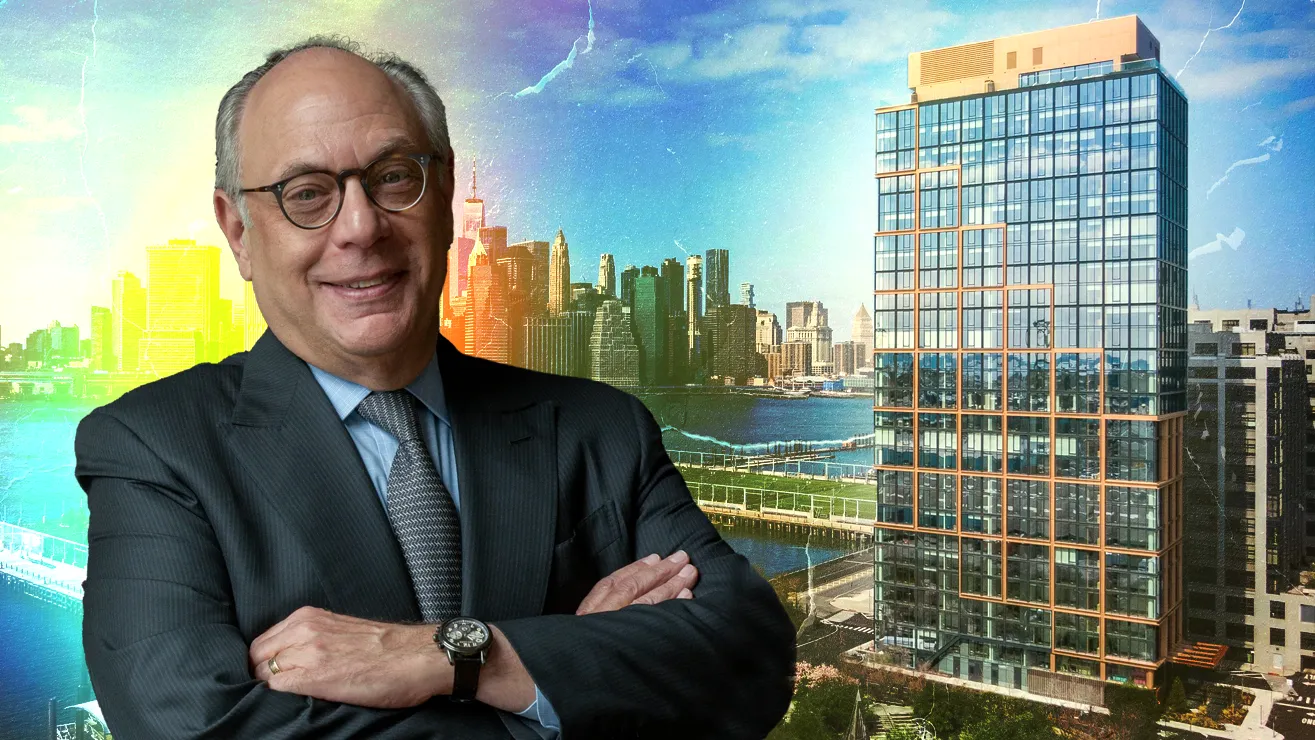
Quay Tower is the follow-up to our initial project in Brooklyn Heights with One Brooklyn Bridge Park. We were the developer of One Brooklyn Bridge Park, also known as 360 Furman Street, an enormous building on the Brooklyn waterfront. Having completed many building conversions in Lower Manhattan, I knew that 360 Furman was the ideal residential conversion. The loft, character, views, and everything about the building were exceptional and would make for a phenomenal living space. Growing up in Brooklyn, I was familiar with the waterfront and always admired Brooklyn Heights. From the promenade, looking at Manhattan was spectacular, but their piers were derelict. You had to have the vision and believe in the location. There were talks of converting the whole area into a park, but unfortunately, those talks never came to fruition. When we bought 360 Furman Street, we looked at it in the context of the plans that had been around for the park. The building would have obstructed the creation of such a park at the South end and we kept that in mind throughout the planning process. We proposed contributing the building to the park or Empire State Development Corporation in exchange for the inclusion of the building in the park and a zoning override to residential, which they accepted. Doing so greatly increased accessibility and created
the funding mechanism that makes Brooklyn Bridge Park self-sustaining. The building was then set up with a nominal ground lease payment, which was replicated for the other development sites within the park making the park self-sustaining. With that, the city and state under Mayor Bloomberg contributed $150 million to the park’s construction. We were the catalyst for that situation and ultimately created the vehicle to start Brooklyn Bridge Park. Quay Tower and The Landing were the other bookends as they were the last developments in the park and were the successful respondents to the RFP for those properties, along with other developers, building Pierhouse, One John, and Empire Stores.
How did you secure financing for the project?
Our funding is all private, we don’t do a lot of public funding for projects. We’re very conventional in all our developments and use our money or institutional financing. In the case of One Brooklyn Bridge Park, it was conventional, and we had an institutional equity partner. With Quay Tower, our partner was Vanke, a major developer in China with a US Entity that invests with select developers. The lender for the conventional construction financing was Bank OZK, who we work with a lot. They lend on many residential condominiums and major deals in New York. The Pier Six development of Quay Tower and The Landing was a combination of Vanke and OZK.
What was the design and approvals process like for Quay Tower?
Our RFP submission for Quay Tower reflected the utmost quality and excellence we are capable of delivering in a residential condominium development. We introduced great architecture using ODA, which was chosen after the Park asked us to run a competition of three extraordinary architectural firms. RAL and our partner in this competition was a group called Oliver’s Realty Group run by David Wine. He is a partner on all of our residential projects. From the onset, David envisioned Quay Tower with superior interior design and finishes. We brought in Marmol Radziner, a West Coast design firm featured on the Architectural Digest 100, to bring the highest level of finishes and quality. The moment you step into the building, you can see that the design and finishes are exceptional. For years the community had some level of opposition to the Park, which we defended successfully, and then were able to build everything planned thereafter. We included a rental component by bringing in The Landing and that’s the only building to date in the market, I believe, that’s 70% affordable and 30% market rate. Typically it’s 70% market rate and 30% affordable. We were able to do this because we allowed the two buildings to overlap a bit, which subsidized some of the shortfall costs of The Landing with the construction and sale of Quay. It was a very generous proposal that we set forth, but consistent with many different projects in our portfolio.
Who are the key collaborators on this deal?
Oliver’s Realty Group run by David Wine was crucial in the interior design and finish. At RAL we have a pretty deep bench and do many things with our various affiliated entities, but we had an exceptional contractor Suffolk Construction that we worked alongside for this project. SERHANT. led our marketing and sales, and they have done an exceptional job. It was certainly a learning curve for me being a dinosaur in a world where social media is the key to presenting these projects for sale. Other than that, it was a true partnership from day one with Brooklyn Bridge Park, Brooklyn Bridge Park Development, the city agencies, and the Empire State Development Corporation. The relationship with Brooklyn Bridge Park, initially under Regina Myer and now Eric Landau, was paramount with their standards and foresight in maintaining the highest and best quality throughout the project.
Are there any key takeaways or challenges you overcame from this project?
The key takeaway is that we stood committed to the things we said. We had a vision going back to 2004 when we acquired the first building that the park could be spectacular and something that did not exist in New York. It has striking architecture and it is the most magical place. We could be a part of New York history. RAL has been around since around 1979 developing properties throughout the country, and one of the things we are very persistent on is that our guiding mantras are truly above and beyond our competition. We produce projects that we are proud of and pride ourselves in enhancing the locations we develop in. In the case of Quay Tower, we were confronted with the community’s opposition which delayed our selection on the RFP and our start by about 2 years. There were also substantial legal costs. Someone else might have walked away from this, but we stood side-by-side with the park and the state in defense of the buildings. The success of the other projects in the Park allowed us to offer the community something it otherwise would not have had with the rental building. The city gave us accolades from the mayor for our persistence to stand by and be ready to go with the project when we got the green light. Ultimately, we were successful and delivered just what we proposed, and it was well received by the community. The building also continues to break records week-after-week with impressive streaks of the highest contracts signed in the borough.
What is RAL working on over the next 12-24 months?
We just completed a building on 14th Street and Union Square called Zero Irving which is a true example of the quality our organization produces. That was also an RFP with the city and we proposed what was termed the “tech hub” by the city. It’s an extraordinary building that features more boutique, approachable office spaces on the lower 7 floors, a partnership with LaGuardia College and other institutions. It’s currently 96% leased, and the bulk of the building has attracted tech companies of the highest levels from throughout the country and they all relocated there, and it’s become a real hub of technology for the city. The ground floor is a food hall where we committed to the city that a percentage of the vendors would be startups from the community, so the whole project is very interesting. We also had the honor of winning the ULI Award for excellence in office development in 2023. Apart from that, we have several other projects throughout the country from residential to rental projects, but the aforementioned are some of the most significant in what we’ve done for communities in NYC.
How’d you get started in Commercial Real Estate?
I grew up in the world of construction, so I decided to study architecture and ended up working at an architectural firm. Eventually, we created our architecture firm called RAL Design Associates and were very involved in commercial and production work. We were the go-to guys for getting things done and worked for major corporations like McDonald’s, supermarket chains, shopping centers, and more. When working on one of these supermarket chains, we ended up doing everything including construction oversight. During that process, we started buying buildings around our office on Long Island. Our office was an old firehouse we had renovated and turned into something aesthetically pleasing, and as a result, we started to do a lot of adaptive reuse and renovations. This led us to acquire a few office buildings and shopping centers on our own, and from there the firm grew. We had a competitive edge as we were trained architects and understood everything about building structures, so we started completing residential conversions in Manhattan. In the early nineties, we started doing these conversions in lower Manhattan and were considerably
successful. We’d be able to go into buildings and truly understand what was behind the walls and were able to put together accurate budgets and stick to them throughout the project. Unfortunately, architects are often perceived as unnecessary evils that are there when you need permits and approvals, or a certificate of occupancy, and I was tired of that. I decided we would focus on our
developments, and work with a more select group. Our focus expanded from New York City to ski and hospitality areas, as we had an understanding of the construction process that allowed us to excel and manage it. In 2008 when the world fell apart and we had multiple ongoing projects; we were able to stay on track, retain our people and add a division that does third party work where we are the developer or project manager.
What advice would you offer to young professionals starting their careers in commercial real estate or doing their first development deal?
One thing you can’t take for granted is a lot of hard work. Many people think that if they just have the financial resources, they’ll be able to do development. It is not the case, and we've seen it backfire on time and again. The most important thing is to recognize what you don’t know and use that to build a team of professionals around you to rely on when you’re getting started. Things can look rosier than they are, and it’s not an easy process. That’s why you must build those relationships and find people you can trust and work with for the long term.
Traded Student Ambassador Program
This interview was conducted through Traded’s Ambassador Program in collaboration with Thomas DeRuvo of Rutgers University.