

Oct 19, 2024
What's the Deal? | MaryAnne Gilmartin | Building 300 East 50th Street & Reimagining Turtle Bay

Traded Editorial
What's the Deal? | MaryAnne Gilmartin | Building 300 East 50th Street & Reimagining Turtle Bay
About the Building
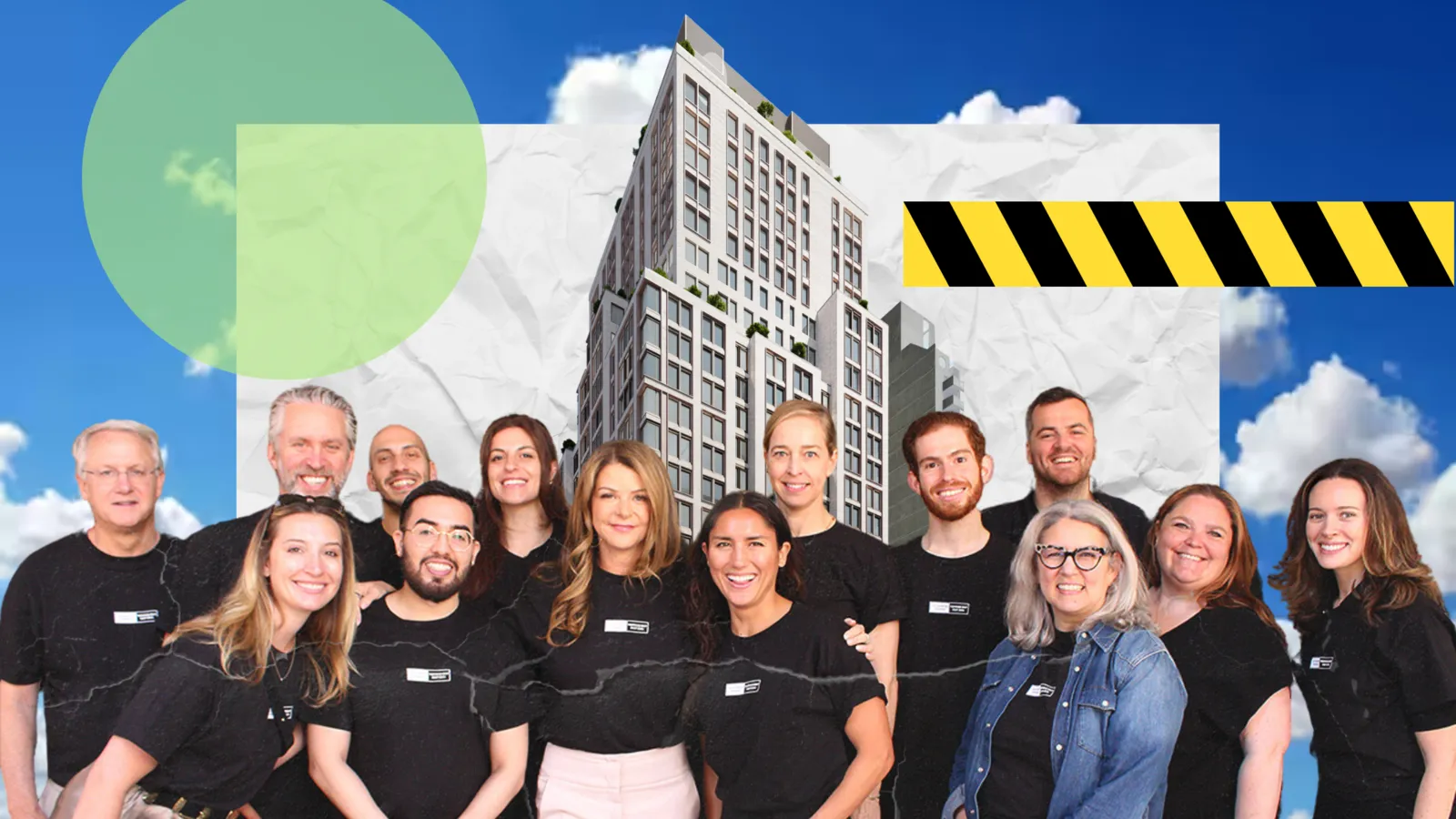
300 East 50th Street is a 275-foot-tall, 170,000-square-foot mixed-use building developed by MAG Partners, in partnership with Global Holdings and Safanad. The building will offer 194 residential units, with 30% set aside as affordable housing under the Affordable NY program. Designed by BKSK Architects, the structure features a blend of modern and traditional design, including detailed masonry that gives it a strong corner presence and vertical emphasis. The project also includes ground-floor retail space and a spacious cellar, adding to the vibrant streetscape at the corner of East 50th Street and 2nd Avenue. Lease up will begin summer of 2025.
What drew you to this deal and the Turtle Bay Market?
I built a large part of my career in Brooklyn, and after starting MAG Partners, began to focus on Manhattan. We currently have two projects in West Chelsea. While we love the west side, expanding our footprint into different submarkets has always been an objective.
Turtle Bay is this little nook in the city and is known for its urban gardens throughout the community. This really influenced our design and positioning, which embraces nature and wellness. It’s an interesting juxtaposition because, when I was growing up, you wouldn’t think of living on the Upper East Side. Back then, it was called the "Silk Stocking District"—an area that was overpriced for young people and lacked affordable housing for that age group. I love being part of the transformation and rebranding of this area, where young people now love to live. The offerings in terms of food, beverage, and entertainment are incomparable, and we are bringing in a product that is in high demand.
What is interesting about this project is that it stems from what makes our business tick—relationships and networking.
Kevin Wang, a long-time colleague in the field who started assembling this property long before we were involved, rang me up one day to ask if I would be interested in a partnership because he knows how to assemble properties, though he has never built a residential building. That began an odyssey where we started discussing what a collaboration would look like.
The team then went deep into the details. Assemblages are tough in New York. Building is already complicated, but when you have to put sites together just to create the paper, it adds years to the timeline. However, we liked Kevin as a partner, and we believed we could build a type of building that is not in great abundance today. We envisioned high-quality multifamily housing aimed at a younger demographic, giving them the opportunity to move to the Upper East Side and experience all that makes it magical, including discovering Turtle Bay.
Can you share with us your long-term vision for this property?
We have a lot of love for this city, so we like to believe that everything we do makes New York a better place to live. In this project, we are adding multifamily housing to a community that could benefit from more inclusivity. By introducing 30% affordable units alongside beautiful, high-end condos that proliferate the neighborhood, we are adding diversity to an already diverse city, right in this little ecosystem at 50th and Second Avenue. We are creating beauty, and we are delivering value. In our company, we uphold the idea that we can deliver value to the city and build beauty—those two goals are not at odds with each other.
You can build commoditized office, commercial, and residential stock in the city and still make money, but that is not what we want to do. We want to show our investors that you can create something beautiful and still be profitable. These buildings will be here for a very long time. What we put on the skyline, how the building meets the ground plane, and how people see it at the pedestrian level all matter deeply to us. That is the business we are in. We don’t just consider ourselves developers, but more like place makers. We are creating a place to live in the city of New York, and we take that responsibility very seriously.
What are your plans for the ground-floor retail component and how will you tailor it to engage with the community?
For the ground floor retail space in this building, we took into consideration the high demand for restaurants in this community. Restaurateurs see gaps in certain areas where their franchises have potential to thrive, and 50th and 2nd Avenue is a prime location to fill one of those voids. There are developers who see restaurants as complicated, messy, and difficult to integrate, but we believe it would be a missed opportunity not to contribute to the lifestyle of the area by including a beautiful, new restaurant. Our inclination is to find a restaurant with outdoor seating and a specialized takeout option for the residents of our building. I want you to be able to order an Italian dinner that can just be delivered right up to your door, like hotel room service. That is the ultimate field of dreams for us, that the value of the restaurant is extruded through the entire tower. That anybody who lives here gets to experience that level of hospitality in a personal way because they are a resident.
Similarly, at our multifamily development on 8th Avenue, we are in a food desert. In West Chelsea, you have to walk a long way to find a full-service supermarket. That is why we had the ground floor tenant deal with the supermarket operator Lidl signed before we even started construction. It is something that’s often unheard of, signing a retail deal before breaking ground. We were able to do that because the opportunity was so valuable, we had our pick. Lidl is an amazing supermarket, and it is an international German brand with very well-priced goods where there is something for everyone. This is exactly the kind of supermarket that should be built there. The fact that we could bring it to the community and contribute to the quality of life for the thousands of people already living in the area was a great privilege.
How did you go about securing financing for this deal?
There are a couple of different stories here. One, the land was expensive, and we had to manage the relocation of various tenants who were already in place. So, we actually got a land loan. You often get a land loan when you are dealing with an assembly because you are putting together the different pieces of the puzzle. We secured the land loan first, then designed the building and finalized the vertical structure on paper before getting a construction loan. It turns out that the timing of that construction loan was during one of the most challenging lending periods we have seen in recent years.
The underlying economics of financing a building like this five years ago were certainly much less challenging. Financing was readily accessible, and you could typically secure 65-70% of the cost. The world changed rapidly in 2022, and it changed for the worse. Loans were more expensive and harder to come by, and we were also facing the expiration of the 421a tax code. Not only did we need to find a lender, but we had to find one who could offer an interest rate that made sense based on a pro forma created before the credit crisis. Interest rates essentially doubled in the course of trying to secure this loan.
With the sunsetting of 421a, we knew as a community of builders that it wasn’t going to get re-upped. It was going to get redesigned, and there would be a period where there would be no tax program. The biggest concern was how a lender could justify lending money when we all knew that if the building wasn’t finished by 2025, the tax program would be in jeopardy and if it wasn’t completed by 2026, it would no longer exist.
So, you had this unbelievable negotiation with lenders, where you weren’t just arguing interest rate and loan conditions—you were convincing them that you had a path that was undeniable, bankable, and almost guaranteed. This level of discussion was never part of the equation a few years ago. It added a whole new layer of complexity. In the face of it all, we got it done and Bank OZK ended up being the lender for our construction. We closed 50th Street and 8th Avenue in the third quarter of 2023. Both were super challenging.
How do you see this project impacting the residential landscape in Midtown East and what specific contributions will it make to the housing needs in Manhattan?
I'll start with a really important feature: it’s 30% affordable, contributing to the need for affordable housing by a pretty large measure. In addition, on the market-rate housing side, we're all navigating the return to the office. Some of the most notable and high-performing office buildings of our generation are being built just blocks away, including JPMorgan’s and Citadel’s headquarters.
Being in the heart of the quality office space in this city, when we thought about the project, we asked ourselves, "Who is going to work in these buildings?" The answer is that the kind of people working in these nearby offices are the same people who would want to live in a building like this. There is a concept called the "15-minute city," modeled after Paris and Mayor Hidalgo's vision. The idea is that you can wake up every day and have everything you care about within 15 minutes of your doorstep. We believe this project creates a walk-to-work, love where you live, and build your life around your home lifestyle in a way that New Yorkers will value and will pay for.
The target demographic are young, urban professionals who are going to consider coming to a city like New York, and where are they going to live? It is a building that you can grow up in, and it will be able to accommodate families as well, all the way up to the penthouse level. The solution to revitalizing midtown is buildings like this. We hope we are part of the story of New York's rebound post-Covid.
Who are some key partners or collaborators on the deal?
Let me start with my team, because I am nothing without them. We staffed this project with people who are competent, capable, young, and truly represent the future. When I was entering my career, the industry was dominated by older white men. And I am only mentioning that because, if I can build a company that reflects the diversity I see here, then I have made my small dent. Hopefully, others will model that behavior. What we know is that women are really good at this business. Women build things, they build babies, they build families, they build community, they build buildings, and they inherently are good at multitasking. This isn't to say that men aren't, but women are naturally skilled in the kinds of things that are necessary for a development company. Yes, men are welcome, we have men in our company, but we are building this company in the likeness of what this city represents, which is opportunity for all.
We’ve been doing this long enough to know that it takes more than just a good developer. It takes a developer who can attract both technical and creative talent to build a building like this. The shout-outs go to the architects at BKSK, whom we treat as a partner, not a vendor; to the marketing team at Douglas Elliman, who have been with us working hand in glove on the layouts and the units; and to our financial partner, Global Holdings, a family office that also functions as a developer. What is great about having a capital partner who knows our business is that they understand the complexities and nuances of being a developer. They also plan to hold this building for a very long time. We like that because we do not want to just build and flip, we want to keep this building in the MAG family for a long time. I can’t say enough about Global as a partner—they have been fantastic. Similarly, MetLife has been a great institutional capital partner on 8th Avenue.
Kevin Wang and I go way back to when I was marketing the New York Times Building from his building next door. They wanted people to look out at the New York Times Building, so I rented space from Kevin and built a marketing center to promote the New York Times headquarters, designed by Renzo Piano. This was in 2000—a lifetime ago. For all the young people out there, this highlights the power of relationships and connections. I always made it a point to have lunch with Kevin every year, and we would catch up and talk about the business. We developed a genuine fondness for each other, and when he thought about who he would want to partner with, I really do believe he said, I'm going to call MaryAnne.
How did you get started in commercial real estate and what advice would you give to young professionals starting their careers?
I was a public developer first, and in that sense, I was an accidental developer. I had a fellowship to work under Mayor Koch and focus on any area of the city I wanted. Someone told me to do something completely outside my nine dots, and I decided to take a look at economic development. I got a glimpse of the people who were changing the landscape of our city. Mayor Koch had a strong economic development platform—he believed in it. I worked on corporate retention, where we saved companies from moving out of the city. I did all this amazing work, like keeping Bear Stearns in New York by relocating them to Brooklyn, early in my career.
Through this, I realized that at the scale the city was working at, there was always a private partner involved. I decided to take a risk and move over to the other side, and I went to Forest City and spent 23 years there. It was a public company, but it wasn’t a real estate investment trust. I learned how to go to the public markets for money, but I also learned another lesson: the public markets are impatient. When the world changed after the global financial crisis, I knew the markets would not be patient for development. It was time to take another risk, and I realized my first love was development. Even though I ran the operating portfolio, I decided I wanted to build a company that could create projects with private money. The stock market isn't the best place for long-term value creation, because they don’t have patience. Quarter after quarter, I did it long enough to realize it's a great business, but it isn’t the right environment for a ground-up development company. So, I started my own company.
As challenging, rewarding, and incredible as it was to work in a public company, there’s nothing more satisfying than building not just buildings, but also building your company—person by person, project by project. I could never go back. I have a lot of respect for what they do, but what we are doing is so much more interesting. It's hard, but it is incredibly gratifying. As I approach the last leg of my professional career, I would say my conscience is as follows: to build a workforce and a team of talent that is best-in-class and, again, reflects the city we live in, and to teach people that you can build a development company that looks very different from the way it has looked for the past 100 years, and that it can be incredibly successful. In fact, it is an imperative to realize that you can’t do business the way it was done 50 years ago, not just inside the company, but the way you interact with the communities you build.
You don’t just roll in and build what you want; you engage with the community, figure out what matters to them, and build accordingly. The model of development is changing—it’s becoming more nuanced and complicated. This is my contribution: to mentor young people, to inspire them, and to show them that this business is the most incredible job on the planet; and you can do this anywhere, but there is only one place like New York to do it. I feel incredibly privileged, humbled, and grateful to have been able to contribute to the skyline in the way that we, as a team, have. Everything in our business takes time. A single building can take anywhere from five to seven years to complete. You only learn this business by doing it. You can read a book, you can go to school and learn how to think, but you can’t be a developer unless you build things. With 35 years of building under my belt, I feel lucky.
My advice to young people is this: development is about three pillars—capital markets, leasing and marketing, and physically constructing the buildings. Master one of these areas, then get your foot in the door at a development firm where you will learn and become conversant in the other two. Then, you’re in a fascinating business where you see all the different tentacles that go into putting a building together. That is why it's the best job in the world. You work with architects, engineers, lawyers, accountants, lobbyists, capital partners—you name it. There is never a dull day, and no day is ever the same.
```