

Apr 8, 2024
What’s the Deal? | Jared Epstein & Aurora Capital’s Acquisition of Historic 24 Ninth Avenue

Traded Editorial
What attracted you to this deal?
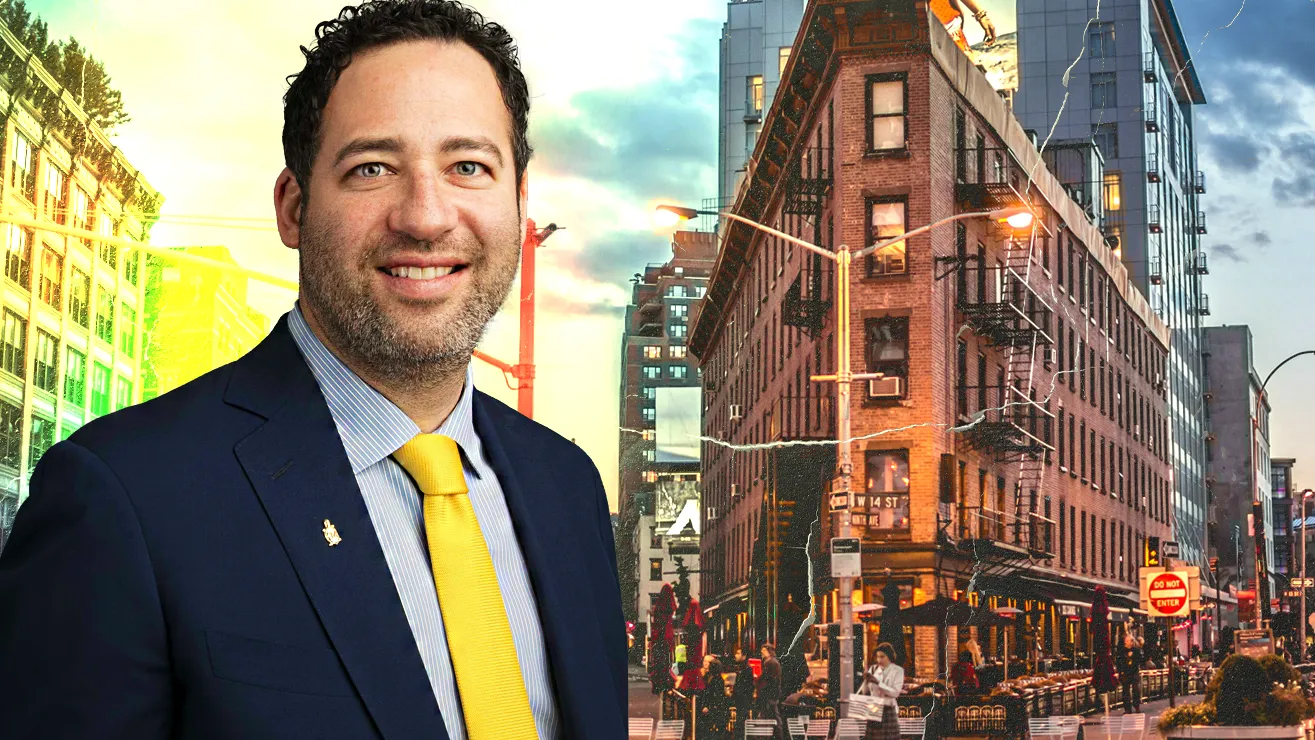
I was initially attracted to the Meatpacking District while I was still in college and promoting nightlife establishments throughout Manhattan. This neighborhood featured Florent, Hogs and Heffers, Mark't, Pastis, Son Cubano, Bodum, Little Pie Company, Jeffrey, and Chelsea Market. These unique establishments which created a sexy 24/7 community attracted celebrities, athletes, and many beautiful people from New York City and tourists from around the world. Then the High Line and Whitney Museum opened which dramatically increased the foot traffic in the area, and created the potential to take it to a much higher level. Along with the beautiful streetscape, cobblestone blocks, large and open plazas, low scale historic buildings, and its proximity to the Hudson River, it was always an area where you could breathe a breath of fresh air. For these reasons, I focused the majority of my time on developing relationships throughout the community. This led to the acquisitions, construction, and curation of the 750,000 square feet Aurora owns throughout the Meatpacking District. From the beginning, I had a vision for the neighborhood and a belief that with time, effort, support, and capital it could come to fruition. 24 Ninth Avenue, also known as 675 Hudson Street, happens to be a very historic and unique building at the epicenter of the neighborhood. There is no building in the Meatpacking District that compares to its visibility. You can see it coming down 9th Avenue from many blocks away. It's on its own island as it's bordered by Hudson Street, 14th Street, 9th Avenue, and West 13th Street. It is the only property with these features in the neighborhood and one of the only properties like it in all of Manhattan. Its V shape has the same look and feel as the Flatiron Building, it’s just much smaller and in a much hipper location. Based on the location, its visibility, its prominence, and its history, it was a property that always intrigued me. I developed a great relationship with the owner, who is only a few years older than me, and I had spoken to him for well over a decade about potentially redeveloping the property together. It needed much TLC, major investment, and vision. After 13 years, he finally decided to enter into that joint venture agreement with Aurora, the private family office that I have been in business with for over 17 years.
How does the move in interest rates impact this acquisition?
The majority of the rate move had happened before the transaction and in our underwriting, we anticipated rates remaining elevated for several years, so it hasn't really impacted us to date and I don't believe it will in the future. My personal opinion is that rates are likely to decrease in the future. Currently, we're carrying the property with a minimal amount of income derived from the tenants who remain on month-to-month leases. Once we have approval from the Landmarks Preservation Commission (LPC), we will commence the restoration and modernization of the building. Before construction or very shortly thereafter, we anticipate having leases executed with strong tenants. This will enable us to refinance the project post construction.
What is your long term vision for this property?
Our vision for the property is no different than our vision for other properties that we've redeveloped throughout the neighborhood. This includes a complete restoration of the property, increased storefront glass on the ground floor, and new windows, lintels, and sills upstairs. We will also complete a full restoration of the brick facade, bringing back a large swath of the cornice which has been missing for decades, and then reintroducing painted wall signage that was on the building historically but had been lost over time. Then, lease it with high-end retail, whether it be a luxury brand or a brand that's looking to do something experiential in this neighborhood. The upper floors will either be an extension of the retail, showrooms, boutique office space, or perhaps a members club. The building features an incredible, vast vault space that is larger and more magical than any vault space I have ever seen. The historic vault space creates an opportunity to program incredibly special things beneath the building and the entire sidewalk that envelopes the property. Over the last fifty years, it's been the home to restaurants, food and beverage, and nightlife. Historically, these vaults connected to underground tunnels that led to the property via the Hudson River. In fact, those tunnels led to this building because it was used as a triage during the Civil War!
What are some key partnerships or collaborators you have in the Meatpacking
District?
I consider every single one of our tenants a partner in the neighborhood ecosystem. The collaborators who helped make the vision a reality include our architects, my fellow members of the Meatpacking BID, and our Executive Director of the BID.
What else is new for you and Aurora in the neighborhood?
We happen to have recently filled our only vacancy in the neighborhood at 405 West 13th Street, a small portion of the retail at the property. We leased the balance of the retail to Sandro and Maje, luxury apparel brands owned by the same company, which is SMCP. In the adjacent 1,500 square foot space, we signed a short term deal with my friend Enrique Cabrera, a renowned artist who is opening his NY gallery in the space. He is opening within a week across from the boutique flagship that we built for Leica, a high-end camera company that opened only a month or so ago. Enrique and Leica are already working on collaborations, which will draw more clientele and other art enthusiasts. These two tenants are eye-catching, interesting, and fun. They will add foot traffic to this particular block.
Are there specific contributions you've made that have played a key role in
enhancing the neighborhood's development?
I believe so. Most of the streets throughout the neighborhood were excavated and remained construction sites for years to enable necessary sewage and electrical upgrades, along with fixing and replacing the cobblestones that often caused many broken heels. Throughout this long period of ongoing work, shipping containers stored the construction equipment and materials that lined the largest thoroughfares throughout the neighborhood. Our firm helped source and fund artists who turned these shipping containers into pieces of art. Instead of looking at large, hunkering metal containers, they became beautiful and interesting art. We were also the first in the neighborhood during COVID to hire local artists to paint boarded up stores. If and when people finally returned to the city we wanted them to see artwork, not shuttered stores protected by plywood.
Reflecting on your experience with the 24 Ninth Avenue property, what are your
key takeaways or significant learnings?
This latest project is no different than anything we've done before. It just represents yet another opportunity for us to exercise our creativity and prowess in development and leasing. In this context, I often liken myself and our team to artists. Each property we are lucky enough to acquire serves as the canvas upon which we can express our artistic vision. While we may not use paintbrushes, many consider myself and our firm visionaries within the world of real estate because we see beyond what currently exists. We reimagine and reshape it successfully into something new and extraordinary.
How did you start your career in real estate?
My father worked with a couple of landlords here in Manhattan, in Soho in particular. He read an article in Crain’s in early 2004 about a broker who recently completed a large retail deal in one of his clients' buildings. After reading the article he called me and said, “Jared it's time that you forget the nightlife world. I know you had a lot of fun, made money, and built something, but it's time to take your professional career to the next level. I think you should get into real estate. My client owns this building in SoHo, and I think he might be able to get you an interview with this broker, Jeffrey Roseman.” I ended up getting the interview after I began studying for my real estate salesperson's license. Jeff interviewed me and shocking to me, he liked the fact that I was a successful nightlife promoter because he had been as well. So he knew that if I could do that, I could probably do this. Within a couple of weeks, he gave me a desk, a computer, and a phone at Newmark New Spectrum. In 2007 I made my move to Aurora which at the time I was excited but unsure about. I had met the managing principal, Bobby Cayre, a few months after I started in the business, and by the end of our initial thirty minute conversation he offered me the opportunity to be his apprentice. I had very little knowledge of who he was and had no idea what the family's holdings were or the capital they had amassed which would fuel the acquisition of additional real estate. He brought me on, I was his first employee, and within a year we completed our first acquisition together in SoHo. A year later we signed a monstrous retail lease at the property with Victoria's Secret. It was an extremely complicated and complex transaction. It involved moving the lobby of two buildings and creating modifications in the vehicular transportation of the buildings, creating relationships with not only the commercial tenants in the building but also several rent stabilized residential tenants. These relationships played a pivotal role in our ability to complete the work required to deliver the space to Victoria’s Secret. This first successful deal helped propel us to our next acquisition, which was 2127 Ninth Avenue, at the southwest corner of 13th Street in the Meatpacking District, which we subsequently leased to Sephora and Catch. The acquisition of
that property elevated me from employee to partner. Over the years, Bobby and I have created an excellent team that has enabled us to acquire, develop, lease, and finance them successfully.
Do you have any advice for young professionals starting out in commercial real
estate?
My career is a case study that proves how building a strong network can lead to success. Whether you're in elementary school, middle school, high school, college, or postgrad, relationships are the foundation of so many opportunities. Education, knowledge, experience, and meeting with people who are successfully doing what you want to do are all necessary. Seek relevant internships and then grind hard while maintaining the relationships you’ve taken the time to build. Your relationships, your knowledge, and your experience are the components that create the luck you need in any business to be successful. Luck occurs when preparation meets opportunity, something my father taught me at a young age. The preparation comes from your knowledge and experience, and opportunity comes from your network and your relationships. When preparation and opportunity meet, you can pounce on the opportunity and are prepared to
seize it.
Traded Student Ambassador Program
This interview was conducted through Traded’s Ambassador Program in collaboration with Thomas DeRuvo and Hope Mullane of Rutgers University.