

Mar 5, 2024
What’s the Deal? | Charney Companies Secure $120M For Newly Rezoned Gowanus Development

Traded Editorial
What drew you to the properties in Gowanus?
The Gowanus rezoning initiative is focused on transforming the industrial waterfront of the canal into a dynamic, mixed-use community, which we have been following very closely over the years. Given how difficult it is to find land in New York City that makes sense to underwrite as a rental property, we were attracted to the potential Gowanus offered. The neighborhood’s rezoning was structured to incentivize developers to build rental housing that includes a permanently affordable component, as well as aid in the larger environmental remedial effort of the area.
Acquiring property in the Gowanus area presents the added advantage of being in an opportunity zone, which offers extra tax incentives for development and long-term ownership. Between the fact that Gowanus is an opportunity zone and the fact that we were there in the infancy stages right before the rezoning was about to happen, it felt like the right opportunity to buy land there. The rezoning has subsequently taken place, and we’re now under construction on all of these projects. Nestled between Park Slope and Carroll Gardens, Gowanus is developing tremendously and also offers great proximity to the canal. To us, Gowanus felt like one of the last areas where you could really build scalable rental housing.
How did you go about securing financing for this deal?
We closed the loan on our Union project with PacWest on fairly traditional financing terms for rental housing. Our capital stack included a construction loan with equity behind it. In June 2022, we closed on the 251 Douglass project with Barings. Lenders love lending on multifamily rentals, and our projects were extremely well received for many reasons – its attractive yield, the excellent design team, the curated amenity plans, and the overall branding of our Gowanus portfolio.
Who are the key partners or collaborators involved in this deal?
Fogarty Fingers, the architect of record for our Gowanus projects, worked with us in the past on both the Jackson and the Dime, and we love working with them to bring buildings to life that really feel in character with the existing buildings in the neighborhood. They are also handling all of the Gowanus interior design work.
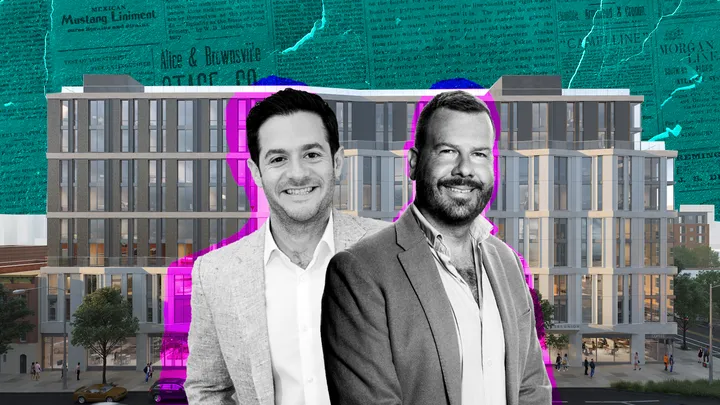
Two of our buildings in Gowanus, Douglass and Union, are sister buildings and have panels on them that mimic riveted steel to give them both a more industrial feel in tune with the history of the area. The exposed concrete on the exterior gives a lot of depth to the buildings.
As far as partnerships go, we partnered with Gowanus Arts to create mixed-use art space in our buildings which will be set aside for the Gowanus community program. If you visit the neighborhood now, all of the sidewalk sheds in front of our buildings feature art by local artists.
We commission custom art for all of our developments, but we haven't released our Gowanus collaborators yet. In the past we’ve brought in Faile, Swoon, Tom Fruin, and Jen Lewin, to name a few.
The buildings will feature an exceptional amenity package for residents, including a basketball court, pickleball, pool, and fitness center, among other shared amenities in the buildings.
Were there any unexpected challenges that you encountered with the deal?
Given that the area is under rezoning, there are a lot of different municipalities involved in the approval process, so the timeline for approvals was lengthy. We began designing the buildings before the rezoning was finalized, so it took quite some to be fully approved through the various agencies.
If you’ve visited Gowanus in the past six months or so, you know that the whole neighborhood has so much construction going on right now, and you can really feel the momentum compared to even just a couple of years ago.
This rezoning was 10-plus years in the making and it’s amazing to see projects moving from planning to reality.
What are Charney Companies’ investment criteria and focus?
The company was founded as a development firm, which continues to be a vital part of our business strategy. Sam has a heavy construction background and spent a decade with Two Trees building their Dumbo portfolio.
We celebrated our tenth anniversary last summer and have progressively taken on larger projects over the last decade. Beginning with the Jackson, a 56-unit condo building in Long Island City, we then took on the Dime, a 350,000 square-foot development in Williamsburg with 177 rental units. We’re currently developing 1,200 units in Gowanus and have larger projects in the pipeline in Long Island City and Brooklyn. As our developments got larger, we also started purchasing multi-family properties throughout the boroughs where we saw opportunities to add value.
With our expertise in construction, it felt natural for us to take on renovation work as well, which is an easier lift than ground-up construction. As our multi-family portfolio grew, we decided to manage the buildings ourselves, and established our management arm. In the same vein, it felt natural for us to start a brokerage firm to handle the leasing for our projects – our thesis is that no one cares about the assets as much as the owner does. Over the past ten years, Charney has evolved into a full-service real estate company that handles development, multifamily properties, property management, and brokerage. It’s unique for one firm to offer as much as we do in-house.
How did you begin your real estate career?
I graduated from the NYU Schack Real Estate Master’s in Real Estate Finance program. I have always loved real estate and wanted to get involved in New York City, so I went into that program and was introduced to a family office doing development in the city and started working there. From there, I got the development bug and loved getting to work on different projects and enjoyed being involved not only in financing, but also in construction, design, and so many more tangential fields that development touches upon. I worked there for a few years before joining GFI Development, where I worked on Ace Hotels among other projects. I met Sam when he was first starting out and joined him on the venture of growing Charney Companies over the past 10 years.
What advice would you give a CRE pro starting in the industry?
Don’t be scared to take a job that allows you to gain a tremendous amount of experience, even if it’s not your dream job. It can be difficult to break into the market, so making the most out of every opportunity goes a long way. Take in everything you can from the people around you and learn from every project you work on. Development is really an apprentice job, and once you get initial experience it will be much easier to jump off from there to find the role best suited to your interests.
Traded Student Ambassador Program
This interview was conducted through Traded's Ambassador Program in collaboration with Thomas DeRuvo and Hope Mullane of Rutgers University.