

Jun 12, 2024
What’s the Deal? | Behind the Scenes at 601 Baltic Ave with Yiannes Einhorn
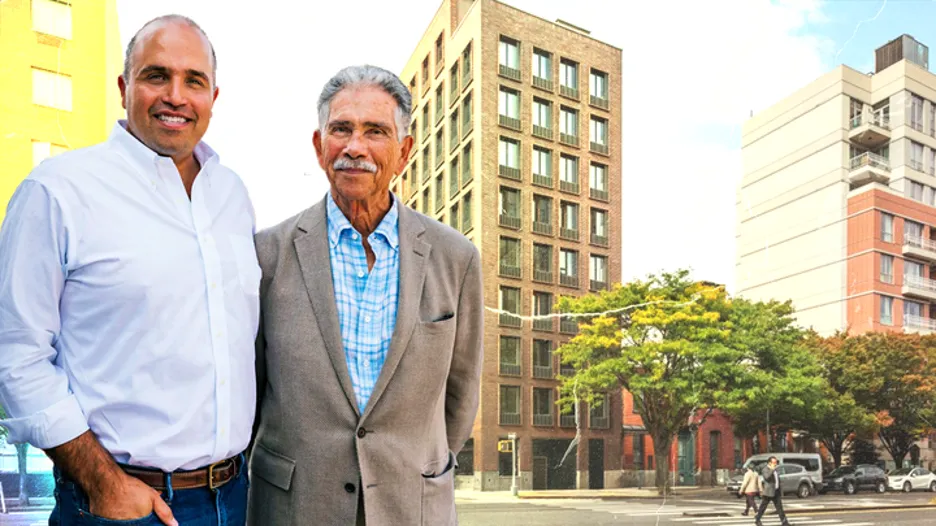

Traded Editorial
What drew you to the deal?
I was born and raised minutes away from 601 Baltic Street in Park Slope and moved to Manhattan when I was 12. Brooklyn, and in particular Park Slope and Boerum Hill, are very much in my DNA. We've owned small, multifamily properties in these neighborhoods for a long time, one of which was actually on the corner of Baltic and Fourth Avenue. It was a three-story brick, 17-foot-wide corner building with five apartments and a legacy project that we held for over 35 years.
I also started my career in Brooklyn around Park Slope, Boerum Hill, Cobble Hill, and Fort Greene. The home inspection business was a big focus of ours, mainly in brownstone neighborhoods. I moved away from that business and have been focused on ground-up real estate development for about 20 years.
How did you navigate the acquisition process?
We continued to own the multifamily corner building on Baltic and Fourth, leases were coming up and there were a few vacancies. We ended up hearing through the grapevine that the owner next door was going to sell. There's usually only once or twice in your lifetime that you can purchase your neighbor! If you have the means, you always should. That's a life lesson in real estate, whether it's an apartment, a house, or a building. If your neighbor wants to sell, you should do anything you can to get that property.
Well, we managed to purchase the neighboring site and then approached the owners of the adjacent building for transferable development rights to fill in the envelope. With these changes, the project quickly transformed from a 10,000 SF site into a 30,000 SF corner project. This was appealing for many reasons. It had been a long time since we completed a project in Brooklyn, and we were really excited to be a part of the Fourth Avenue and Boerum Hill revitalization. Grid Group had a vision to create what I would call approachable apartments in Brooklyn’s best neighborhood.
Can you elaborate on your vision for the project?
From a value standpoint, the apartments at 601 Baltic start around a million dollars. While only in NY is this approachable, it’s extremely hard to find apartments for less than a million in any NY neighborhood. We wanted to build a beautiful boutique condo at this particular price point, which would trade quickly. So we designed a 21-unit corner building that offered this price point for the lower levels.
As you go to the upper floors, instead of having three units per floor, we have two for extra space and privacy. These apartments are in the $1.5 to $2 million range. We passed the TCO inspection for the full building and launched sales this spring. We’ve sold eight units in the first five weeks of being on the market despite interest rates really hurting prospective buyers at this price point.
What prompted you to design and construct the building yourselves?
We are very proud of the quality and the design work that our in-house architecture and construction management team do. We often end up acting as engineers and architects drafting and designing many details of the property, so anytime we're going to build, we will have a very heavy presence in the drafting and construction coordination. We took another leap of faith and decided to forgo having an architect of record, which was actually very exciting. Belinda Stuart and Brian Caffrey are both architects at Grid Group and they painstakingly collaborated on the facade and layouts at 601 Baltic.
Kitchens feature customized fluted wood cabinetry and white quartz countertops, with integrated appliances by Fisher & Paykel and Miele. The primary and secondary baths feature Blanco Sivec and Thassos white-honed marble surfaces, glass-enclosed showers or Duravit tubs, along with Hansgrohe, Moen, and Artos fixtures. Six-inch white oak floors add brightness to each room and oversized casement windows bring abundant light into the open layouts. Many of the residences have outdoor space.
Were there any key collaborators on this deal?
I consider the paradigm shift in Brooklyn as a collaborator on this deal. I was very much a kid from Brooklyn. I came home from school, threw my bag inside and went outside to play with my friends in the street. In retrospect, I was probably part of the last generation to do this. Back then it was considered unsafe to walk west of Fifth Avenue, so seeing the transformation has been unbelievable. Back then, there were very few neighborhood services. More often than not, if you had to get something done, you had to go into Manhattan. Now there isn't a vacant storefront and it’s packed all the time. There are multiple supermarkets, restaurants, medical care…..whatever you need, is now entirely local. Fourth Avenue doesn’t have a vacant lot and incredible projects are being built there. No one could have predicted the revitalization in the Gowanus area.
How did you get started in real estate?
My father and mother were both architects. In fact, my stepmother was also an architect and my grandfather was a very well known architect. Because of that connection, I had a lot of design and architectural exposure during my childhood. I have a business and economics degree and worked in construction for summer jobs. Because of this experience I quickly adapted to the home inspection business which I did for about ten years with my father. We went through nearly 10,000 buildings together and I became the diagnostician of the company.
While a lot of the work of a pre-purchase inspection is general i.e. a rundown of the working condition of a building, sometimes you get calls for highly nuanced issues. My job ended up being the guy who managed these super specific parts of an inspection, and I really enjoyed it. It gave me incredible insight into where failures happen, and where issues arise with construction and how to problem solve and course correct. I got to see what works and what doesn’t from a construction standpoint on buildings of all ages and it led to my obsession about quality.
These years were invaluable for me to go on and develop buildings. After ten years an opportunity came across our desk for a four-story gut renovation of a brownstone in Park Slope. I approached my father with this opportunity because he had done projects like these in the past before the inspection business. And I said, you know, it would be great to do a project. We did and it was a major success. I kept up the inspection business for a couple more years, but then really focused on doing what started as basically gut renovations of existing buildings. Eventually we transitioned into new developments mainly focused in New York City. We got comfortable doing ground up development and have been doing that ever since.
Traded Student Ambassador Program
This interview was conducted through Traded’s Ambassador Program in collaboration with Thomas DeRuvo of Rutgers University and Johnny Tran of New York University.