

Oct 9, 2025
The Miami Duo Building a New Model for Middle-Class Housing

Traded Editorial
In a city synonymous with glimmering towers, luxury penthouses, and world-class hospitality, a new development in Miami is shifting the narrative—not by chasing extravagance, but by championing accessibility.
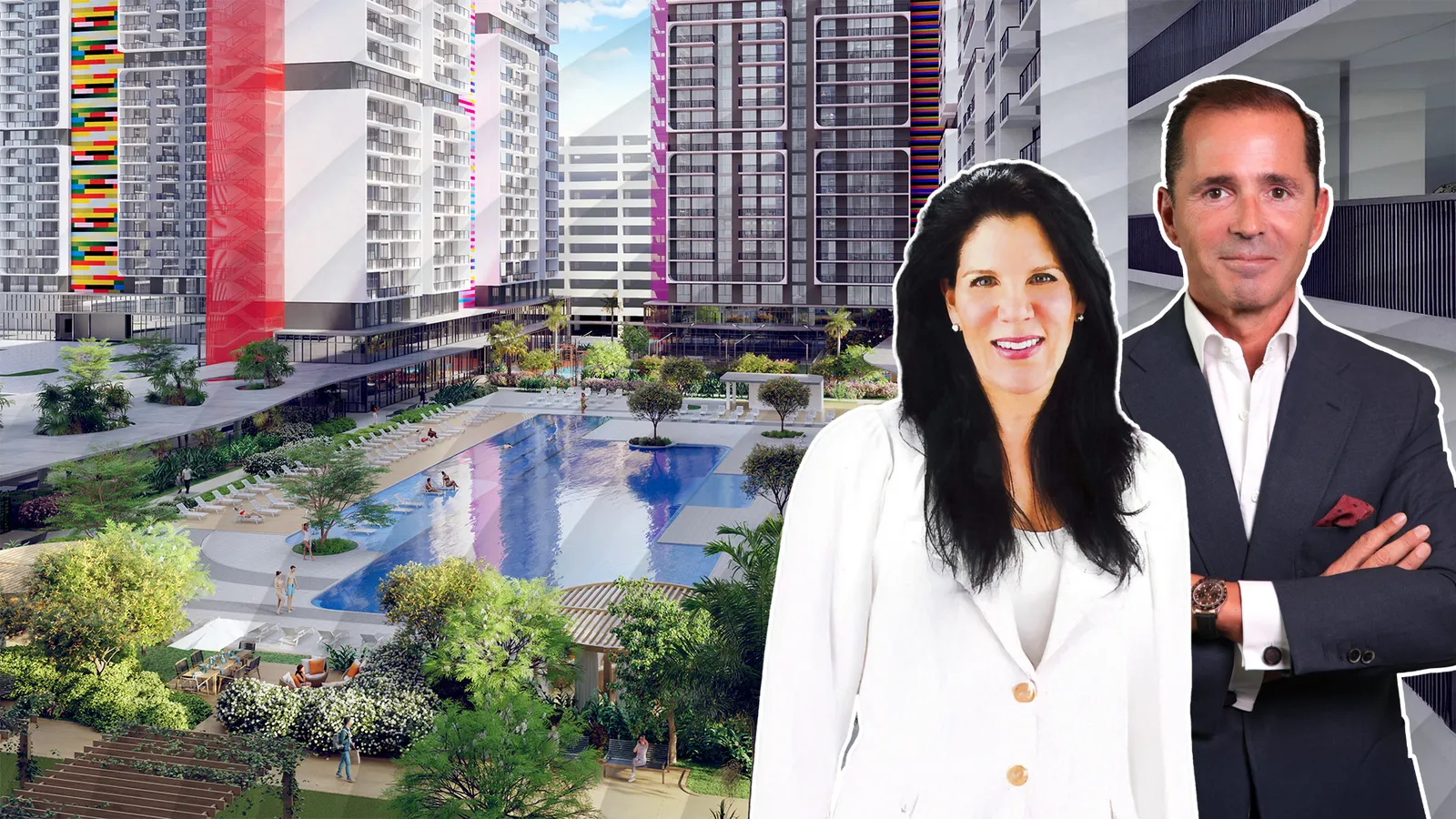
Introducing The HueHub: a transformative, community-forward residential project in West Little River that aims to reset the standard for middle-income housing in Miami-Dade County. Spanning 12 acres and delivering over 4,000 fully furnished units, this $880 million undertaking is more than a real estate venture—it’s a social mission.
“We serve those who serve us,” says veteran Miami developer Laura Tauber, who’s spearheading the project alongside longtime affordable housing builder Pablo Castro. “This isn’t just about buildings. It’s about building community—for our teachers, nurses, firemen, and police officers who can’t even afford to live in the neighborhoods they protect.”
From Friendship to Vision
The collaboration behind The HueHub was born organically. Castro, who has built a career developing middle-income housing in Spain, met Tauber three years ago. They quickly aligned on a shared belief: that it was time to build something more meaningful for the Miami market.
Tauber, who has more than 25 years of experience in Miami real estate—first on the finance side and then as a developer—was immediately aligned. “This is by far the most meaningful project I’ve ever done,” she says. “The need is just staggering. The deficit of housing for our middle class is in the six figures.”
Scale with Soul
If the vision for The HueHub sounds big, that’s because it is. Phase one alone sits on nine acres and will deliver 4,032 units wrapped around a 2-acre central park—a “real” park, as Tauber emphasizes, with mature trees, expansive greenspace, paddle and pickleball courts, and pools. “This isn’t one tree and a picnic bench like you often see in workforce housing,” she notes.
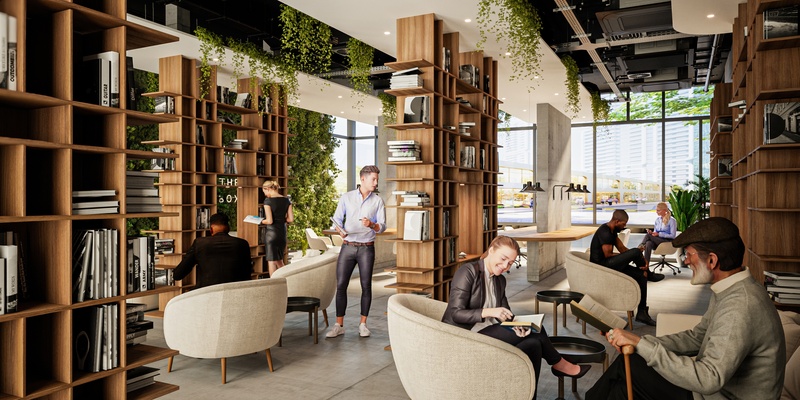
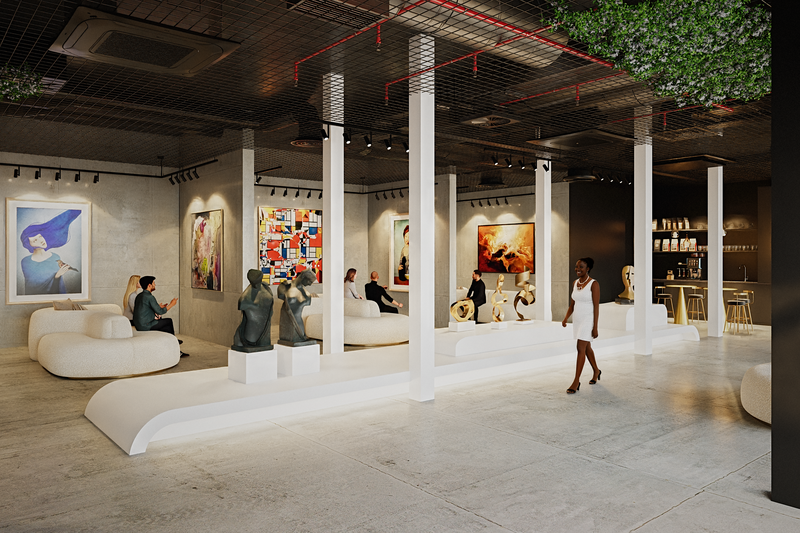
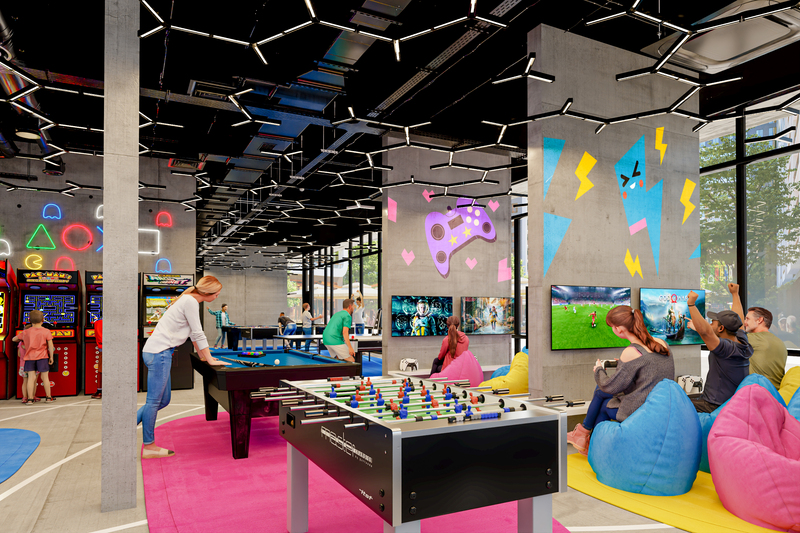
The amenities are where The HueHub begins to feel less like a housing project and more like an all-inclusive resort. There’s 200,000 square feet of indoor amenity space, from yoga and CrossFit studios to boxing rings and co-working lounges. A partnership with Miami Dade College will activate a showcase kitchen for healthy cooking classes, while the on-site learning center will offer after-school tutoring and tech classes for seniors.
“We want this to be a place where people don’t just live—they thrive,” says Tauber. “It’s multi-generational. It’s connected. It’s inclusive.”
Rethinking the Housing Model
From the outset, the team knew the traditional approach to development wouldn’t cut it. Castro emphasizes the need to create more than just housing—he believes in designing a new way of life. His experience developing workforce housing in Europe emphasized connection, wellness, and lifestyle—not just shelter.
Today’s demographic shifts also inform the design. Over half of adults live alone and 70% don’t have children, meaning residents expect flexibility, access to services, and a sense of community more than ever before.
This is why The HueHub integrates everything from art, sports, and culinary programming to advanced co-working options and wellness facilities. The site’s central location—steps from a MetroRail station and a future transit stop—ensures that accessibility and sustainability go hand in hand.
Designed with Purpose
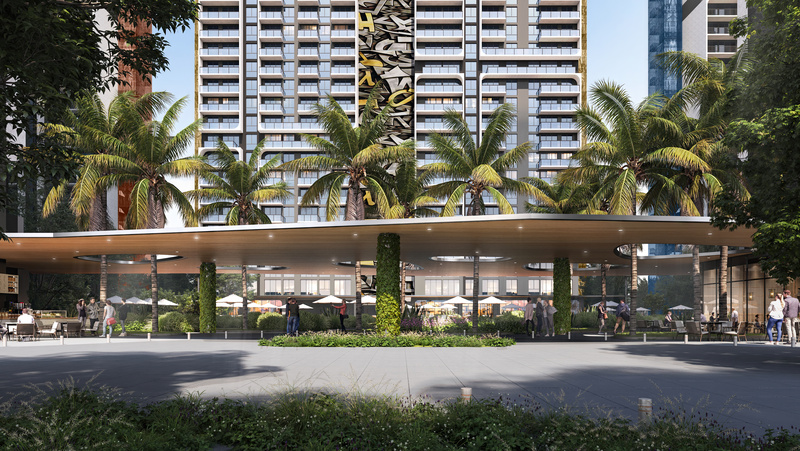
The units themselves reflect a European sensibility—modern, compact, fully furnished, and efficient. Every apartment includes a balcony, and the development team enlisted Arquitectonica to bring a luxury-grade visual language to a workforce housing price point.
“It’s a beautiful, luxurious-looking building with an affordable price tag,” says Tauber. “People shouldn’t have to choose between a nice place and a livable budget.”
But what truly sets the project apart is the introduction of fractional services. Residents will have access to optional low-cost services like bathroom cleaning, dog walking, and assistance for seniors—all priced affordably and delivered at scale.
“This is how people want to live today,” Castro explains. “We’re not just providing housing—we’re creating a better way to live.”
Community First
Another key differentiator: The project is prioritizing leases for union workers and public servants. The developers have already inked agreements with numerous Miami-Dade unions, including the Police Benevolent Association, Fraternal Order of Police, Department of Corrections, AFSCME Local 199, and the United Teachers of Dade—offering first access to thousands of workers who too often find themselves priced out of the communities they serve.
“We’re trying to reverse that trend,” says Tauber. “People should be able to live near their work. Not drive an hour and a half each way just to afford rent.”
Backed by Live Local
The HueHub also takes advantage of Florida’s Live Local Act, which helps unlock density and tax benefits for developments leasing to tenants earning between 80% and 120% of the area median income. For The HueHub, that translates to significant tax relief—and just enough breathing room to make the model financially viable with traditional equity and debt financing.
Still, Tauber stresses that even with public support, the private sector must lead innovation. “The Live Local Act helps with entitlements and tax relief, but the real challenge is rethinking how we design, finance, and scale these communities. That’s where the creativity comes in.”
Anchored in History, Looking Ahead
West Little River—once a thriving center of Miami-Dade—has flown under the radar in recent years. But developers see the potential for a renaissance. “It’s central. It’s connected. And it has history,” says Tauber. “We’re bringing it back—carefully and consciously.”
Retail, while a smaller component of the project (roughly 30,000 square feet), will be curated with a mix of local flavors and national conveniences. Tauber hints at restaurants, bakeries, coffee shops, and possibly urgent care facilities—all serving both residents and the surrounding neighborhood.
Breaking Ground
The HueHub is set to break ground in February 2026, with all seven towers of phase one delivered in just 28 months—an ambitious timeline for a development of this scale.
But if the team has proven anything, it’s that they’re not afraid to defy convention.
“Real estate hasn’t changed much,” says Tauber. “But everything else has—tech, healthcare, education. It’s time for housing to evolve too. Think outside the box. Move the cheese.”
Final Word
For Miami’s middle class, The HueHub promises more than just housing—it promises dignity, community, and a life that feels attainable again.
And if the early momentum is any indication, it could mark the beginning of a new kind of urban living—not just for Miami, but for cities across the country.