

Oct 10, 2025
Single-Family Rental Sector Shines with Higher Yields, Stronger Occupancy

Traded Editorial
Key Points
-
SFR cap rates climbed to their highest level since 2021, as rents grew faster than home prices.
-
Occupancy hit 94.5% in Q2 2025, reversing a year of decline and topping pre-COVID averages.
-
$4.2B in CMBS issuance so far this year suggests investor demand is still strong.
The single-family rental (SFR) sector is showing fresh signs of strength. According to Arbor’s Q3 2025 report, investors are seeing improved returns thanks to rising cap rates, stronger occupancy, and better tenant retention—even as national rent growth moderates and home values stagnate.
The report paints a picture of a multifamily real estate sector settling into a more mature, yield-driven phase after years of rapid expansion. With homeownership remaining unaffordable for many households and capital markets still supporting SFR-backed lending, institutional and mid-sized investors alike are finding renewed reasons to stay active in the space.
Returns Improving as Cap Rates Rise
SFR cap rates reached 7.1% in the second quarter of 2025, up from 6.8% in late 2024 and significantly higher than the post-pandemic lows of 5.4% recorded in 2021, according to a Chandan Economics analysis. The increase is largely driven by the disconnect between stable or rising rents and softening home prices, which have now declined modestly on a month-over-month basis for four straight months.
While the average single-family home value was still up 0.6% year-over-year in June—according to Zillow—forward-looking forecasts predict a 1% decline over the next 12 months. For investors, that pricing reset has made acquisitions more appealing, especially when paired with steady rental income and higher risk premiums relative to Treasury yields.
CMBS Lending Stays Solid
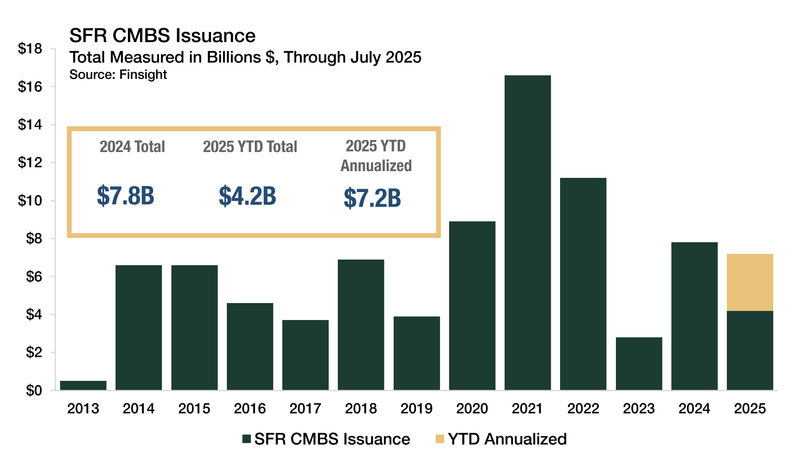
Despite higher interest rates, SFR capital markets remain active. Through July 2025, CMBS issuance in the sector totaled $4.2 billion—on pace to reach $7.2 billion by year’s end. That would come just short of 2024’s record $7.8 billion, which marked a nearly threefold increase over 2023 levels.
The debt markets are more selective, however. Debt yields climbed to 11.1% in Q2, up 257 basis points since 2022. This has reduced leverage for many deals, prompting a shift toward stabilized, cash-flowing properties with strong operating performance.
Occupancy and Retention Rebound
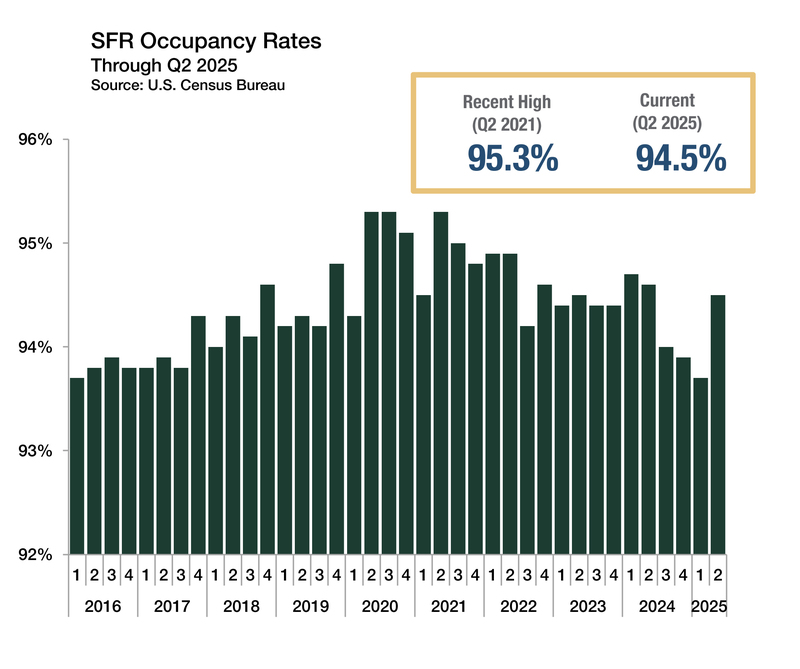
Perhaps the most notable shift is the rebound in occupancy and tenant retention—two metrics that had declined throughout much of 2023 and early 2024. In Q2 2025, SFR occupancy rose to 94.5%, an 80-basis-point jump from the previous quarter. That marks the largest quarterly gain in four years and pushes occupancy back above pre-pandemic levels.
At the same time, retention rates—measured as the share of tenants renewing expiring leases—climbed back to 83.7% as of March, up from a low of 79.2% in April 2024. After several quarters of turnover and rising vacancy rates, this suggests renters are staying put longer, especially as the cost of homeownership rises.
Rent Growth Slows But Holds Steady
Rent growth has slowed nationally but remains positive. Through June, single-family rents were up 3.6% year-over-year, down from 4.5% at the end of 2024. While this is the slowest pace since 2017, it's only slightly below the 2016–2019 average of 4.3%, indicating that the market remains healthy.
Growth remains uneven geographically. The Midwest and Northeast are leading the way, with Providence, Rhode Island posting a 7.1% annual increase. Indianapolis and Kansas City followed with gains of 6.8% and 6.1%, respectively. In contrast, post-pandemic boom markets in Texas, like Austin and San Antonio, saw rents flatten or decline.
Build-to-Rent Remains a Key Growth Channel
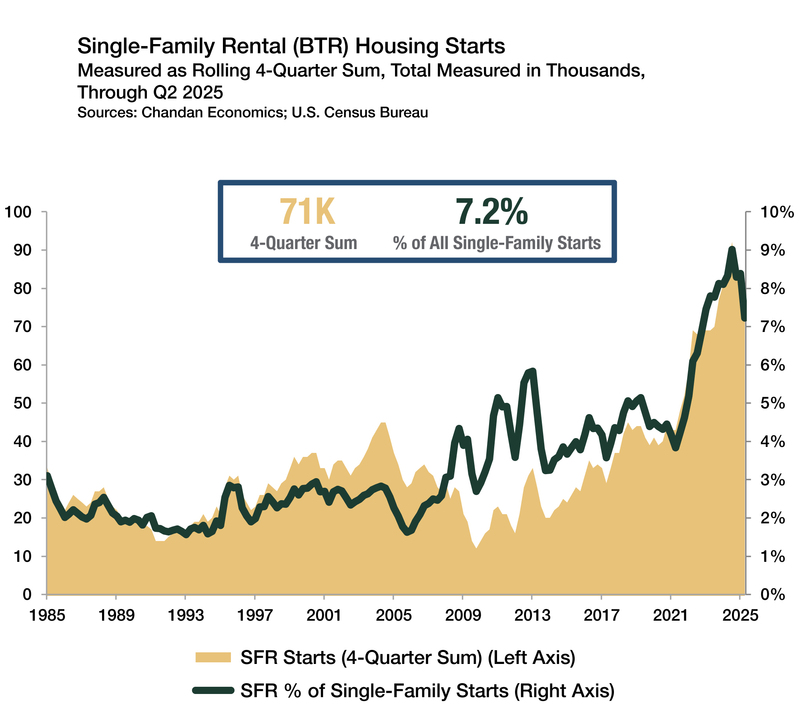
Even with some cooling, build-to-rent (BTR) construction remains a vital part of SFR expansion. Over the past year, 71,000 BTR units were started, making up 7.2% of all single-family housing starts. That share is down slightly from recent highs but still above the five-year average.
The continued growth of these purpose-built rental communities signals investor confidence in the long-term demand for suburban rentals—especially among households priced out of buying a home.
Limited Distress, Stable Outlook
Despite higher mortgage rates, distress in the housing market remains limited. Only 1.3% of all household mortgages were more than 90 days delinquent as of Q2, and within the SFR sector, delinquency rates are even lower—just 0.9% among rated CMBS transactions.
Many homeowners are locked into fixed-rate mortgages below 5%, which has kept foreclosure risk low and constrained supply in the for-sale market. This dynamic continues to benefit the SFR space by increasing rental demand.
Looking Ahead
With mortgage rates expected to remain above 6% well into 2026, homeownership will likely stay out of reach for a growing share of the population. This supports continued demand for high-quality rental homes in suburban areas, especially those with good schools and proximity to job centers.
At the same time, investors are adapting to a higher-rate, lower-leverage environment. The focus is shifting toward yield stability and operational performance—marking a clear evolution in how the SFR sector is being valued and managed.
For long-term investors, the message is clear: the market may be cooling from its post-pandemic highs, but the fundamentals for cash-flow-driven returns remain strong.