


Key Points
- RXR and One Investment Management are converting 61 Broadway into 796 rental apartments in Manhattan’s Financial District.
- The project is backed by a $475 million financing package led by Apollo Global Management affiliates and JPMorgan Chase.
- About 200 units will be affordable, with the first apartments expected to deliver in 2028.
Office tower set for major residential conversion
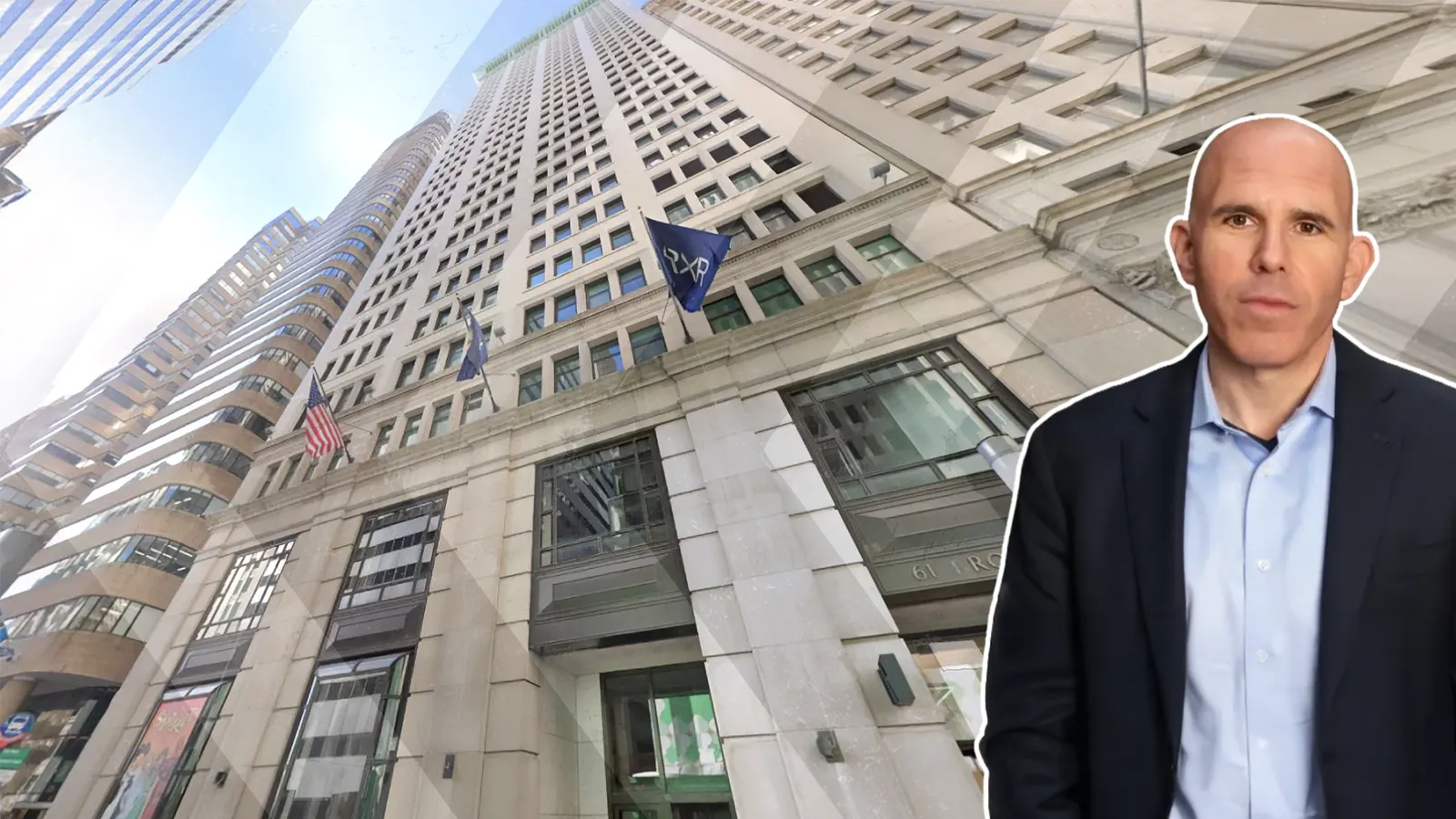
RXR, led by CEO Scott Rechler, along with One Investment Management, is moving forward with the office-to-residential conversion of 61 Broadway in Manhattan’s Financial District. The redevelopment will transform the historic 33-story office tower into 796 rental apartments, adding significant housing supply to Lower Manhattan. Construction is expected to begin in March 2026, with the first residential units scheduled to deliver in the first half of 2028. The redevelopment reflects a broader push across New York City to repurpose aging office properties as residential assets amid changing office demand. The building spans roughly 670,000 square feet and sits between Broadway, Trinity Place, and Exchange Alley. Originally built in 1913 for the Adams Express Company, the tower was designed by architect Francis Kimball and remains listed on the National Register of Historic Places.
What the financing package means for the project
The conversion is supported by a $475 million capital stack arranged by JLL Capital Markets. The financing includes $420 million in construction financing from affiliates of Apollo Global Management and a $55 million tax equity investment from JPMorgan Chase. The project also benefits from state and federal historic tax credits, which are commonly used to make large-scale conversions financially feasible when redeveloping landmark properties. RXR originally purchased the building for $330 million in 2014 from Broad Street Development. However, after defaulting on a $240 million loan in 2022, ownership transferred to lender Aareal Bank. The new financing package has allowed the project to move forward despite the earlier distress.
What the housing program means for affordability
The development will include roughly 200 affordable apartments, representing 25 percent of the total units. These apartments will be reserved for households earning up to 80 percent of the area's median income. The affordability requirement comes through New York City’s 467-m tax incentive program, which was designed to encourage office-to-residential conversions while expanding the city’s housing supply. Programs like 467-m have become central to New York’s strategy to revive underused office buildings in Lower Manhattan, where many pre-war office towers face modernization challenges and declining demand.
What the redevelopment adds to Lower Manhattan living
Once completed, the building will offer 40,000 square feet of amenities for residents. Planned features include a rooftop lounge, outdoor terrace, and additional storage spaces. The location also provides strong transit access, with nearby subway lines including the R and W trains at Rector Street, the 4 and 5 trains at Wall Street, and the J and Z trains at Broad Street. For RXR and its partners, the project represents one of the larger office-to-residential conversions currently planned in Manhattan’s Financial District, continuing the neighborhood’s transformation into a mixed-use residential hub.
What this conversion signals for the Manhattan office market
The redevelopment of 61 Broadway highlights how investors are repositioning older office buildings as residential assets in response to long-term shifts in workplace demand. With nearly 800 apartments planned, the project adds meaningful housing inventory to Lower Manhattan while demonstrating how historic office properties can be repositioned through tax incentives, institutional capital, and adaptive reuse strategies.