

Nov 12, 2025
NYC Moves to Legalise Thousands of Illegal Basement Apartments - Goldstein Panel Green-Light for Landlords
The New York City has rolled out new rules under Local Law 126 of 2024 to bring pre-existing illegal basement and cellar units into full compliance over a 10-year timeframe. The program applies only to one- and two-famil…
Traded Media

Traded Editorial
Key Points
-
The New York City has rolled out new rules under Local Law 126 of 2024 to bring pre-existing illegal basement and cellar units into full compliance over a 10-year timeframe.
-
The program applies only to one- and two-family homes in specified Community Districts (in the Bronx, Brooklyn, Manhattan and Queens) and excludes units located in flood-risk zones.
-
For landlords and owners the opportunity is significant: convert an illegal lower-level apartment into a legal one, avoid vacate orders, and tap into extra rental income — while improving safety and compliance. For landlords this is a chance to increase income and reduce risk.
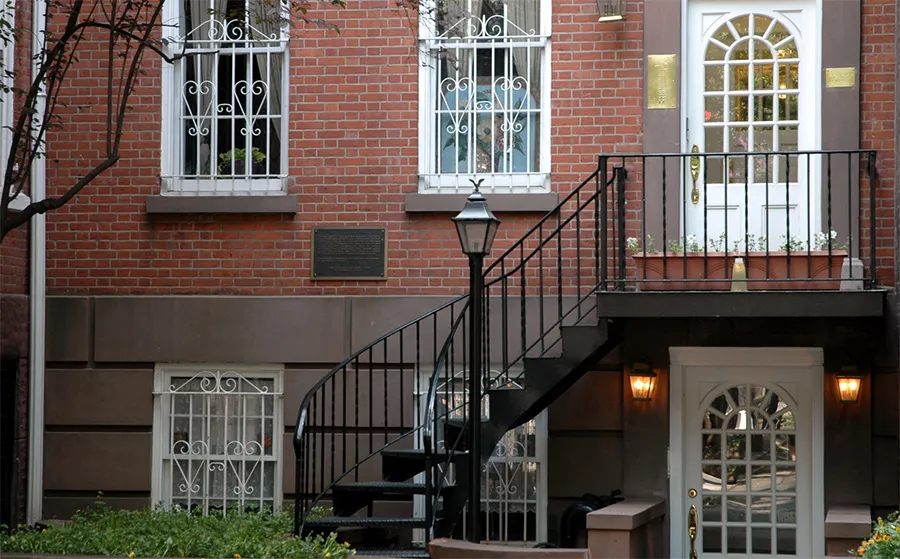
/cdn.vox-cdn.com/uploads/chorus_image/image/60212503/shutterstock_101707696.0.jpg) The city is tackling a long-standing issue: thousands of illegal basement apartments that emerged over decades, many unsafe and unregulated. Now, under the new rules, owners of one- and two-family homes may legally convert or bring those lower-level units into the legal fold. This matters for landlords and brokers because it opens an avenue for added income streams and property value uplift — while reducing liability. In this post we’ll break down: (1) what the rules require, (2) how landlords can act, and (3) what the risks and trade-offs are.
The city is tackling a long-standing issue: thousands of illegal basement apartments that emerged over decades, many unsafe and unregulated. Now, under the new rules, owners of one- and two-family homes may legally convert or bring those lower-level units into the legal fold. This matters for landlords and brokers because it opens an avenue for added income streams and property value uplift — while reducing liability. In this post we’ll break down: (1) what the rules require, (2) how landlords can act, and (3) what the risks and trade-offs are.
What the Rules Require
Eligibility & Geography
-
Only existing basement or cellar units occupied prior to April 20, 2024 qualify for the legalization track.
-
Units must be in designated Community Districts in the Bronx (CDs 9,10,11,12), Brooklyn (CDs 4,10,11,17), Manhattan (CDs 2,3,9,10,11,12) and Queens (CD 2).
-
Units in high-risk flood zones (FEMA Special Flood Hazard Areas / DEP’s 10-Year Rainfall Flood Risk Area) are not eligible.
Process & Compliance
-
Owners must enter an “Authorization for Temporary Residence” (ATR) while bringing the unit into compliance.
-
They then have up to 10 years to meet incremental milestones (upgrades for egress, fire-safety, ventilation, etc) under the legalization schedule.
-
Only one accessory dwelling unit (ADU) per one- or two-family home is permitted under the larger ADU regime.
Why Landlords Should Care
-
Income potential: A previously unlicensed basement unit, once legalised, becomes a fully rental-compliant space — boosting yield.
-
Liability reduction: Converts a risky, possibly code-violating basement unit into a proper rental — reducing exposure to vacate orders and enforcement actions. The city warns of unsafe basement/cellar units: “Occupants of illegal basement and cellar apartments may be ordered by the City to vacate”.
-
Property value uplift: Legalising a basement unit improves the building’s certificate of occupancy status and appeal to investors and tenants.
-
Better market positioning: With housing supply tight in NYC (vacancy rates low) legal units are more desirable and command higher rents.
Risks & Trade-Offs For Owners
-
Cost of compliance: Upgrading a basement unit to meet fire, egress, ventilation, flood-resistance and other code requirements will involve expense.
-
Exclusions: If the unit is in a flood-prone area or doesn’t meet the pre-existing occupancy date, it might not qualify.
-
Timeline-driven: The 10-year window obligates milestone progress — failure could mean reversion to non-compliance status.
-
Zoning / occupancy limits: Under the ADU rules, adding the unit may change the classification of the building (e.g., a two-family home adding an ADU becomes a three-family building under certain code regimes).
Bigger Picture & Market Context
-
The reform responds to estimates that tens of thousands of illegal basement units exist across NYC.
-
By enabling legalization, the city hopes to increase safe housing supply without large-scale new development — which is relevant in tight markets where landlords and brokers are seeking deals within existing stock.
-
For investment strategy: This opens what some call a “latent inventory” of rental-units that have been unofficial — bringing them legal creates optionality for owners (rental income, refinance potential, sales appeal).

For investors and landlords in NYC’s one- and two-family segment, the new basement-unit legalization rules represent a meaningful opportunity: convert existing unlicensed apartments into legal rentals, improve asset value, and reduce regulatory risk. The caveats are real — cost, flood-risk exclusions and compliance timelines matter. But bottom line: this is a pro-landlord move worth tracking closely.