

Jan 24, 2024
NYC Administration Grants $100M Tax Breaks For Manhattan Office Buildings Upgrade
The administration of Mayor Eric Adams is set to embark on a groundbreaking initiative to rejuvenate financially struggling office buildings in Manhattan.

Traded Editorial
A New Era of Revitalization Begins as Tax Breaks are Granted for Office Buildings
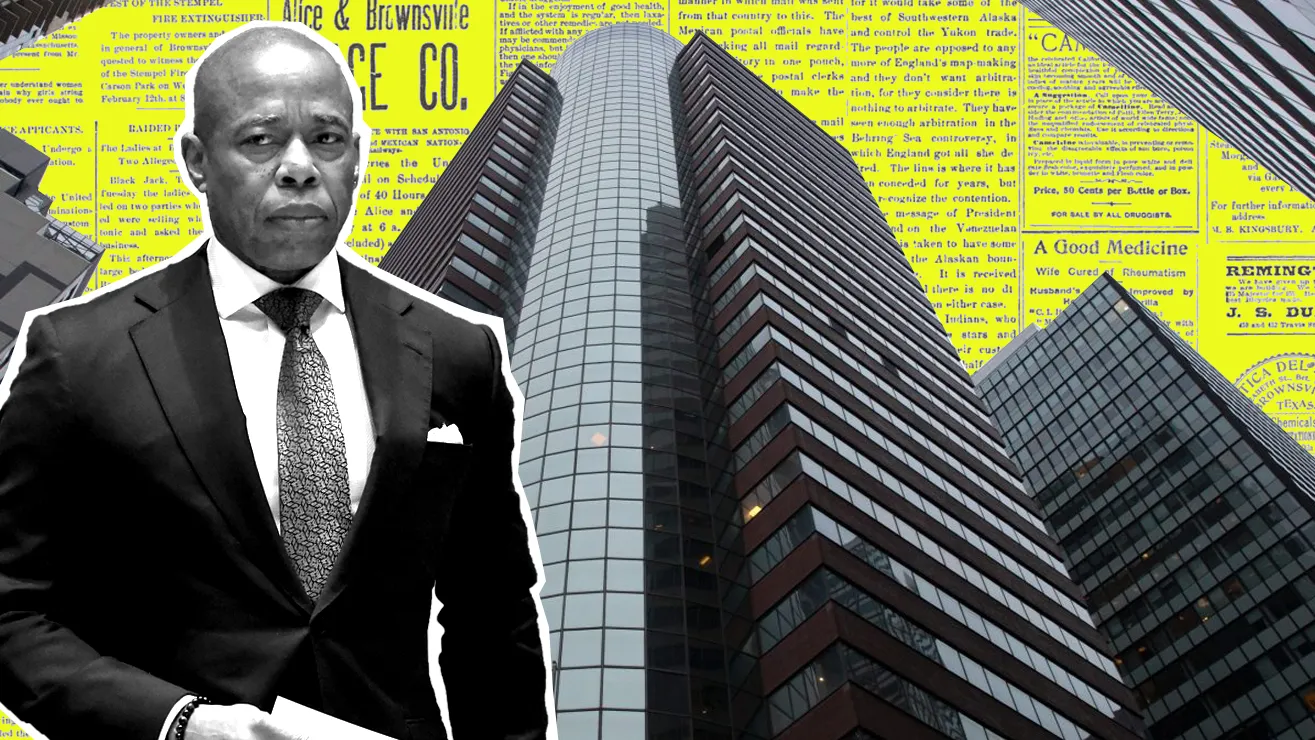
The administration of Mayor Eric Adams is set to embark on a groundbreaking initiative to rejuvenate financially struggling office buildings in Manhattan. Under the newly introduced Manhattan Commercial Revitalization subsidy, developers will receive a total of $100 million in tax breaks, starting with the renovation of two prominent properties. Located at 850 Third Ave. near 51st Street and 175 Water St. near the South Street Seaport, these buildings have the potential to generate significant employment opportunities.
The transformation of these offices into modernized spaces is projected to create over 2,100 jobs within three years, while also retaining 365 existing positions. These estimations are based on a report by the New York City Industrial Development Agency, the local authority responsible for this initiative. As the board of the agency prepares to cast their votes on this matter, the potential economic impact cannot be denied.
Although concerns have been raised regarding the current surplus of available office space in Manhattan, city officials remain optimistic. While there is no concrete evidence to suggest that these buildings will attract tenants at this time, the tax-break program does not require the city to recover funds if developers fail to secure occupants. Instead, the incentives are contingent upon timely completion of construction and fulfillment of promised investments. The focus remains on revitalizing these struggling properties and stimulating economic growth.
In an effort to bring back office workers to older buildings below 59th Street, these two projects represent the first phase of a larger plan. Recognizing the shift in corporate dynamics with more employees opting to work remotely, city officials aim to entice companies by creating attractive and vibrant office spaces. Dubbed as "amenity-filled" environments, the offices seek to provide a blend of culture, art, and gastronomy. Andrew Kimball, President of the Economic Development Corporation, envisions a downtown core that seamlessly integrates work and leisure, much like the thriving Hudson Yards area.
The M-CORE program, short for Manhattan Commercial Revitalization, is a reflection of cities reimagining the traditional concept of downtown areas. By targeting underperforming buildings that would otherwise remain vacant, the initiative aims to inject life into these neglected spaces. The importance of this endeavor cannot be overstated, as it sets the stage for a remarkable transformation in the heart of Manhattan's commercial landscape.
With the first two projects underway, the spotlight shines on the endless possibilities that lie ahead. As momentum builds, the city embraces a new era of revitalization, breathing life into once struggling properties and reshaping the future of Manhattan's office market.
A Tale of Transformation: Reviving Aging Skyscrapers in New York City
In the heart of New York City, two iconic skyscrapers stand as testaments to the city's ever-changing architectural landscape. Steeped in history, these buildings have witnessed the rise and fall of businesses, the evolution of technology, and the shifting preferences of tenants. Now, they find themselves in a state of decline, desperately needing a revitalization to secure their place in the modern world.
One such building is 850 Third Ave., aptly nicknamed the "Blah Glass Tower." Once a symbol of chic and sleek design when it opened its doors in 1960, it has since fallen from grace. New York Magazine describes it as "way past its prime," and even Discovery, Inc., a major tenant, has opted for trendier accommodations in the Flatiron District. With only 33% occupancy and an expected decline to 14% in the coming years, this building is in desperate need of a makeover.
Real estate developer Jacob Chetrit, after experiencing the diminishing value of the property, made the difficult decision to sell. HPS Investment Partners, the building's lender, acquired 850 Third Ave. for $265.9 million—significantly less than the $422 million Chetrit paid for it just four years prior. Recognizing the potential for transformation, HPS plans to invest $62.8 million in renovation costs, aiming for a more extensive overhaul to breathe new life into the aging tower.
But what incentivized HPS to embark on this ambitious undertaking? City officials granted them a subsidy, which would cost taxpayers $58.4 million over 20 years—largely to reduce property taxes. In an application outlining their strategy, HPS claims that without these tax breaks, such a comprehensive renovation would not have been financially viable.
Meanwhile, another illustrious skyscraper, located at 175 Water St., shares a similar fate. This 31-story tower, once the global headquarters of American International Group, now sits nearly empty. With only 5% occupancy, the need for an intervention is undeniable.
Recognizing the potential for a new and vibrant future, developers aim to rebrand 175 Water St. as a "creative hub," catering to businesses in the fashion, arts, and cultural sectors. By investing $150 million and receiving a tax break of $41.3 million over 20 years, the goal is to attract companies that will generate 1,027 jobs within three years.
As these aging giants undergo their respective transformations, they hold the promise of writing a new chapter in the ever-evolving story of New York City. While some may view them as relics of the past, the visionaries behind these projects see an opportunity to breathe new life into these iconic structures, ensuring their continued relevance in a rapidly changing world.
Note: HPS and the developer of 175 Water St. declined to comment on their respective projects.
A Shifting Vision for Real Estate in Lower Manhattan
The landscape of Lower Manhattan is undergoing a transformation as the priorities of real estate developers and local government officials evolve. The potential conversion of a building on 175 Water St. into housing reflects this changing vision. While the previous owner had intended to transform the property into much-needed residential units, current regulations limit conversions to buildings constructed before 1977. Unfortunately, this meant that the building missed the eligibility criteria by six years. A proposed adjustment to the state law, which would have allowed the conversion to proceed, failed to materialize due to political reasons.
In an interview, Kimball, an official from the Economic Development Corporation, acknowledged the lack of control over the outcome of this situation. However, he emphasized that his agency no longer enforces specific job targets for developers, signaling a shift in priorities. This change in approach recognizes the evolving requirements of the market and aims to adapt accordingly.
Interestingly, the establishment of the new Manhattan Commercial Revitalization program (M-CORE) echoes a similar initiative put forth during former mayor Rudolph Giuliani's administration. Both programs seek to revitalize commercial occupancy rates in lower Manhattan, albeit in different contexts and circumstances.
The Innovative M-CORE Program: A Game-Changer for Tax Breaks
A groundbreaking study conducted in 2018 by the Independent Budget Office shed light on the limited success of the existing commercial revitalization programs in New York City. Contrary to expectations, these programs failed to bring down vacancy rates or significantly impact employment levels. Undeterred by these findings, city officials have introduced a new initiative that promises a fresh approach.
One notable distinction of the new program, known as M-CORE, is its unconventional genesis. Unlike its predecessors, M-CORE was not birthed through specific state legislation but instead capitalized on the wide-ranging powers bestowed upon public authorities by state law. In practical terms, this means that the Industrial Development Agency can now generate tax breaks without the need for legislative approval or involvement in the city budget process, including public hearings before being greenlit by the City Council.
Let's delve into the specifics. The tax breaks offered through the M-CORE program are not insignificant, with an average value of $5 million annually per participating building. However, it's important to note that these tax breaks are not calculated on a yearly basis; instead, they span a 20-year term, providing a longer-term outlook for businesses and developers.