

Jul 10, 2026
Miami Approves Coconut Grove Playhouse Revival
Miami commissioners approved a $58.4 million redevelopment plan for the Coconut Grove Playhouse, which will include a 310-seat theater, retail space, and a 289-space parking garage at 3498-3500 Main.


Traded Editorial
- Miami commissioners approved Miami-Dade County’s redevelopment plan for the historic Coconut Grove Playhouse after nearly two decades of debate and legal challenges.
- The $58.4 million project includes a 310-seat theater, retail and restaurant space, offices, educational space, an open-air plaza and a 289-space parking garage.
- The redevelopment will preserve the playhouse’s historic 1926 façade while adding a new performance venue behind it.
- Opponents remain concerned about traffic, commercial development and impacts on the surrounding West Coconut Grove community.
What the Redevelopment Will Include
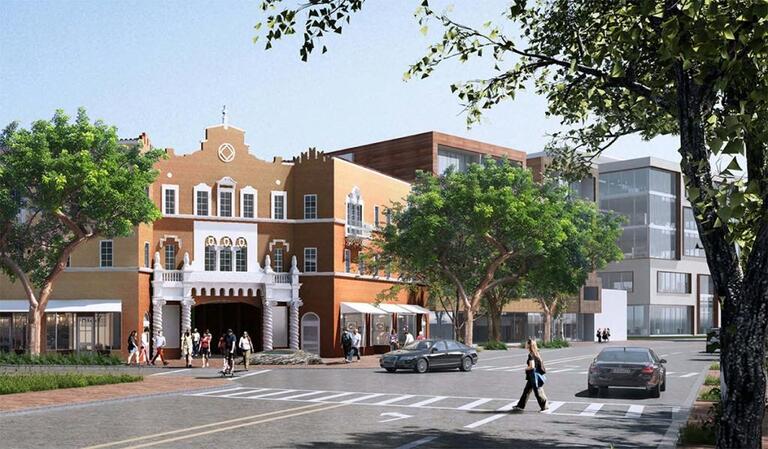
The approved plan calls for the restoration of the Coconut Grove Playhouse’s historic façade and the construction of a new 310-seat theater behind it. The project is located at 3498-3500 Main Highway and will center around an open-air public plaza. Plans also include 2,600 square feet of retail space, 3,800 square feet of food-and-beverage space, 28,000 square feet of offices and 2,600 square feet of educational space. A neighboring parking garage will provide 289 spaces. County officials said the commercial portions are intended to help make the property financially self-sustaining because Miami-Dade County does not plan to cover ongoing operating and maintenance costs.
What the City Approved for the Site
Miami commissioners granted five zoning exceptions and four waivers needed to advance the redevelopment. The approvals allow maximum lot coverage to increase from 50 percent to 62.4 percent while reducing the required green space from 30 percent to 14.9 percent. The county will also be permitted to add more impervious pavement and construct a 30-foot-wide driveway from Main Highway to the planned parking garage. Officials said some of the reduction in green space is connected to the addition of sidewalks requested through public feedback. The commission’s decision overturned a May recommendation from Miami’s Planning, Zoning and Appeals Board, which had rejected the application following hours of public discussion.
What the Project Will Cost
The redevelopment has a total budget of $58.4 million. Funding includes $28.5 million from Miami-Dade general obligation bonds approved in 2004 and $13.4 million from the countywide infrastructure investment program. Additional funding includes $9.1 million from special obligation bonds issued in 2005, $5.4 million in parking revenue and a $2 million grant from the John S. and James L. Knight Foundation. The city of Miami had previously committed to contributing $10 million, but the county is no longer requesting that funding.
What the Plan Means for West Coconut Grove
The proposed plaza is designed to connect the playhouse with historically Black West Coconut Grove, also known as Little Bahamas. County officials said the project could help reconnect a community that was historically divided by segregation. Neighborhood organizations, including Preserve the West Grove and the Coconut Grove Homeowners and Tenants Association, have requested stronger commitments related to traffic, local employment, community programming and recognition of the West Grove’s history. Some residents remain concerned that the office and commercial components could increase traffic and over-commercialize the property. County officials have responded that commercial space was historically part of the playhouse and that the redevelopment is restoring those uses rather than introducing them for the first time.
What Historic Preservation Means for the Project
The Coconut Grove Playhouse was built in 1926 as a Paramount Pictures movie palace. The Spanish Rococo-style property later became one of Miami’s leading regional theaters before financial difficulties led to bankruptcy and its closure in 2006. Florida acquired the property in 1980, and Miami designated it as a local historic landmark in 2005. After the building was declared unsafe in 2010, Miami-Dade County leased the property from the state in 2013. The Florida Department of State previously determined that the redevelopment could negatively affect the National Register-listed property. The agency directed the county to preserve important architectural elements, follow historic preservation requirements and conduct archaeological monitoring. County officials said historic features have been secured and documented and that the structure has been stabilized. The county also maintains that the redevelopment is complying with preservation and archaeological requirements.
What Happens Before Construction Moves Forward
The city commission’s approval clears a major obstacle, but additional steps remain. Miami-Dade County must secure outstanding permits and meet the conditions attached to the approval before advancing the redevelopment. Opponents may also challenge the city’s decision in court. The project has already gone through years of public hearings, preservation reviews, appeals and legal disputes involving plans to partially demolish and reconstruct portions of the theater. Construction activity previously faced another setback when part of the building’s third floor collapsed during demolition work. Work was temporarily halted before later resuming.