

Jul 6, 2026
Inside the Capital Stack: How Mavik Is Financing the Office-to-Residential Boom
Mavik's Dan Cooperman highlights key factors for successful office-to-residential conversions, including building suitability, experienced sponsors, and C-PACE financing, which enhances project viability.

Traded Editorial
"An apartment building worth $400 million is a far better outcome for a municipality than an empty office worth a fraction of that."
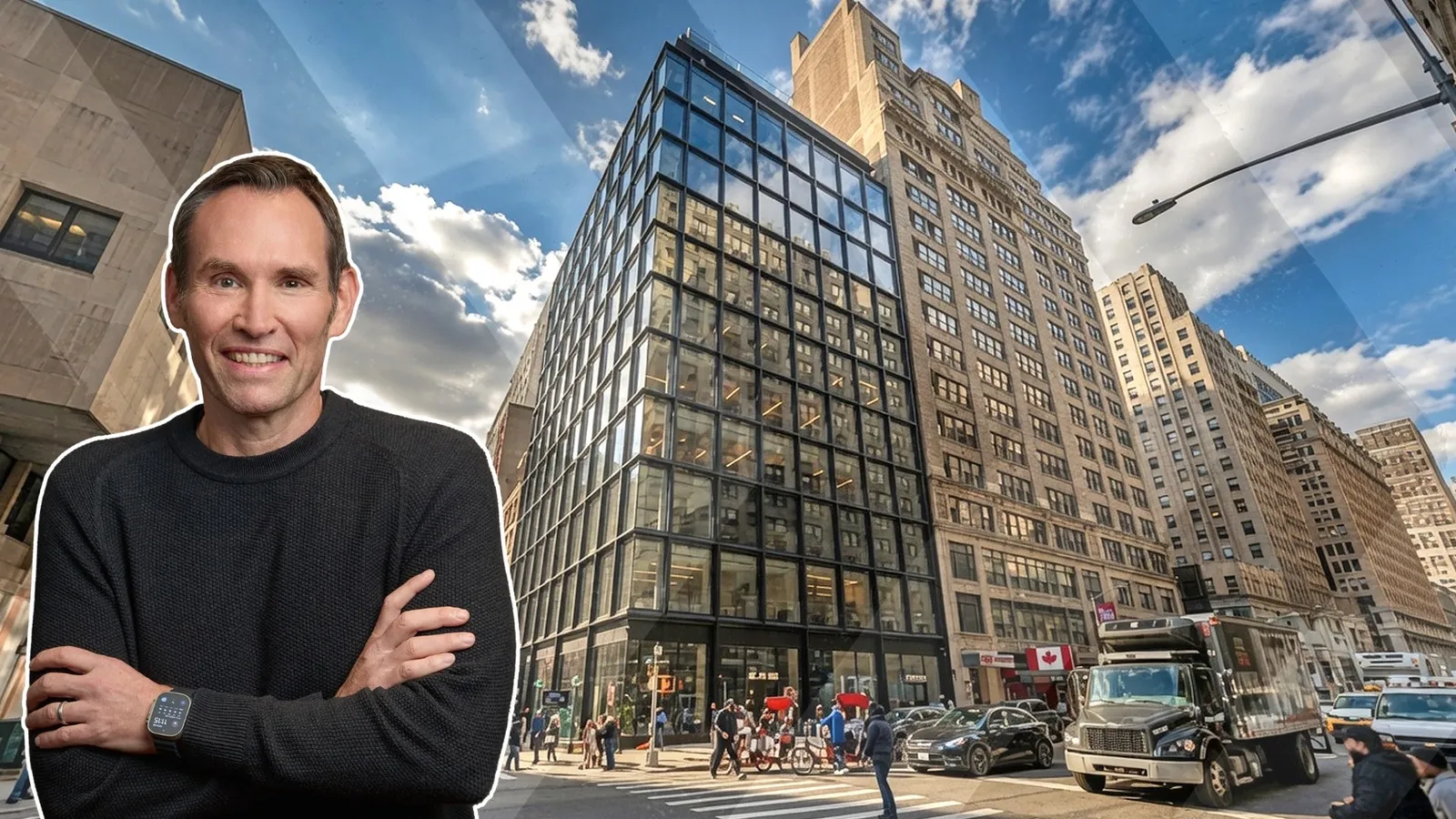
That's how Dan Cooperman, Head of Investments at Mavik, sums up the policy shift driving one of the most closely watched sectors in commercial real estate finance. As cities across the country continue to grapple with persistently vacant office buildings and an acute shortage of housing, office-to-residential conversions have evolved from a niche redevelopment strategy into a national investment theme. At the center of that momentum is Cooperman, who has spent years structuring complex real estate financings and identifying opportunities where risk and basis align.
With a background spanning investment banking, institutional lending, acquisitions, and asset management, Cooperman brings a deeply analytical lens to a market many developers are still learning how to navigate. At Mavik, he oversees sourcing and execution across the firm's investments and sits on the Investment Committee, helping shape the company's approach to one of the industry's fastest-growing asset classes.
Fundamentals Before Financing
According to Cooperman, successful office conversions begin with fundamentals that are often overlooked in the excitement surrounding adaptive reuse.
"Starting with the building itself: the conversion needs to be as-of-right; the property needs to be vacant, or there needs to be a clear path to vacancy, and the floor plates need to yield efficient, light-filled units," he explained.
While market demand and location remain critical, Cooperman emphasized that execution risk ultimately separates financeable deals from projects that never leave the drawing board. Sponsors with prior conversion experience, reputable general contractors, sufficient contingency reserves, and meaningful equity commitments are increasingly essential in today's underwriting environment.
A Capital-Stack-Agnostic Approach
For Mavik, the focus is less about fitting into one part of the capital stack and more about identifying where inefficiencies create the best opportunities for risk-adjusted returns.
"Mavik is capital stack agnostic; we invest anywhere from first mortgage through LP equity," Cooperman said. "Our focus is always on generating the best risk-adjusted returns through basis and structure."
That flexibility has become particularly valuable as conversion projects require increasingly creative financing solutions. Among the most transformative developments in the sector has been the emergence of C-PACE financing as a major source of capital.
C-PACE Becomes a Major Force
Cooperman noted that C-PACE lenders have become more aggressive due to their ability to recognize the environmental benefits of adaptive reuse, particularly the preservation of embodied carbon that would otherwise be released through demolition. The result has been materially higher leverage and lower overall capital costs for borrowers.
"C-PACE is long-term, fixed-rate, non-recourse, assumable, and light-structure," he explained.
"Critically, it doesn't accelerate on default; only the delinquent installment has to be cured."
That financing structure played a pivotal role in one of the industry's landmark conversion deals: The Geneva, widely recognized as one of the largest office-to-residential conversions in the country. The project included approximately $465 million in C-PACE financing from Nuveen Green Capital, marking the largest C-PACE loan on record at the time.
Inside The Geneva
For Cooperman, deals like The Geneva demonstrate that institutional-scale office conversions are no longer theoretical.
"It demonstrates that large-scale conversions are now genuinely financeable and that C-PACE has gone mainstream as a source of conversion financing," he said.
Mavik's involvement in the transaction was made possible through its longstanding relationship with developer Post Brothers, a repeat borrower the firm had been tracking since its acquisition of the property in 2022. Cooperman said that familiarity allowed the team to move quickly once the optimal financing structure emerged.
"This familiarity with the borrower and their portfolio enabled us to close a complicated
transaction in less than 30 days," he noted.
Policy as a Tailwind
Beyond individual transactions, Cooperman sees broader structural forces accelerating conversion activity nationwide. New York remains the dominant market, but Washington, D.C., has quickly emerged as another major hub for adaptive reuse activity. Increasingly, municipalities are incentivizing conversions because the alternative, severely discounted or functionally obsolete office assets, presents a far less attractive economic outcome.
"The broader tailwind is policy," Cooperman said. "Most major cities now offer conversion incentives," a calculation, he noted, that comes down to the arithmetic he opened with: a revitalized apartment building generates far more value for a municipality's tax base than a vacant office ever could.
Discipline Over Rate Cycles
Even as interest rates fluctuate, Cooperman stressed that Mavik's underwriting philosophy remains disciplined and rooted in downside protection. The firm focuses heavily on untrended stabilized debt yield, construction certainty, completion guarantees, and sponsor strength.
"At Mavik we are laser-focused on downside protection," he said, emphasizing the importance of strong guarantors, adequate contingency reserves, and additional collateral support where appropriate.
What Separates a Financeable Deal
That conservatism reflects the reality that conversion projects remain highly execution-sensitive despite growing market enthusiasm. Attractive renderings and well-located assets alone are not enough to secure financing in today's environment.
"The pitches that get financed show five things," Cooperman explained. "A building that can actually be delivered, a secured tax abatement or comparable subsidy, an experienced conversion sponsor with meaningful cash equity in the deal, a stabilized debt yield that a takeout lender will refinance, and cost certainty."
Where the Next Wave Comes From
As cities continue recalibrating their downtown cores and investors search for opportunities amid office market distress, Cooperman believes the next generation of residential inventory will increasingly emerge from repositioned office stock rather than new ground-up developments alone.
"The next wave of well-located residential will increasingly come out of failed, deeply discounted office," he said, "not just in the gateway cities but in any market where the office stock has reset, and the city is willing to incentivize housing."
For Mavik, that evolution represents more than a market trend. It signals a long-term reshaping of urban real estate, one where capital structure expertise, disciplined underwriting, and creative financing will determine which projects redefine city skylines and which remain permanently shelved.