

Inside Israel Tech Week: The Founders Building Miami's Bridge to Startup Nation
Ayal Stern and Lior Halabi on resilience, the Israeli founder archetype, and why Miami is becoming the most strategic platform for Israeli tech outside of Tel Aviv. A TradedVC Interview for Israel Tech Week
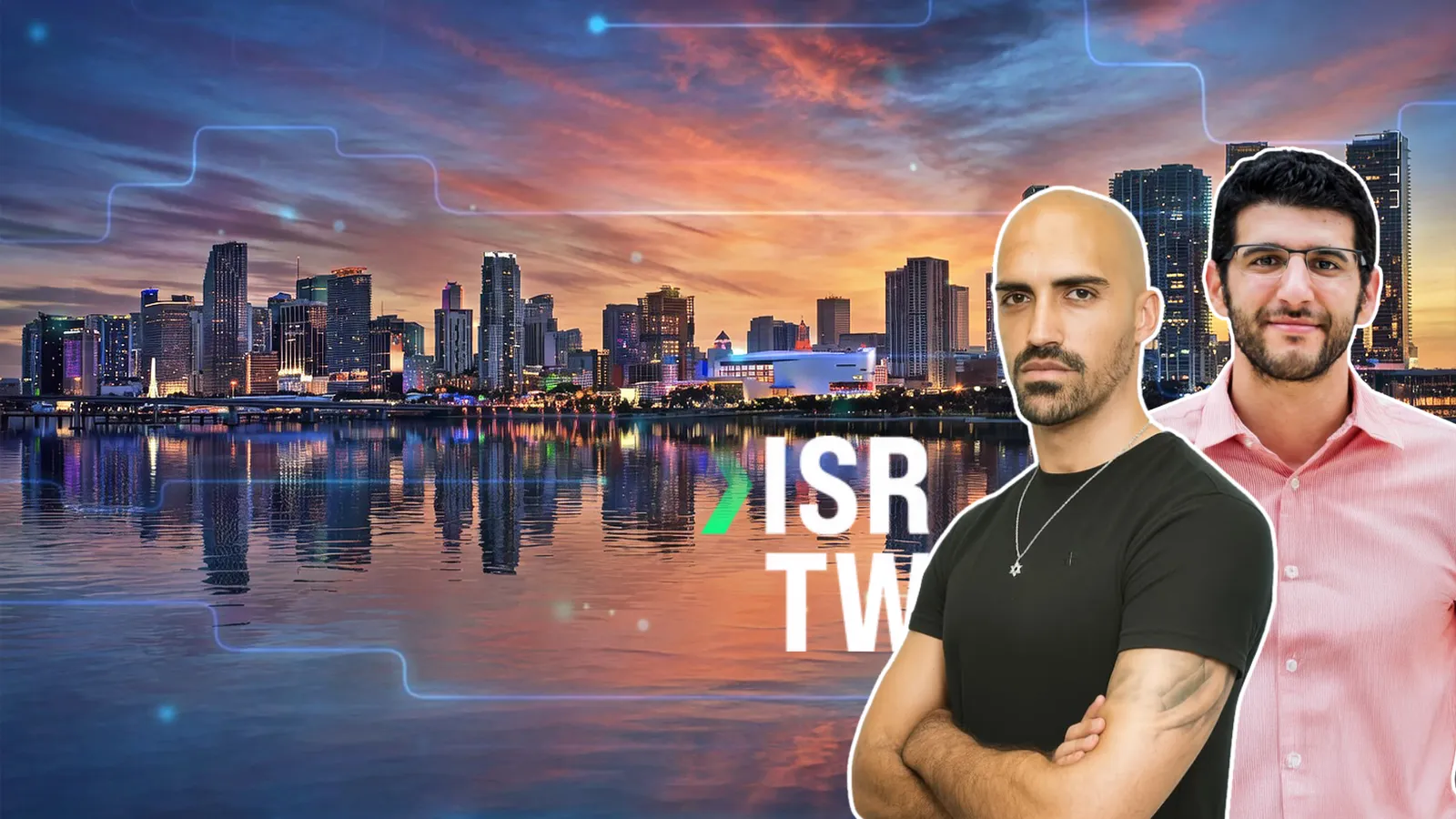
What started four years ago as a meetup at a Wynwood art gallery has become one of the largest Israel-focused tech conferences outside of Israel. Israel Tech Week (ISRTW), now in its second flagship year, is on track to host 130+ speakers, 1,500+ attendees, and 30+ programmed sessions across PropTech, FinTech, healthcare, cybersecurity, defense tech, and AI.
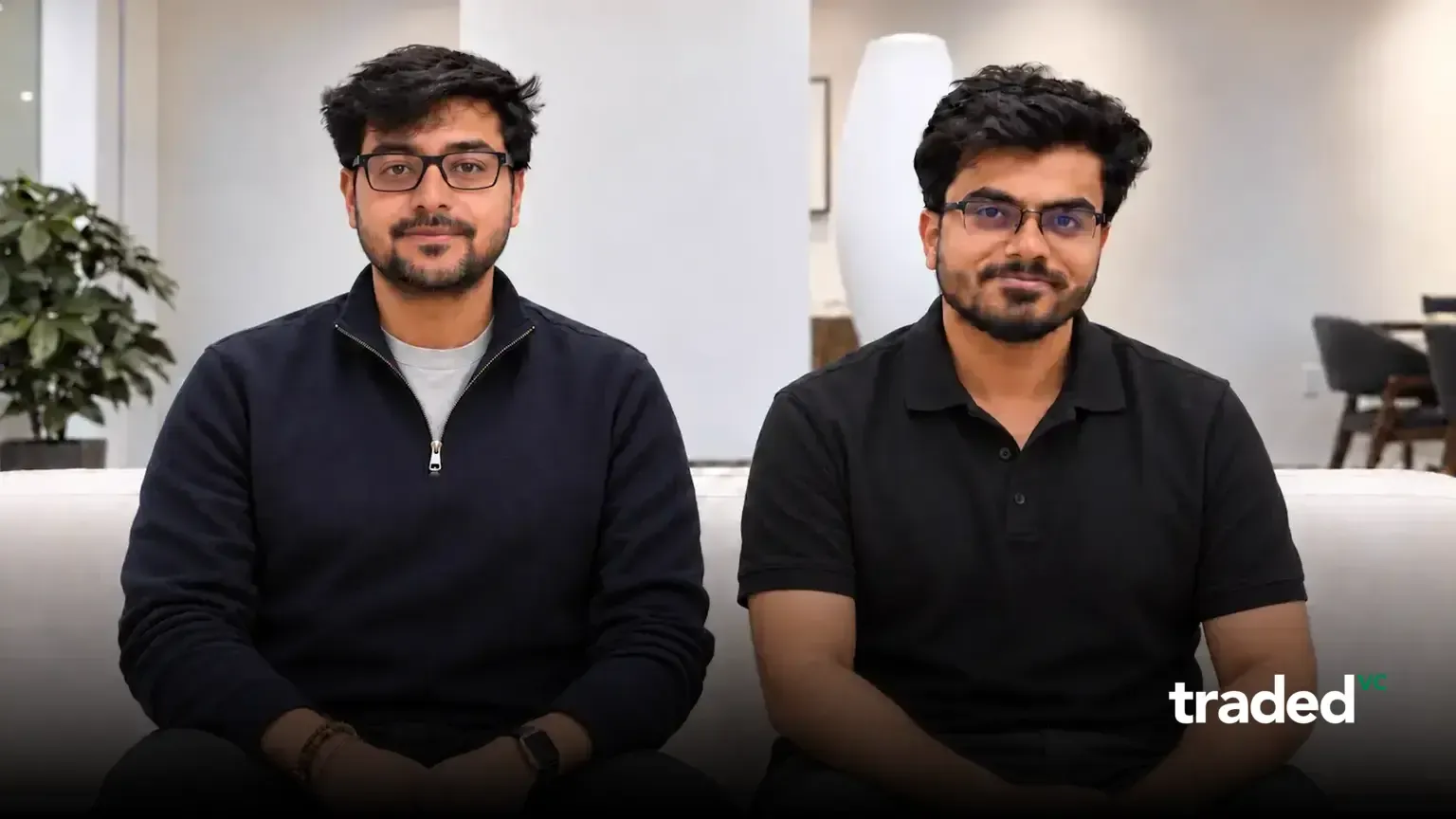
The week is co-built by Ayal Stern, former U.S. CEO of Thrive DX and co-founder of The Lab Miami, and Lior Halabi, the Israel-born brand strategist behind the Miami Israel Collective. Together, they've engineered a platform that operates less like a conference and more like a deal-making bridge between Israeli founders and U.S. capital, industry, and ecosystem builders.
TradedVC sat down with both ahead of the 2026 edition to talk through the origin story, the architecture of the programming, where Agentic AI fits in, and what comes next.
The Origin Story
TradedVC: Take us back. How did Israel Tech Week actually start?
Ayal Stern: It started a long time before we ever thought about Tech Week. Lior was running for commissioner in the City of Miami, and we met at an Israeli consulate event. I was still CEO of Thrive DX in the U.S. at the time. We kept coming back to the same observation: Miami was missing the atmosphere we had in Tel Aviv. The meetups, the density, the daily collisions. So we said, if nobody's doing it, let's do it ourselves.
Our first event was in an art gallery in Wynwood. Around 300 people showed up. That's when we realized there was a massive void in the bridge between Israel and the U.S. Then, on October 7, the mission shifted. International delegations stopped going to Israel for obvious reasons, and Israeli founders lost their commercialization runway. So we asked, "What's the best thing we can do?" Offer them a platform here, in one of the most Israeli-friendly and Jewish-friendly cities in the world.
Lior Halabi: I moved to Miami from Israel about 11 years ago. My background is branding and community building for the art and design world. After Ayal and I connected, we launched the Miami Israel Collective. The first phase was pure community: building the database, building the brand, defining why Miami. After about 15 events, we had real engagement, so last year we took it to the next stage and built a commercial week around it.
The concept is closer to a mini-summit than a typical tech week. Themed tracks. Deal-making by design. Three goals: showcase Israeli innovation, connect the Jewish and Israeli diasporas (which are culturally distinct and don't naturally do business with each other), and build a real tech ecosystem in Miami.
The Israeli Founder Archetype
TradedVC: Israel produces an outsized share of the world's tech output relative to its size. What makes the Israeli founder genuinely different?
Ayal: Resilience. The State of Israel is less than 100 years old, has no natural resources, and sits in an unfriendly neighborhood. The only edge is innovation. Scarcity creates drive. That's true for any people in any geography, but in Israel, it's compounded by mission.
The army is part of it. You're handing 19-year-olds problems where the stakes are life and death, and the answer can't be "more tanks," because Israel can't out-produce its neighbors. The answer is technology. That carried from old-school warfare into cyber, drones, and now AI.
The output is everywhere. Most Nobel Prizes per capita. The Technion, Tel Aviv University, Hebrew University, and Weizmann. And the founders compound it. Look at the Wiz founders building Wiz after the Adallom exit. They didn't need to build anything. They built anyway. That's the archetype: ambition rooted in meaning.
TradedVC: Specific characteristics?
Ayal: "I can't" doesn't exist as a sentence. You project the outcome and reverse-engineer everything. Tenacity. A 9-to-9 work culture that nobody had to define because it's just the operating reality. And mission orientation. In Israel, building a startup isn't only about your cap table. It's tied to the country's GDP. People understand they're inside something bigger than themselves. That's hard to replicate.
Programming Architecture
TradedVC: With 100+ speakers, how did you architect the agenda?
Ayal: We started from the mission: bring Israeli founders into rooms with industry that actually matters. South Florida has clear strengths, so we built the verticals around them.
- PropTech and ConTech because real estate is enormous here.
- FinTech because of the financial services concentration.
- Healthcare and life sciences, because of Baptist, UHealth, Jackson, Nicholas, and an aging population that creates real demand for digital health.
- Cybersecurity because every regulated vertical needs it.
- AI is both a horizontal layer and its own dedicated programming.
For each track, we pull three sides into the same room. Industry voices like Dr. Steven Nymer at the Sylvester Cancer Center, who can tell founders exactly how a health system evaluates a startup. VCs with real Miami presence: David Blumberg, Ed Sim of Boldstart, Ocean Azul. And scaled founders who can share war stories. We also bring in ecosystem builders, mayors, and academics like Dr. Pinchas Spencevi, who chairs the College of Engineering at the University of Miami after a decade at Virginia Tech.
For cybersecurity specifically, we brought in three of the top VCs in the category, including a former CrowdStrike Corp Dev lead and an investor who backed most of the largest cyber deals of the last 5 to 8 years, including Wiz. We're also running a private CISO dinner on the 28th with Fortune 500 and Fortune 1000 security leaders from across South Florida.
Lior: We also ran a startup submission process for the showcase. Over 100 startups submitted. We selected roughly 50 across seven programs, each pitching 5-7 minutes to investors and industry. On top of that, side events plug into the platform, JNF, the Miami Jewish Federation, the ISC, IDB Bank, and Greenspoon Marder. The idea is to give organizations that don't run tech events year-round a single high-leverage moment to do so.
Agentic AI as a First-Class Track
TradedVC: AI moved fast in the last 12 months. How are you specifically bringing Agentic AI into programming?
Ayal: A few angles.
One. We're hosting an Anthropic meetup during Israel Tech Week on Tuesday, the 28th. Claude, Claude Code, the surrounding ecosystem.
Two. Microsoft for Startups is our AI partner. Their CTO and their head of corporate venture are both flying in. Amit and Mital. They'll cover Azure, OpenAI integrations, and the Microsoft AI ecosystem.
Three. Ed Sim is moderating a panel focused on enterprise AI and Agentic software, in which he's actively investing.
Four. Noam Sehgal from Figma, formerly head of UX research at Zapier, is speaking on the future of interfaces. A lot of agentic software is APIs talking to APIs across systems of record. That changes what the interface even is.
Five. The VP of AI and Machine Learning at ModMed, the largest EMR/EHR in the world, is presenting. He was previously director of AI/ML at Walmart Tech. So you get the perspective of someone shipping AI inside a $5B+ healthcare scale-up.
The flip side of agents is what they break. Mandiant is a partner on the cyber side, and they're going to walk through how agentic attacks are showing up in the enterprise. Some of our cyber speakers are saying the latest model releases are surfacing vulnerabilities they couldn't find 30 years ago. Agents are the topic. And they're already the threat surface.
The Vision Forward
TradedVC: Where does this go in 1, 2, 3 years?
Lior: The goal isn't more bodies in the room. We don't need to scale attendance for its own sake. 1,500 quality attendees are fine. The work is to keep raising the caliber of speakers, sponsors, and the industry. Sponsorship is up roughly 50% year over year, with bigger premier sponsors and new entrants like Greenspoon Marder and Stan Kessler. Law firms that have operated for 30 to 40 years and don't typically need to invest in platforms are choosing to invest in this one because of the founders it convenes.
We also have offers to extend the brand to Mexico, Singapore, and other geographies. Closer in, we're planning two ISRTW vertical conferences, likely a defense and cybersecurity summit in November, and a PropTech and ConTech summit. Each is a focused two-day event in Miami.
Ayal: I'm always pulling back to the mission: support Israeli founders as they expand into the U.S. That means more VCs in the room. We've roughly doubled VC participation this year, including top-decile global funds that wouldn't have engaged a year ago. It means more industry partners. Mafat, the Israeli DARPA, is an official partner this year. Microsoft and Google are in. The more industry partnerships, the more support flows back to founders.
I wear a second hat as co-founder of The Lab Miami. The thesis there is that South Florida should be a real tech hub, and Israelis are now genuinely choosing Miami over New York. That conversation didn't exist 5 years ago. Today, it's happening weekly. Where do I live? Where's the talent? Where's the office? We're building to support that year-round, not just for one week.
How Investors and Operators Should Engage
TradedVC: For VCs, founders, advertisers, and law firms reading this, what's the message?
Ayal: If you're not participating, you should be. We don't charge investors. We don't charge the industry. It's free. So if you say you want to support Israel, the ask isn't money. It's time. Show up.
What you're missing if you don't is the room. 150 to 200 people per session in healthcare, cyber, and PropTech, who actually want to engage. As a VC, you get alpha in Israeli deal flow and a fast lane to connect your existing portfolio to industry buyers. That's a hard combination to engineer in any other format.
Lior: The engagement ladder has three rungs.
- Buy a ticket and show up. Lowest bar.
- Host a side event. Bring your community into the platform. We'll list it on the calendar. The format works because it's structured like New York Tech Week.
- Build a year-round partnership. Don't make this a one-time gesture. Israelis read consistency as commitment. The law firms and organizations getting the most return from engagement are the ones running events every two to three months and treating this as infrastructure, not a moment.
What Drives the Build
TradedVC: Last one. What actually drives you day to day?
Ayal: Being around Israeli founders is the fountain of youth. The ambition, the tenacity, the rigor. I moved here to build a company, and supporting the country I was born in from Miami is meaningful. Israel is one of the most strategic places in the world and one of the U.S.'s closest allies. On the innovation side, Waze, Wiz, and the systems we all take for granted are the most powerful counter-narrative to the noise. Being a small fraction of that mission is what gets me up.
Lior: I worked in the Israeli parliament before I ran for office in Miami. My long-term ambition is political, possibly Prime Minister of Israel in 10 to 15 years. So everything I build now has to ladder to a higher purpose. Tech is the bridge. Tourism is gone. The way to show Israel's beauty right now is through innovation in action. I don't need to talk. I need to do. That's what drives me.
Why It Matters
Israel Tech Week is one of the cleanest examples of a platform built around mission rather than scale. The founder pipeline is vetted. The programming is thematic, not generic. The capital in the room is increasingly in the top decile. And the city is positioning itself as the default U.S. landing pad for Israeli founders, just as Miami became the default landing pad for crypto, finance, and family offices over the last cycle.
For investors, that's a high-signal week. For operators, it's the cleanest path into Israeli deal flow without flying to Tel Aviv. For Miami, it's another unlock on the path to becoming a real tech hub.
Israel Tech Week 2026 runs from April 27 through May 1 across Miami. Full programming, speaker list, and side-event calendar are available at israeltechweek.com.
This interview has been edited for clarity and length.
ABOUT THIS STORY
- Desk
- Articles
- Filed
- Apr 29, 2026
- By
- Traded Media