

Jul 31, 2026
Inland California Markets Where Gen Z Rental Demand Holds Promise

Traded Editorial
Key Points
-
Gen Z is aging into its prime renting years, and metros with large numbers of young adults still living at home may hold a deep reservoir of future rental demand.
-
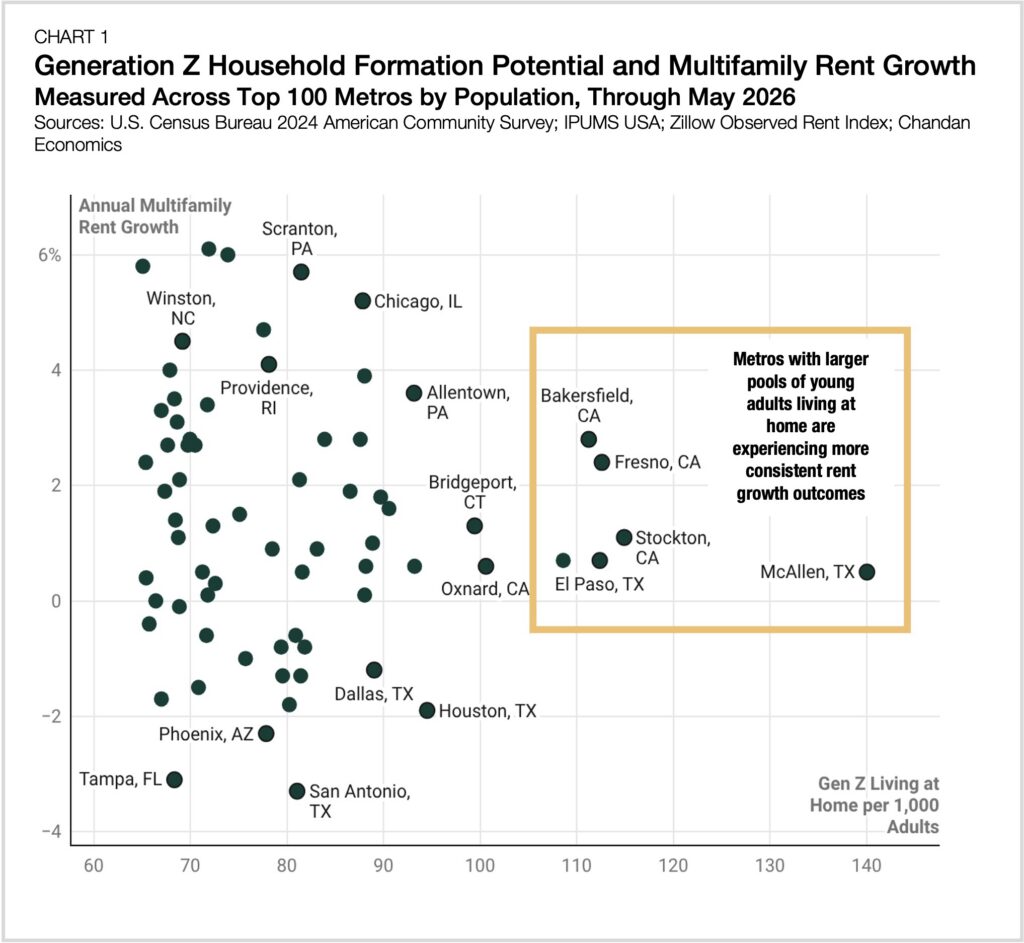
Stockton, CA, Fresno, CA, and Bakersfield, CA, rank among the national leaders for the concentration of Gen Z adults living at home, based on Chandan Economics and Arbor Realty Trust’s analysis of 2024 Census data.
-
For multifamily investors, these markets demonstrate long-term demand support rather than rapid near-term growth.
Generation Z is positioned to become a meaningful source of rental demand in three mid-sized, inland California multifamily markets that often don’t make top markets lists.
Arbor Realty Trust and Chandan Economics ranked the 100 largest metropolitan areas identifiable in the U.S. Census Bureau’s 2024 American Community Survey by the number of adults ages 18 to 27 living at home per 1,000 adults. Stockton, Fresno, and Bakersfield each ranked among the country’s leading markets for Gen Z household formation potential, pointing to a sizable pool of locally generated rental demand that has yet to materialize.
Why Gen Z Household Formation Matters for Multifamily Demand
Gen Z adults who live with family represent a potential new pool of renters. Although not all young adults will rent immediately, more members of Gen Z are likely to form independent households as they age, reinforcing rental demand.
Living at home reflects a mix of conditions rather than a single cause. Census data note that elevated rates of young adults living at home are shaped by housing affordability, local age structures, family-based living arrangements, and the ability of younger residents to remain rooted in their communities.
As incomes rise and personal circumstances change, a portion of this cohort may move into independent renter households. Markets with the largest concentrations of Gen Z adults living at home could therefore have more locally generated rental demand in the future.
Why Inland California Markets Rank Highly
Three of the top five metros in the analysis are located in inland California.
Stockton ranks second nationally at 114.9 Gen Z adults living at home per 1,000 adults. Fresno ranks third at 112.6, while Bakersfield ranks fifth at 111.2.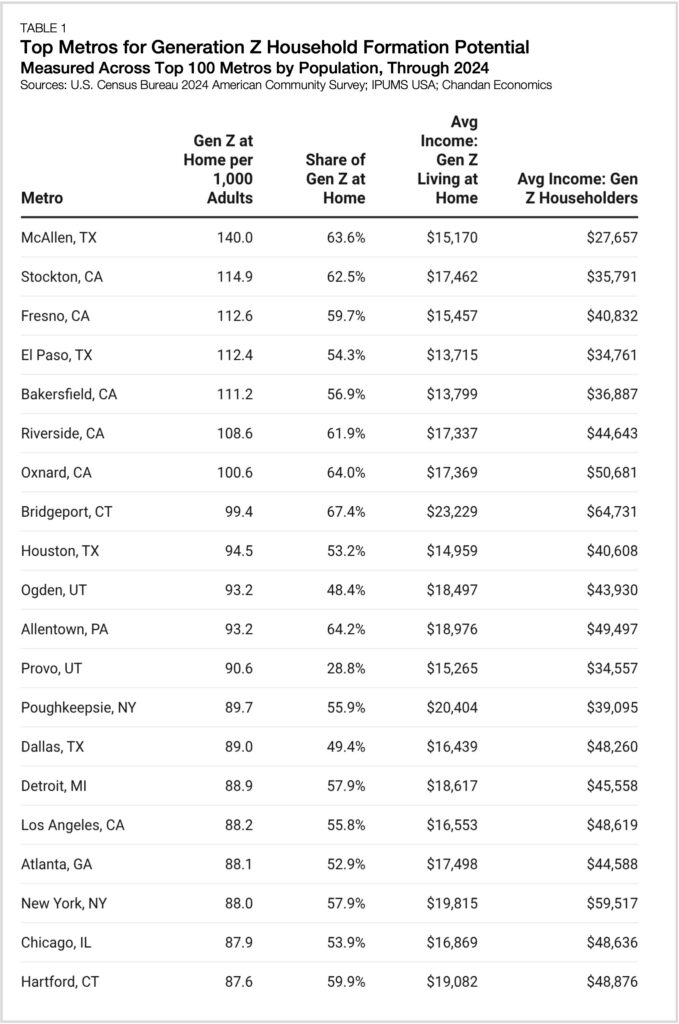
Each of the three California metros has more than 110 young adults living at home per 1,000 adults, placing them near the top of the country’s 100 largest metros. In these markets, the forces driving this trend include affordability pressures, local age structures, and family-based living arrangements, which reinforce one another.
Inland California is generally more affordable than Los Angeles, San Francisco, San Jose, and San Diego, even though housing costs remain challenging for many younger residents.
A relatively lower cost of living may make it easier for Gen Z adults to remain in the area while they build income and savings, keeping future household formation within the local market. The same cost difference may also attract households seeking alternatives to higher-priced coastal markets.
These metros also have established employment bases tied to logistics, agriculture, healthcare, education, public-sector work, and regional services.
Economic diversity like this can help anchor renter demand even without high in-migration. The result is a demand profile built more heavily on locally generated households than on population inflows.
Market Spotlights: Stockton, Fresno, and Bakersfield
Inland California metros may not fit the traditional high-growth narrative, but they offer a different kind of strength.
Stockton
Stockton anchors the northern San Joaquin Valley and is positioned between the Bay Area and Sacramento.
Its location connects it to broader Northern California employment and logistics networks while offering a more attainable cost structure than many coastal communities.
Stockton’s high concentration of Gen Z adults living at home points to a large base of young adults who may form renter households locally when their income and personal circumstances change.
For investors, Stockton’s proximity to larger Northern California employment centers strengthens and solidifies local rental demand.
Fresno
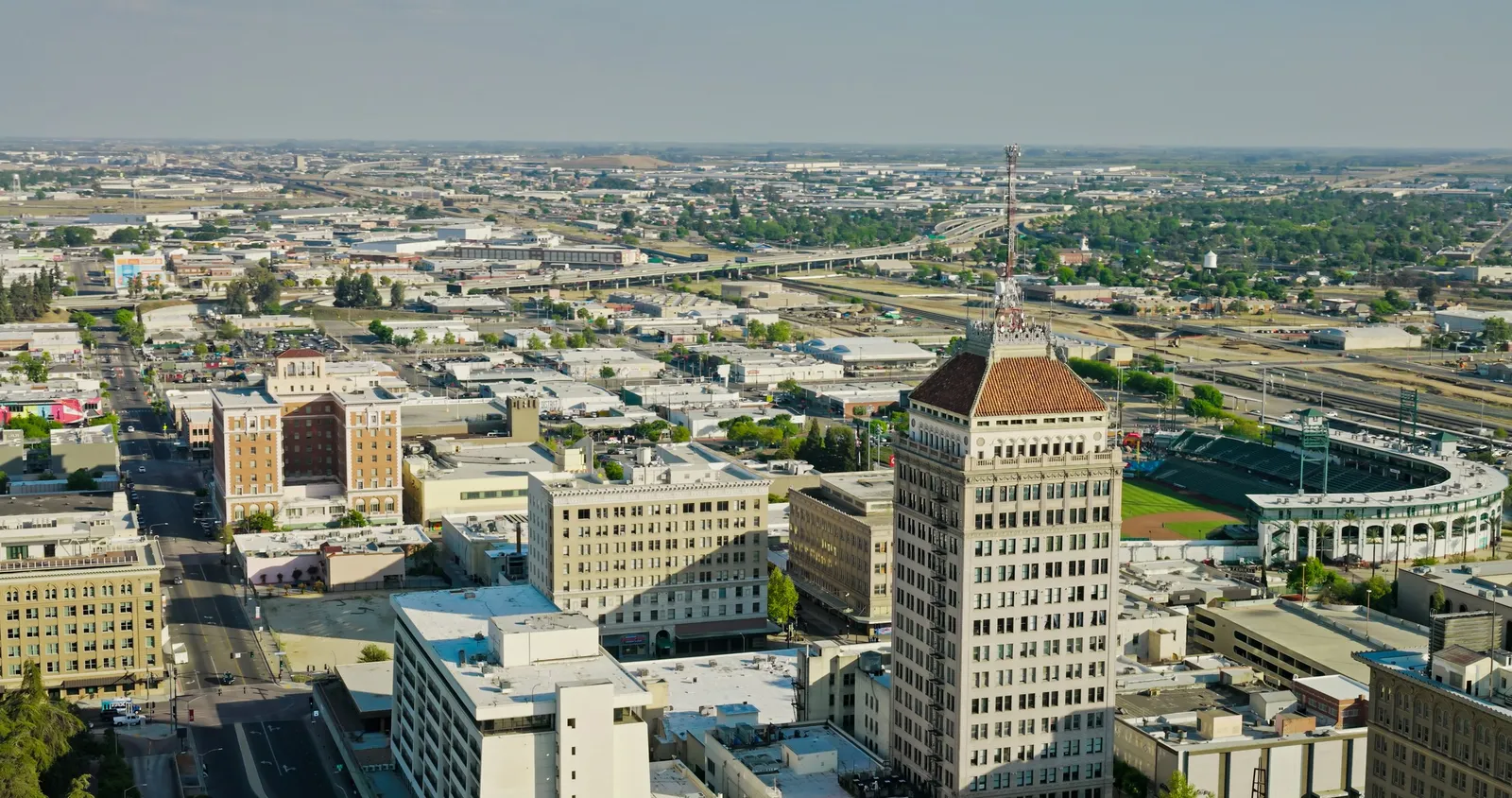
Fresno is the largest metropolitan area in California’s Central Valley and functions as a regional anchor.
Its economy draws on agriculture, healthcare, higher education, government, and regional services, creating a demand base rooted in local institutions.
Fresno’s third-place ranking reflects both the metro’s sizable young-adult population and the affordability pressures that keep many younger residents at home, both of which support the metro’s Gen Z household formation potential.
Bakersfield
Bakersfield sits at the southern end of the Central Valley and remains one of California’s more affordable large metropolitan areas.
Energy, agriculture, logistics, healthcare, and public-sector employment support local economic growth.
Bakersfield, which ranked fifth overall, pairs a sizable young-adult population with relative affordability, creating conditions that may support future renter household formation. For investors, Bakersfield’s appeal may lie more in durable household formation than in near-term rent acceleration.
The Takeaway
Stockton, Fresno, and Bakersfield may not fit the traditional profile of high-growth multifamily markets, but their demographic fundamentals point to a different source of strength.
Each market has a large concentration of Gen Z adults living at home, a relatively attainable cost structure, and an established local employment base.
As more young adults move into independent households, these metros could benefit from a steady source of locally generated rental demand to augment fluctuating intermarket migration patterns.
For continued multifamily insights, visit Arbor.com and Traded.co.