

Jan 15, 2026
Indian Creek Residences and Private Yacht Club Sells Out, Jonathan Landau Expands Bay Harbor Islands Vision With One Kane
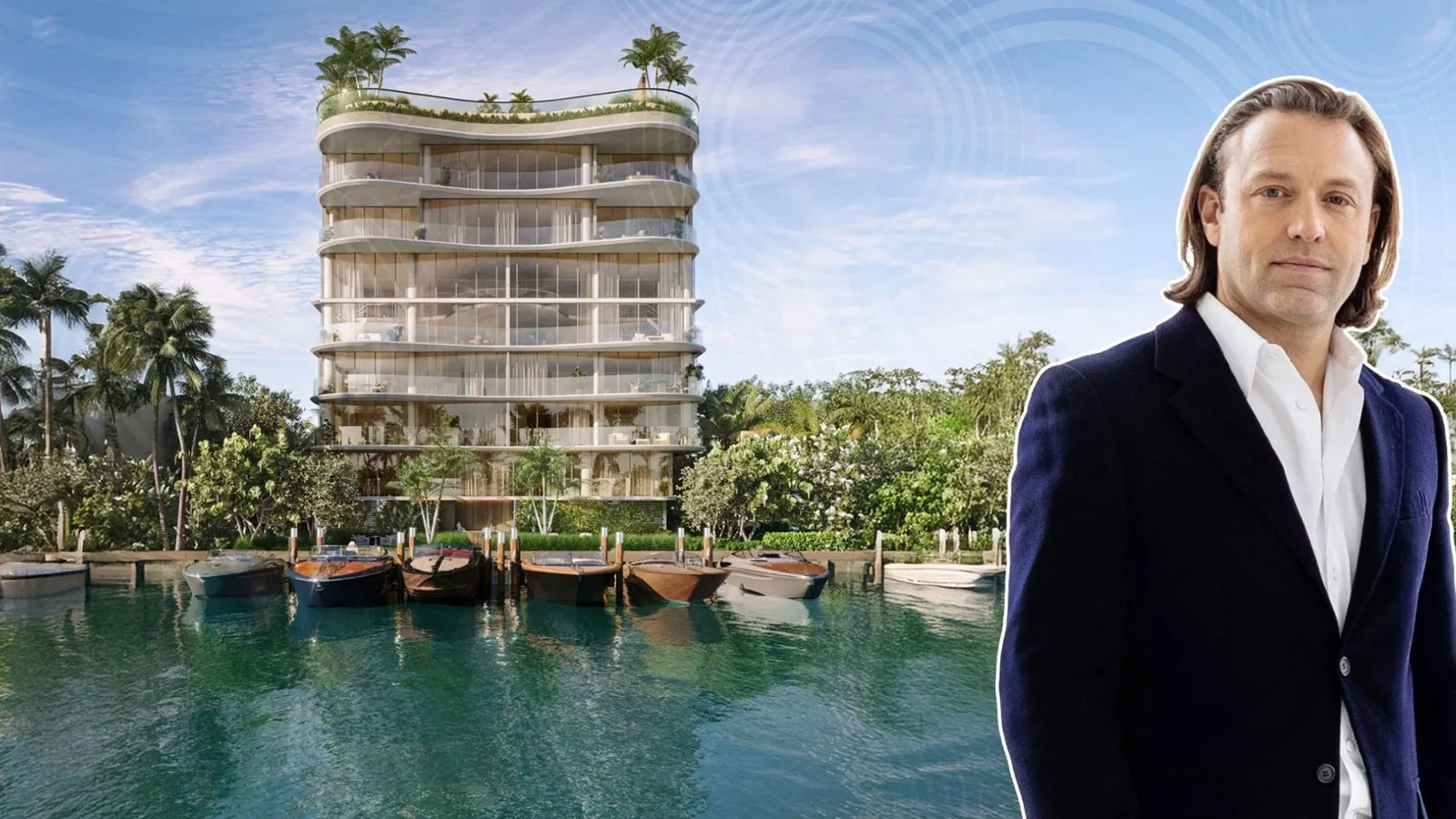
Indian Creek Residences and Private Yacht Club have officially sold out all nine waterfront residences before completion, marking a defining moment for Bay Harbor Islands and reinforcing the strength of boutique, design-…
Traded Media

Traded Editorial
In a wide-ranging conversation with Jonathan Landau, founder of Landau Properties, Traded explored what drove the project’s rapid sellout, why intentional low-density design was central to its success, and how Bay Harbor Islands is emerging as one of Miami’s most compelling luxury enclaves.
The discussion also turned toward One Kane, Landau’s subsequent development in the area, a Class A office project designed to serve the growing concentration of ultra-high-net-worth residents seeking convenience-driven workspace close to home.

A sellout rooted in scarcity, location, and livable luxury
When asked what he attributes to the success of Indian Creek Residences and Private Yacht Club, Landau emphasized discipline and a focus on delivering a product that did not exist elsewhere on the island.
Rather than chasing density, the development team leaned into what made the site exceptional. Positioned directly across from the Indian Creek golf course, the property offers uninterrupted water views and a sense of calm that Landau described as “idyllic,” setting it apart from traditional canal-front or inward-facing waterfront properties.

Beyond location, Landau said the defining differentiator was scale and layout. While many new developments in the area focus on one-, two-, or three-bedroom units, Indian Creek Residences was designed to feel like a true luxury home in the sky.
The residences feature expansive living areas, approximately 75 feet of waterfrontage in the primary living spaces, multiple living rooms, proper family rooms, and primary suites. The goal, Landau explained, was to avoid the common pitfall of selling an oversized condo that still feels like an apartment.
“It needed to feel like a luxury home, not just an apartment that’s sold as a condo,” he said.
Why boutique mattered
The decision to build just nine residences was deliberate. Landau explained that the site’s most valuable attribute, its expansive waterfront exposure, would have been diluted in a higher-density configuration.
“If you take something special and split it up into a high-density project, you get a little bit of something special, but not the full experience,” Landau said.
By keeping the building intentionally small, every buyer received the full benefit of the location, views, and layout. With only nine residences and typically just a handful of owners in the building at any given time, the project offers a near-private-home experience while still delivering full-service amenities.
Landau added that he personally prefers developing boutique properties because they allow developers to design from the perspective of how someone actually wants to live, rather than defaulting to formulaic, high-density programming.
Design, interiors, and a critical sales pivot
Landau credited the project’s interior design to a collaborative process that brought together architect Kobi Karp and interior designer Linda Zarifi. Zarifi’s work, in particular, resonated strongly with buyers to the point where Landau says he receives frequent calls asking to be connected with her.
Midway through the project, the development also changed sales representation, a move that can be challenging under any circumstances. Landau said bringing in Vanessa Frank and her team proved pivotal, noting that their execution was instrumental in achieving a full sellout.
Achieving top-tier pricing through conviction
Indian Creek Residences achieved average pricing exceeding $1,900 per square foot, with the final residence selling for over $2,300 per square foot, placing the project among South Florida’s highest-performing boutique developments.
Landau attributed this not to aggressive discounting or late-stage momentum pricing, but to holding firm from the outset.
Rather than starting low and raising prices as demand materialized, the team set pricing based on the belief that the product was truly rare.
“When you go into Chanel or Hermès, you don’t negotiate the price. The price is the price,” Landau said. “When we build a specialty product, we are that Hermès or Chanel product in the condo world.”
That confidence, paired with genuine scarcity, allowed the project to command pricing well above surrounding market averages.
A true private yacht club experience

The “Private Yacht Club” designation is not branding theater. A central pillar of the project is its private marina with six yacht slips and a service model designed to remove the friction of boat ownership.
Recognizing that many buyers either own boats or plan to, the team built a concierge-style marina experience. A dedicated yacht master is on staff roughly 40 to 50 hours per week, assisting with docking, departures, cleaning coordination, stocking beverages, fueling, and ongoing maintenance arrangements.
Landau described the philosophy: maximize the upside of owning a boat while eliminating the hassle.
Additional amenities extend that service-first approach to the rest of the property, including waterfront wellness features like a cold plunge and jacuzzi, supported by staff who provide towels and refreshments. The goal was not scale, but activation of the waterfront lifestyle in a refined, intimate way.
Why Bay Harbor Islands is different

Landau views Bay Harbor Islands as fundamentally distinct from nearby luxury markets like Miami Beach, Bal Harbour, and Sunny Isles.
Unlike oceanfront locations that require massive capital investment and large-scale buildings, Bay Harbor Islands offers waterfront living without the beachfront scale. This allows for more manageable, design-driven developments that integrate boating into daily life.
Equally important is proximity. Residents can access Bal Harbour, Surfside, Sunny Isles, and Miami Beach within minutes, often at a significantly lower cost per square foot than direct oceanfront properties.
Landau also highlighted Kane Concourse as a key driver of future value, predicting meaningful redevelopment over the next five to ten years. As that corridor evolves, he expects Bay Harbor Islands to feel increasingly integrated with Bal Harbour’s luxury retail and lifestyle ecosystem.
Buyer profile and demand dynamics
The buyer mix at Indian Creek Residences reflects broader domestic migration trends. Purchasers came from New York, California, Texas, and Miami, with limited international participation and minimal activity from South America or Asia.
Landau acknowledged that lifestyle preferences, tax considerations, and political climates in other states all influence relocation decisions. While he does not expect an unlimited influx, he believes Miami will continue to attract successful individuals seeking a more hospitable environment.
One Kane: a convenience-driven office thesis
Following the sellout at Indian Creek, Landau turned his attention to One Kane, a Class A office development designed to fill a glaring gap in Bay Harbor Islands.
The idea was sparked by repeated conversations with residents who lacked nearby professional workspace. Many were using residential amenity rooms as informal offices simply because commuting to Brickell or other office hubs could consume hours each day.
“In some cases, you’re committing an hour and a half or two hours a day just to get to an office,” Landau said.
One Kane is designed as a boutique, high-end office environment catering to family offices, funds, and executives who want an exclusive place to work and host clients close to where they live. The project continues the same waterfront and convenience-driven philosophy that defined Indian Creek Residences.
Construction began in early 2025, with delivery expected in late 2026 or early 2027. The most complex phase involved two levels of below-grade parking on the water, requiring extensive soil improvement. That work is now complete, with the building expected to rise above grade in early 2026, and tenant buildouts to begin approximately a year later.
A family-run philosophy with selective execution
Landau Properties operates as a family-run firm built on collaboration and specialization. Each member of the team brings distinct strengths, from marketing to fundraising to execution, with design partners engaged early to align vision with feasibility.
Rather than pursuing volume, the firm focuses on highly selective projects where differentiated execution is possible.
“We’re not looking just to keep a pipeline full,” Landau said. “We’re looking to build beautiful properties with no compromise on design or experience.”
Looking ahead to 2026 and beyond
Landau remains optimistic about Miami’s luxury real estate market, while acknowledging that cycles are inevitable. He noted that while middle-market demand has softened since the post-COVID surge, truly exceptional luxury projects continue to perform.
His primary caution for developers is scale. Larger projects require sustained velocity and are more exposed to market fluctuations. Boutique developments, by contrast, offer greater flexibility and resilience during slower periods.
The strategy that drove Indian Creek Residences and now informs One Kane reflects that belief: stay selective, stay differentiated, and build for how people actually want to live and work.