

Aug 27, 2026
Google Billionaire Larry Page Builds Out Koop Family Office In Coconut Grove
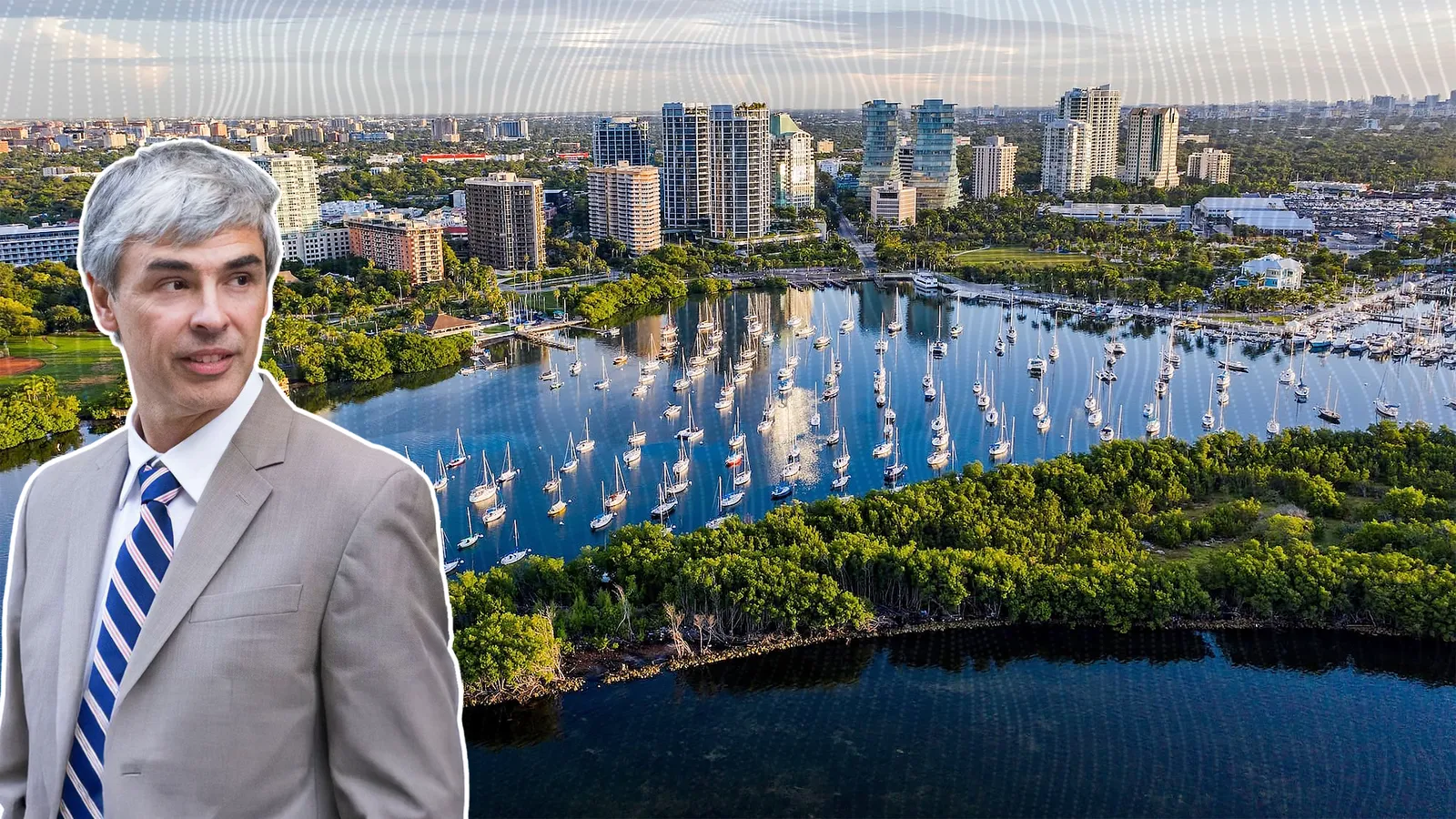

Traded Editorial
- Koop, Larry Page's family office, is building out operations in Coconut Grove.
- Page paid $101.5M and $71.9M for two waterfront estates since December.
- Koop reincorporated from California to Delaware in late December.
- Miami-Dade lost 113,700 residents to migration in 2025 even as billionaires moved in.
Koop Follows a $173 Million Buying Spree Into Coconut Grove
Larry Page doesn't do press releases. His family office, Koop, has no public website, and staff reportedly don't identify their employer. So when Bloomberg reported this week that Koop is building out operations in Coconut Grove, it counted as loud news from one of the quietest operations in finance.
The expansion follows two trophy purchases. Page paid $101.5 million for a 4.5-acre waterfront compound, Banyan Ridge, and $71.9 million for a 10,400-square-foot home nearby on Munroe Drive, a deal that pencils out to roughly $6,900 per square foot. Together the two properties cost $173.4 million and gave Page a real footprint on the water in one of Miami's oldest money neighborhoods. A third, smaller Coconut Grove property, reported at close to $15 million, brings his total known outlay in the neighborhood to around $188 million.
Koop itself was converted out of California and incorporated in Delaware in December, according to filings reviewed by Business Insider, the same month Page closed on Banyan Ridge. Founded in 2012 to manage Page's Alphabet fortune, roughly $295 billion by recent estimates, Koop has historically invested directly in early-stage technology through co-investments and special-purpose vehicles rather than committing to outside funds, with a stated focus on mobility, space, energy transition and proptech. Its move to Miami puts an investment vehicle with that kind of reach in the same zip code as its principal's new house.
A December Deadline Explains the Timing
The corporate move wasn't just paperwork housekeeping. California's proposed Billionaire Tax Act would impose a one-time 5% levy on the net worth of residents who held at least $1 billion in assets as of January 1, 2026. For Page, that would work out to roughly $14 billion. Converting Koop's structure out of California in December, weeks ahead of that deadline, lines up neatly with the rest of the state's billionaire exodus.
Page isn't running that play alone. Fellow Google co-founder Sergey Brin, Amazon founder Jeff Bezos, Citadel's Ken Griffin and Oracle's Larry Ellison have all bought Florida property or shifted operations south in recent years, and the timing tracks the same tax pressure.
The Comps Are Getting Bigger
Page's buying spree lands in a Miami-Dade market that just posted its best year for ultra-luxury sales: 361 homes traded for $10 million or more in 2025, a record. The single biggest transaction of the year belongs to Mark Zuckerberg, who closed on a $170 million mansion on Indian Creek Island, itself a Miami-Dade price record. Page's $101.5 million Banyan Ridge deal doesn't touch that number, but it's close enough to put two of the most recognizable names in tech atop the same submarket's sales sheet within months of each other.
What Miami Isn't Getting From the Boom
Not everyone reads the billionaire migration as a straightforward win for the region. A Fortune analysis pointed out that when a buyer like Page pays nine figures for a house, most of that money goes straight to the previous owner, not the local economy. Florida charges no state income tax and no capital-gains tax, so what local governments actually collect from these deals is property tax, sales tax and whatever spending trickles down from the new owner's presence.
Meanwhile, Miami-Dade County lost 113,700 residents to net internal migration in 2025, and housing prices are up 79% since the pandemic. Miami's cost of living overtook New York's for the first time in July. The same forces pulling in nine-figure home purchases are pushing out longtime residents, and that tension is becoming the defining story of Miami's billionaire era.
What Comes Next
Koop's public footprint will likely stay minimal by design, the family office has spent thirteen years operating without so much as a website. But a $188 million residential base and a Delaware-registered investment vehicle sitting in the same neighborhood tend not to stay purely residential for long. Family offices that build out local operations typically start deploying capital into the market around them, whether that's direct real estate, private companies or the professional services that cluster around wealth of this size. Coconut Grove, already home to a growing list of family offices, is the neighborhood positioned to find out first.