

Mar 19, 2026
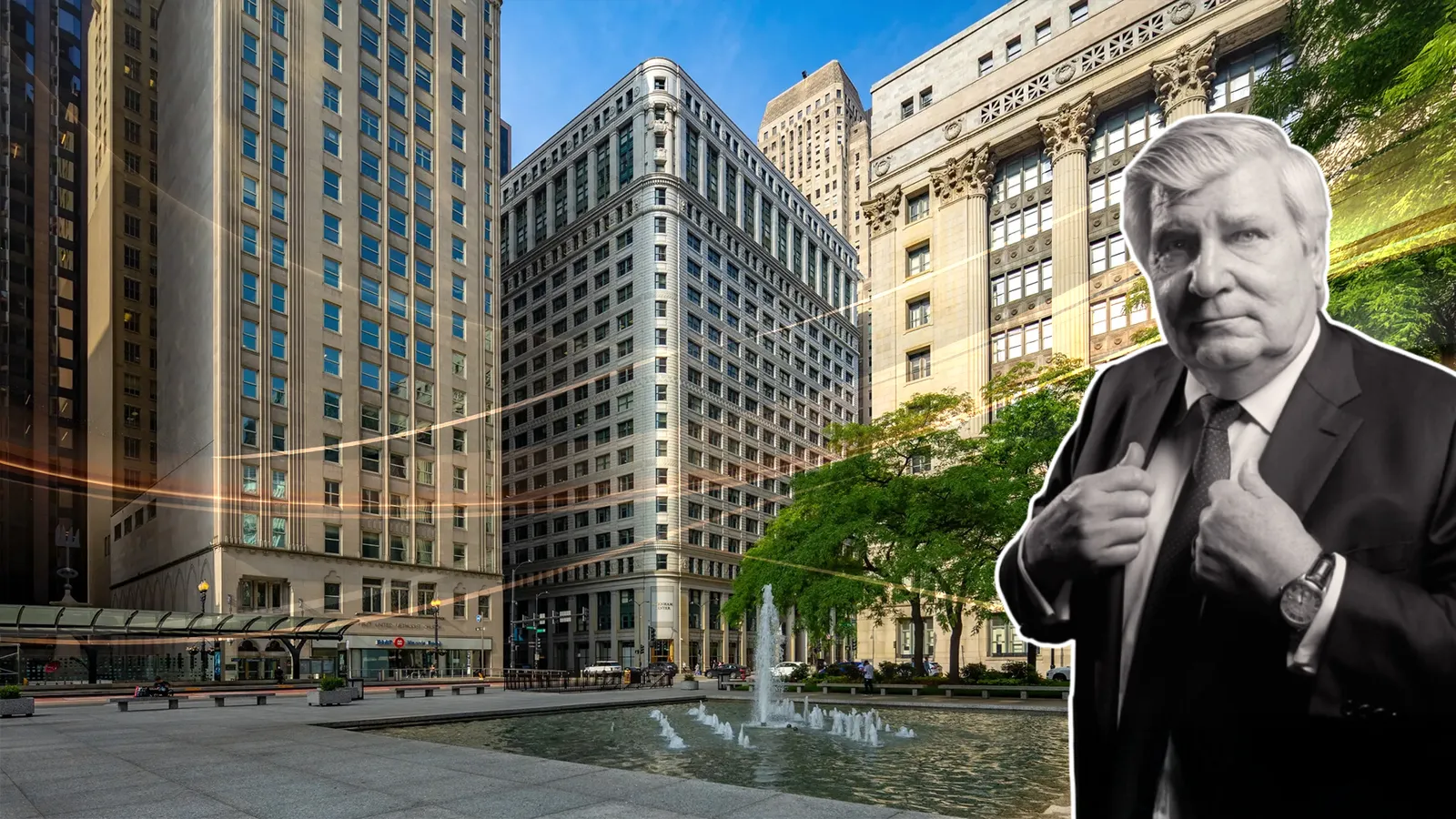
Gabal, Reschke Plan Hotel Conversion of Burnham Center in Chicago Loop
Traded Media

Traded Editorial
- Developers propose converting Burnham Center into a 250–300 room hotel
- Office tower currently sits at 23% occupancy, driving adaptive reuse
- Project led by Igor Gabal and Mike Reschke
What this conversion means for the Chicago office assets
A new adaptive reuse proposal is emerging in Chicago’s Loop, where developers are looking to convert the historic Burnham Center into a hotel. The 12-story building, originally completed in 1913, is currently underutilized, with office occupancy sitting at just 23 percent. This reflects a broader trend across downtown Chicago, where older office buildings are being repositioned as hospitality or residential assets due to shifting demand for workspace.
What the building’s design means for redevelopment
The Burnham Center’s Beaux Arts design and central atrium create a strong foundation for conversion. Originally designed for natural ventilation and light, the atrium will now support plans for a column-free ballroom, adding value to the hotel program. With roughly 585,000 square feet, the building offers enough scale to accommodate a full-service hospitality concept while preserving its historic architecture.
What the developers’ involvement means for execution
The project is being led by Igor Gabal and Mike Reschke, both active in downtown Chicago redevelopment. Their past involvement in major projects, including work around the Thompson Center, signals experience with large-scale repositioning in complex urban environments. The pair acquired the property for $5 million, positioning the deal as a low basis investment with upside tied to conversion.
What this signals for LaSalle Street repositioning
The proposal aligns with broader efforts to revitalize Chicago’s central business district through the LaSalle Street Reimagined initiative, which encourages converting obsolete office space into new uses. With multiple nearby projects already in progress, Burnham Center adds momentum to the shift toward mixed-use and hospitality-driven redevelopment in the Loop.
What this means for investors and developers
This deal highlights how underperforming office assets can be repositioned into higher demand uses. In markets like Chicago, where vacancy remains elevated, conversion strategies are becoming a key path to unlock value and stabilize assets. For investors, the opportunity lies in identifying well-located buildings with strong architectural bones and executing conversions at the right cost basis.