

Mar 2, 2026
Dayssi Olarte de Kanavos on the Business of Luxury Development
Traded Media

Traded Editorial
When Flag Luxury Group co-founder Dayssi Olarte de Kanavos talks about development, she doesn’t start with renderings; she starts with service. Olarte de Kanavos has built her career at the intersection of hospitality operations and real estate finance, an approach she says changes how risk is evaluated, how amenities are justified, and how “legacy” is protected and extended over generations.
In a recent conversation with Traded, Olarte de Kanavos unpacked Flag’s hospitality-first lens on underwriting, the scarcity thesis behind The Ritz-Carlton Residences, South Beach, the firm’s conservative capital strategy through volatile markets, and why she believes the next decade of luxury hospitality will be shaped by a single idea: disconnection.
Hospitality-first underwriting: where the pro forma starts with the guest
Traditional development underwriting often begins with the “hard” variables (costs, debt, exit comps). Olarte de Kanavos argues hospitality forces a different sequence: design and programming are not aesthetic decisions; they’re operational decisions.
In practice, she described how a single element, such as an activated lobby bar, has to be evaluated as a full economic system: buildout cost, ongoing labor, and the revenue that activation is expected to produce. Hospitality training, she said, makes it harder to “miss” the operational consequences embedded inside a beautiful plan.
That mindset is baked into her day-to-day role at Flag Luxury, where she is involved across site selection, finance and acquisitions, branding and management contracts, design/programming, zoning, construction, and asset management.
“Legacy” as something you preserve—and upgrade for the next generation
Flag is often described as a legacy-driven developer, and Olarte de Kanavos doesn’t treat that as a marketing line. To her, “legacy” is fundamentally generational: preserving what came before while making it stronger for what comes next.
She pointed to Flag’s Chairman and CEO, Paul Kanavos, whose family history in hotels predates Flag Luxury’s founding. Kanavos formed Flag Luxury in 1997 and built the firm’s brand-hospitality partnership strategy early, most notably through a strategic relationship with
The Ritz-Carlton dating back to the late 1990s.
And internally, the “legacy” concept is literal. Olarte de Kanavos shared that two of their children are now in the business (after first working outside the family enterprise), bringing what she framed as an intentional, long-term continuity plan.
The Ritz-Carlton Residences, South Beach: scarcity as pricing power
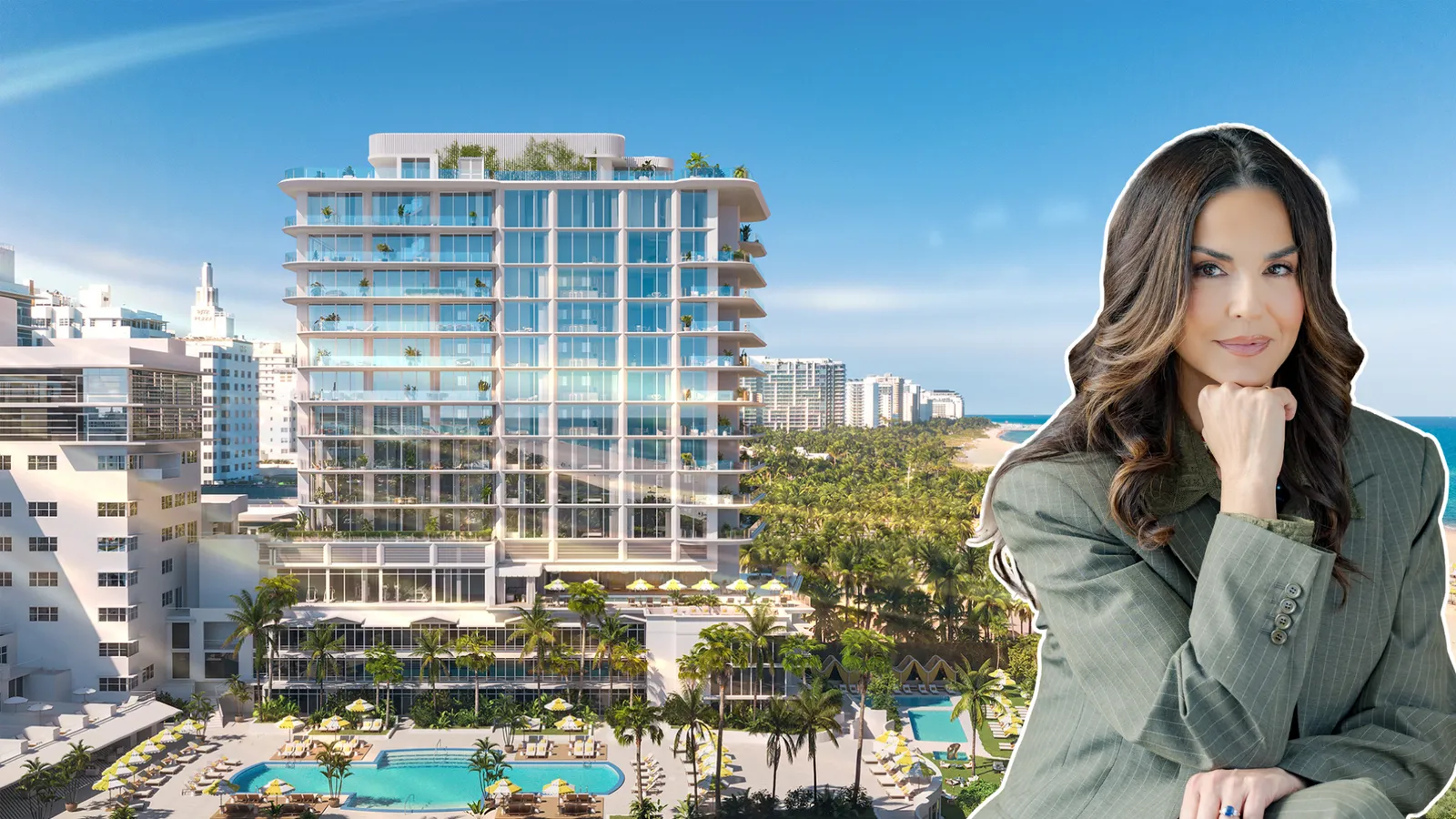
Flag’s newest South Beach vision, The Ritz-Carlton Residences, South Beach, is positioned less like a tower and more like a limited collection: a small-format, ultra-luxury product designed to feel private, controlled, and residential-first. The project is widely marketed as a collection of 30 oceanfront residences.
Olarte de Kanavos explained the underwriting logic in human terms: in a building small enough to feel like a New York co-op, residents can know their neighbors, step off the elevator into private landings, and live with a level of privacy that can be rare in a high-traffic South Beach setting.
In her view, that scarcity is not incidental; it’s the value. If you scale the building three or four times larger, she implied, you may gain volume, but you lose the exclusivity that supports the price.
Brand affiliation as a “global membership” and a trust mechanism
One of the most tangible “luxury premiums” in branded residences is the certainty of what the buyer is getting.
Olarte de Kanavos described The Ritz-Carlton brand as a kind of “stamp” that signals minimum standards (service, design expectations, and amenity quality), reducing the risk of surprise for buyers. She also framed the owner experience as inherently different: elevated recognition, preferential treatment, and a consistent service culture across locations.
In other words, a brand isn’t just signage. In the luxury buyer’s mind, a brand can function like a global membership, where the service experience travels with you.
Capital discipline: why Flag keeps debt low on purpose
While rates fluctuate, Olarte de Kanavos emphasized that Flag’s defining discipline is not timing, it’s structure. She described the firm’s preference for maintaining a lower debt ratio than the maximum available, and prioritizing liquidity so that volatility doesn’t force compromised decisions.
That conservative posture, she suggested, creates resilience: the ability to keep operations steady, fund capex when needed, and avoid getting “too thin” when markets turn.
Orlando’s thesis: luxury near demand that keeps compounding
In Flag’s view, what’s “scarce” in Orlando isn’t tourism demand; it’s a true luxury product in a district dominated by limited-service and convention-adjacent hotels. Flag bets that introducing a luxury brand in the right node of demand can stand out in a saturated field, especially with a brand that isn’t already overrepresented in that market.
Publicly announced plans for InterContinental Orlando describe a hotel expected to open in 2028, featuring approximately 106,000 square feet of meeting and event space and substantial
wellness programming.
Women’s Power Breakfast: building a business conference “for the everyday woman.”
Olarte de Kanavos also co-founded the Women’s Power Breakfast alongside her daughter, Sophia Kanavos, creating a platform designed to function as a true business conference, not an awards luncheon or a once-a-year celebration.
She traced the idea back to what she kept seeing at major industry gatherings: rooms and panels that were still overwhelmingly male, while many women with curiosity, capital, or entrepreneurial ambition lacked an accessible entry point. At the same time, she reflected that
in her generation, women often didn’t talk openly enough about business with one another.
Conversations centered on family and children, not finances, dealmaking, or the realities of building companies.
The Women’s Power Breakfast was built to shift that culture: bring women across industries and stages into one room, normalize conversations about money and strategy, and create space for
collaboration because, as she put it, “nobody is coming to save us.”
The next decade of luxury hospitality: “disconnection” becomes the amenity
Looking forward, Olarte de Kanavos sees the biggest opportunity in luxury hospitality as experiences that help people disconnect. Disconnection is not through strict rules, but through environments compelling enough that guests want to put the phone away.
She described a future where the most differentiated destinations blend wellness and calm alongside adventure and nature, all designed around presence and reset, especially for younger travelers who increasingly crave relief from constant digital life.
Advice to women entering development: don’t shrink your competitive circle
When asked for one piece of advice for women building careers in real estate development, Olarte de Kanavos offered a counterintuitive framing: don’t lead with labels.
Her point wasn’t to dismiss identity or women’s networks, but to avoid mentally “boxing yourself in.” The core mindset, she said, should be: you’re a business person, and you should measure yourself against the widest possible competitive set to drive excellence.