

May 11, 2026
Coconut Grove Playhouse Debate Highlights Miami’s Preservation Challenges

Traded Editorial
- Miami-Dade’s long-running Coconut Grove Playhouse revival faces new resistance
- West Grove residents are pushing back against commercial and mixed-use components
- Debate reflects broader tensions between preservation, growth, and neighborhood identity
What The Latest Opposition Means For The Project
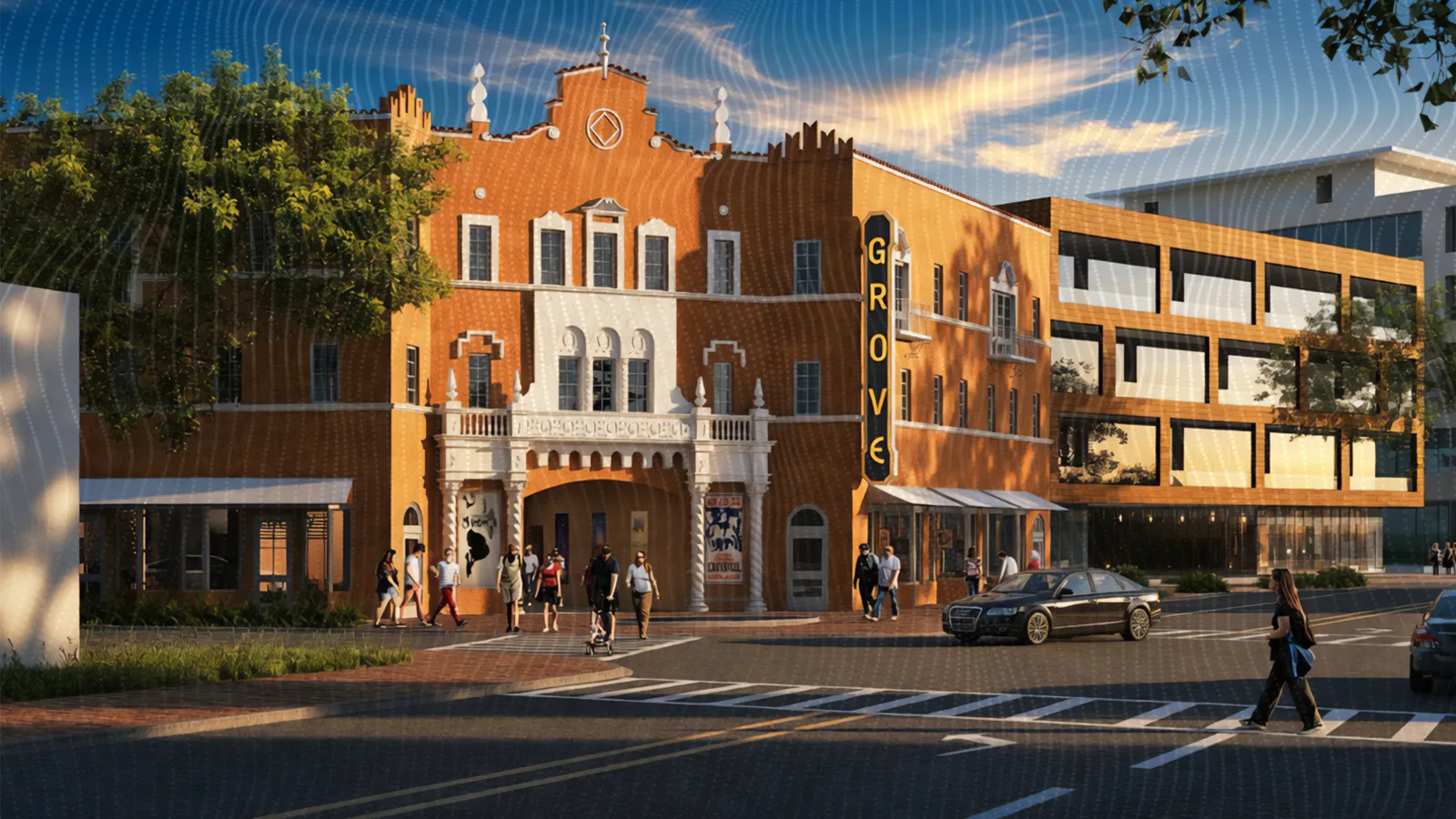
Miami-Dade’s 13-year effort to revive the historic Coconut Grove Playhouse has encountered another major setback after nearby residents raised concerns over the project’s commercial elements. Neighbors in West Grove argued that added retail activity, traffic, parking demand, and mixed-use programming could negatively impact the surrounding residential streets and neighborhood character. City officials appeared receptive to those concerns, creating additional uncertainty around the future scope and timeline of the redevelopment. The situation highlights how even widely supported historic preservation projects can become highly contentious once redevelopment details begin affecting surrounding communities.
What The Debate Reveals About Modern Preservation
The conflict surrounding the Coconut Grove Playhouse reflects a broader shift in how cities approach historic preservation projects. Preservation today is no longer just about restoring architecture or protecting cultural landmarks. It increasingly involves difficult conversations about density, commercialization, infrastructure strain, and long-term neighborhood change.
Communities now weigh questions like:
- How much new activity should a historic site generate?
- Who benefits economically from redevelopment?
- And how much growth should surrounding neighborhoods absorb in exchange for preserving cultural assets?
Those debates are becoming increasingly common in fast-growing cities like Miami.
What Financial Realities Developers And Cities Face
One of the biggest challenges with historic restoration projects is financial viability. Restoring aging cultural landmarks is extremely expensive, and many projects rely on revenue-generating components like retail, restaurants, event spaces, parking structures, or mixed-use development to offset operating and restoration costs. Without those commercial elements, many historic properties struggle to sustain themselves long-term. At the same time, nearby residents often resist the very components that make these projects financially possible, especially when they fear increased congestion, tourism activity, or changes to neighborhood identity.
What This Means For Miami Development Trends
Miami continues facing a delicate balancing act between growth and preservation. As land values rise and development intensifies, historic sites are increasingly becoming flashpoints where cultural preservation, neighborhood activism, and economic realities collide. The Coconut Grove Playhouse debate also reflects a broader trend where communities are demanding a greater voice in shaping how redevelopment impacts their neighborhoods rather than simply accepting top-down planning decisions.
What Happens Next For The Playhouse
The latest pushback could force revisions to the project’s commercial programming, operational plans, or overall scale. However, reducing revenue-generating uses may also create new financial challenges for the long-term sustainability of the restored venue itself. That tension between preservation goals and economic practicality is likely to remain at the center of the conversation moving forward. The Coconut Grove Playhouse has become more than just a restoration project. It now represents a broader debate about how Miami defines growth, culture, and community identity in one of the country’s fastest-changing cities.