

Mar 28, 2024
Alirio Torrealba Secures $148M Construction Loan For Monumental Metro Center Development

Traded Editorial
What drew you to the deal and Hialeah market?
First, the city is pro-development, it's easier when you're dealing with a city that will give you the support and the legs to develop and that actually sees our vision. Secondly, our focus is on transit-oriented developments (TOD), a critical aspect given our belief that in the near future, the primary modes of transportation in Miami will be the metro or other forms of commuting. They already use the metro in Brickell, which is 15 minutes from our project in Hialeah, so that was really a big incentive for us. Another significant achievement was our ability to enhance the market's value, similar to how we successfully brought added value to Coral Gables. We are providing Hialeah a building with amenities that no other building has, such as a pool deck and working space. There are similar projects in the area that are either transit oriented or target a high-end market, while we are combining everything together. Right now, it's the tallest building in Hialeah. Mostly everything in Hialeah is garden style and a maximum height of five stories. This building spans ten stories tall, making it an important milestone for the city, as well. An important point to establish is that for the people in Hialeah who get a better job or for the younger generation who finishes school and wants to evolve, they have had to leave Hialeah because there was no such place like the one we're building right now. The most important incentive itself is a basic principle that Hiealeah is pro development and has the potential to be a community you can be involved in.
How did you secure financing for the $148M construction loan?
It was certainly a challenge, but being able to partner up with people who had the same vision made it all possible. A major challenge that every evolving developer has in the business is how you’re going to get your vertical money or loan. That's the looming question. That's where you need either a JV, if it's an industry that you don't know, or if it's somewhere where you have experience, you can probably do it by yourself. For example, in Gables we usually do residential, so we don't tend to JV. But in Hialeah, when we opened our multifamily division and this being our first building, that's how we did it, just looking for a JV and people who have the same vision.
How do you envision the Metro Center transforming urban living in Hialeah and setting a precedent for future developments in South Florida?
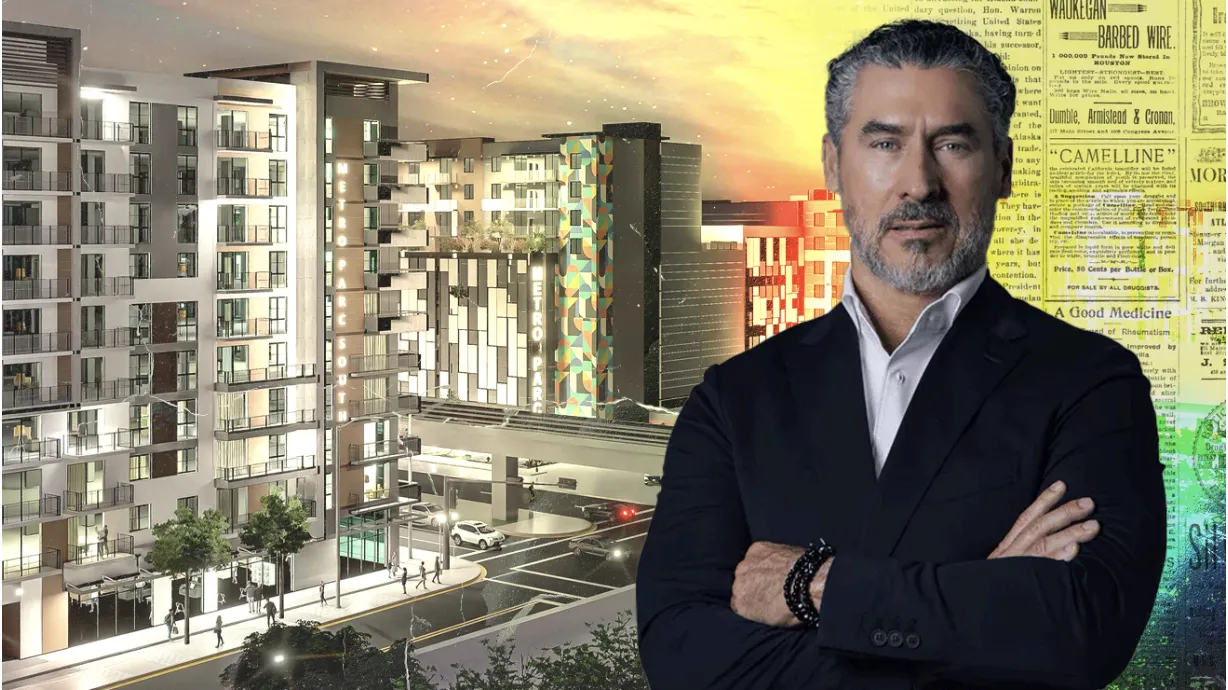
When the Metro Center is completed, it's going to be about 1,500 units. But with all the developments around the area, we're talking about almost 2,000 units in total. The area is going to completely change because the project is so massive and there are other projects in its surroundings. The lifestyle of Hialeah residents and the additional families that are going to call Hialeah home will transform, just like Wynwood and Brickell. Since we're the first project there, we're also going to serve as an example for other projects to push and motivate other developers to follow our steps, believe in the city, and support the collective vision for Hialeah. It’s very exciting, we're already seeing other big players follow in our footsteps and come into Hialeah with these kinds of developments.
Who are your key partners or collaborators on this deal?
Our JV for development is BPG, Baron Property Group from New York, our architects are with Modis, our brokers are from Colliers, and our construction company is Kast.
What have been the biggest challenges in developing the Metro Center, or some of the biggest lessons you’ve learned throughout the process?
I think that the regular daily challenges and unexpected situations that aerie with new construction. At some point, construction costs went up, so we had to figure out how to cope with those. Besides that, when we started around ten months ago, conversion costs also went up. So it was a challenge getting our first project to a GC that we could feel comfortable with. One of the most important challenges was getting other stakeholders on board to embrace our vision. The Hialeah people see it and hopefully, when everything's finished, they'll see what we see.
What are MG’s development criteria when assessing a site?
Our same principle since we started is how can we come into this new area whether it be Hialeah, Coral Gables, or another part of the city, is to add value and change the perspective of what people feel. We did it with townhomes, which was a different project we developed in the city of Coral Gables, and in Hialeah we are doing it with a ten story building, completely unique from anything else in the area. If you're in for the long run, developers are going to start to get involved with the community to see what everyone needs and develop around that, instead of only developing to maximize returns.
How did you begin your real estate career?
We started back in 2014 when we got offered our first site in the Gables. It was a site two blocks from Biltmore Way, a famous street that will lead you to the Biltmore Hotel. We were actually offered to come in as partners and the only way we were willing to invest was if we could manage the project, and so MG was created to develop that project. That was a 32 unit condo project, finished in 2017, and was the first development in that area in 7 years. It was still a sleepy market then that hadn't picked up like it is right now, and we were able to assemble four more sites around that same development where we built 5 townhomes, then 10, then another 9. That really redeveloped the entire area and created what we call “Biltmore Square” which is an entire area of our developments. We recently just closed on the last lot that was available there that we're going to do 13 townhomes on called The George.
What advice would you give a CRE pro starting in the industry?
It all comes down to exposure to learning opportunities, investors, new projects, and opportunities to grow. I’d ask myself “How can I get involved in a firm in a way that other people can’t?” Some people focus on bigger, more corporate firms and if you're an analyst, you're going to pass on your work to another person. When you go into a mid sized firm, you're going to be able to participate in meetings, see investors face to face, and become involved in other parts of the business. That's the most important thing, how can you get that exposure? Additionally, consistency and discipline are key. Most students and young people focus only on studying and learning to get good grades. But it's also important to focus on the personal aspect of the industry. You have to be hungry to learn, face new challenges, meet new people, and work hard in those areas because the technical part you can always learn day to day.
Traded Student Ambassador Program
This interview was conducted through Traded’s Ambassador Program in collaboration with Thomas DeRuvo and Hope Mullane of Rutgers University.