
Oct 29, 2025
$9.5B Mega-Terminal at JFK International Airport Gets Fresh Renderings & High-End Art Program

Traded Editorial
Key Points
-
The new 2.6 million sq ft terminal (23 gates) is part of the $19 billion overhaul of JFK and will eventually handle 23 million passengers a year.
-
The $9.5 billion project developed by the Port Authority of New York & New Jersey (PANYNJ) broke ground in Sept 2022 and opens in phases starting in 2026; full completion aimed for 2030.
-
A major public art, branding and digital experience program is being integrated into the terminal, involving top-tier artists and curators, to deliver a “sense of place” rooted in New York and Queens.
Intro
A major piece of commercial real-estate and infrastructure news: the redevelopment of JFK’s international gateway is getting a public reveal of new renderings and a high-profile art campaign. For landlords, brokers and investors this signals big scale redevelopment, major capital flows and a premium shift in terminal real-estate value and passenger experience. In this piece I’ll break down the design and construction scope, the art & branding element, and the investment/real-estate implications for the broader airport redevelopment trend.
Design & Construction Scope
-
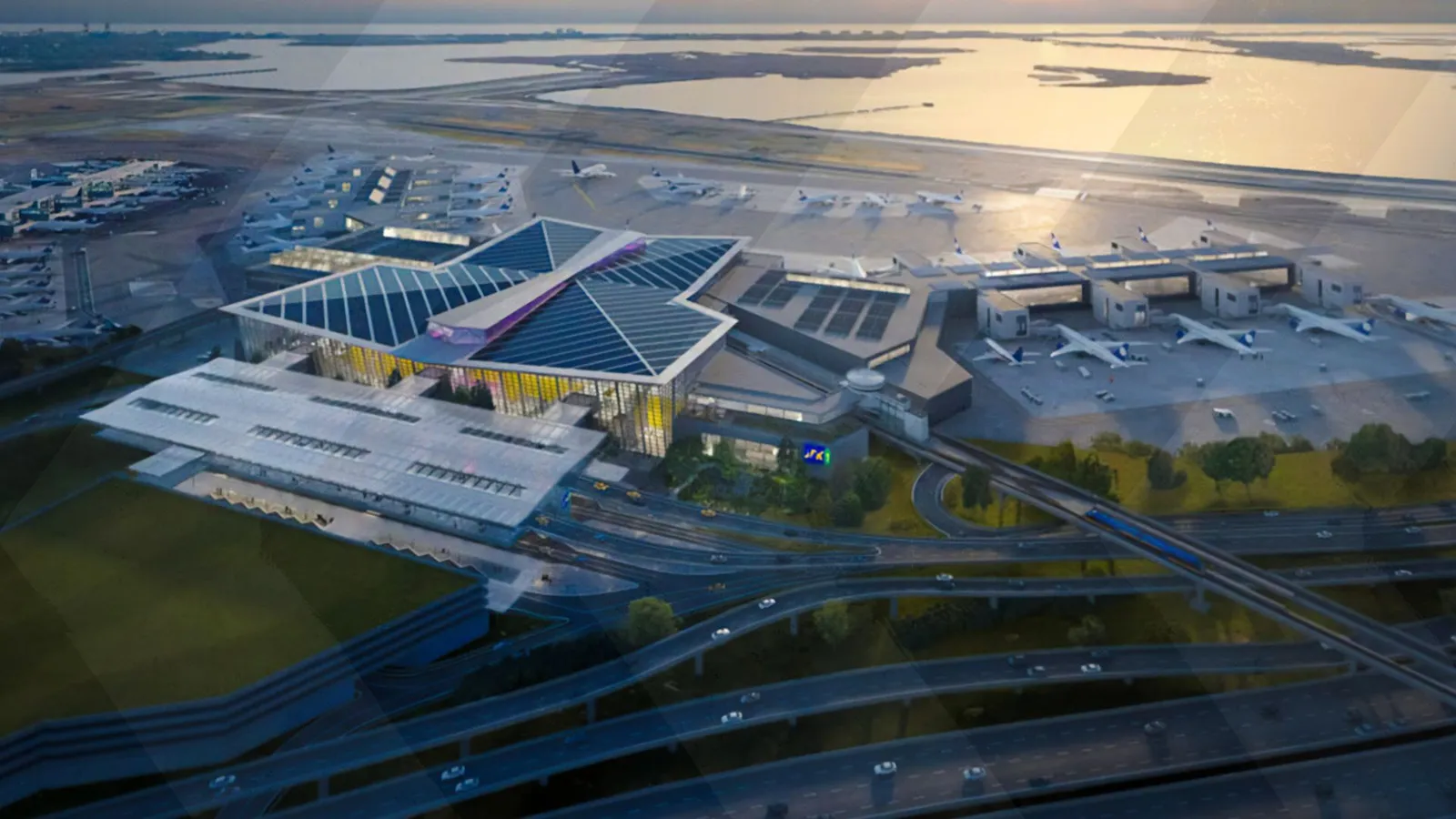
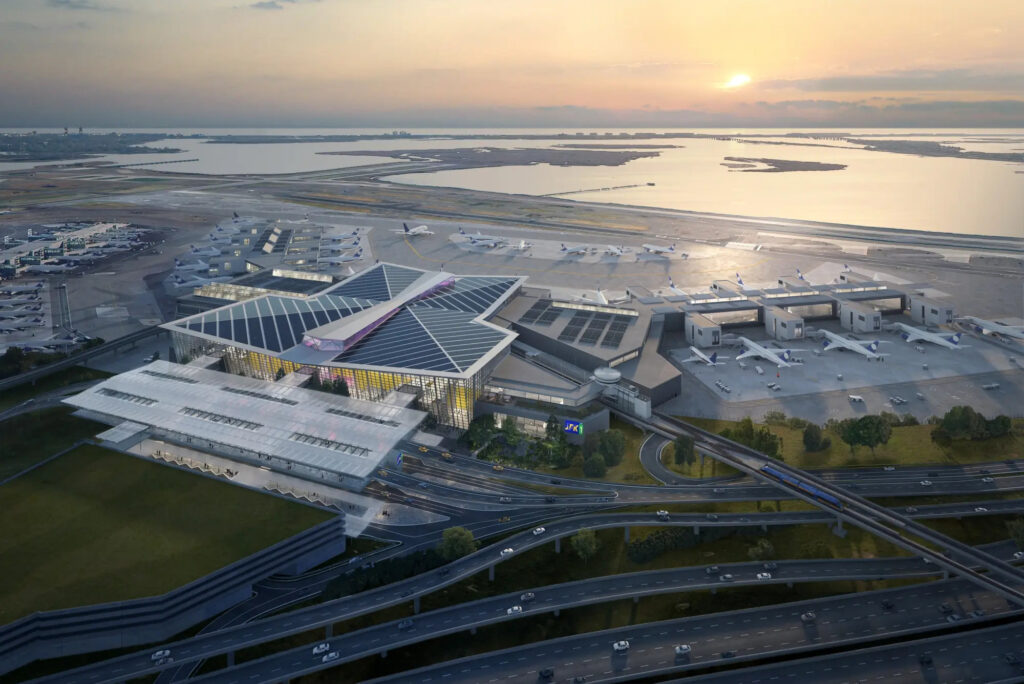
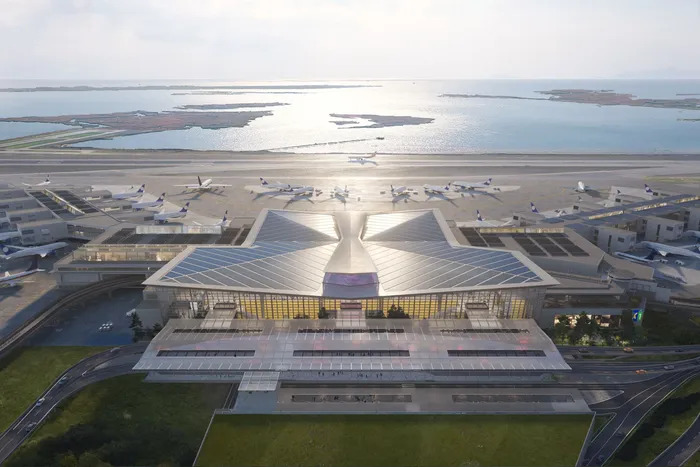
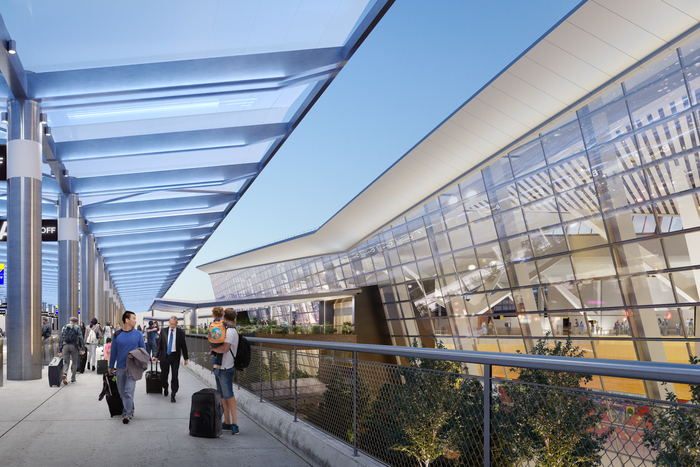
The new terminal (by AECOM Tishman and Gensler) spans 2.6 million sq ft and will feature a Y-shaped footprint, an hourglass-shaped skylight above a photovoltaic-paneled roof, a glass canopy over the vehicle drop-off, and elevated bridges to the structure.
-
It replaces or builds east of existing Terminal 1, along Jamaica Bay at the south end of the Van Wyck Expressway. Construction began Sept 2022.
-
Opening phases: first 14 of 23 gates + terminal headhouse to open starting 2026; full buildout by 2030 to serve 23 million passengers annually.
-
Sustainability features include solar, hot-water systems, fluid recovery technology, and a fleet of electric ground-service vehicles. The terminal is part of PANYNJ’s goal for a modern, sustainable global gateway.
Art, Branding & Premium Passenger Experience
-
The art program is led by Arup, in collaboration with design/branding firms like Pentagram, and curators such as Culture Corps.
-
Seven internationally recognised artists have been selected to create site-specific works: for example Yinka Shonibare will create “Kites for Queens”; Kelly Akashi an 18-ft sculpture “Migrations of Flora”; Woody De Othello an installation atop baggage carousels.
-
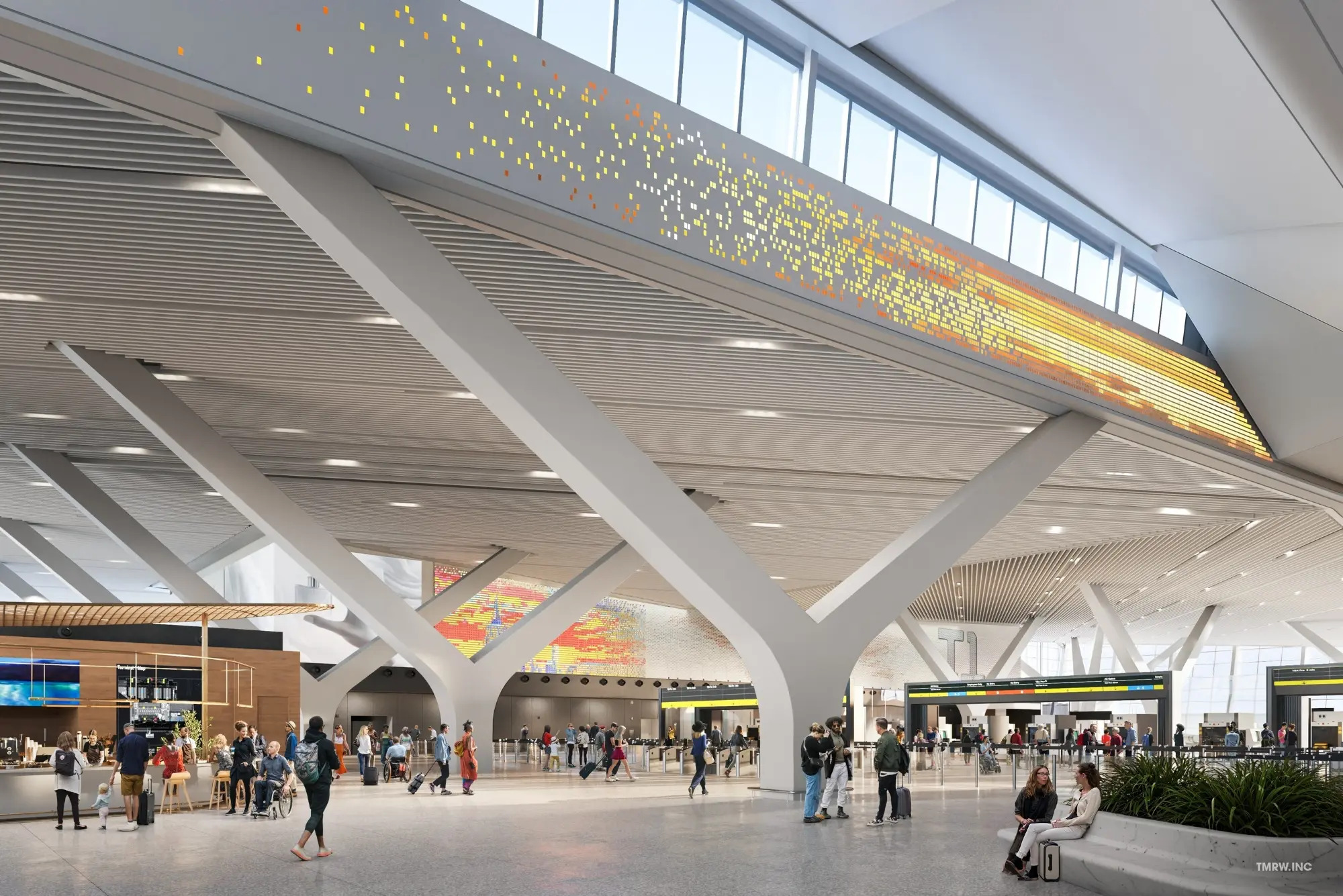
The branding includes a massive digital component: e.g., digital wall displays above the security queue titled “Leaving New York”, an immersive film series “Love Letters to New York”, and dynamic signage reflecting the identity of the city and airport.
-
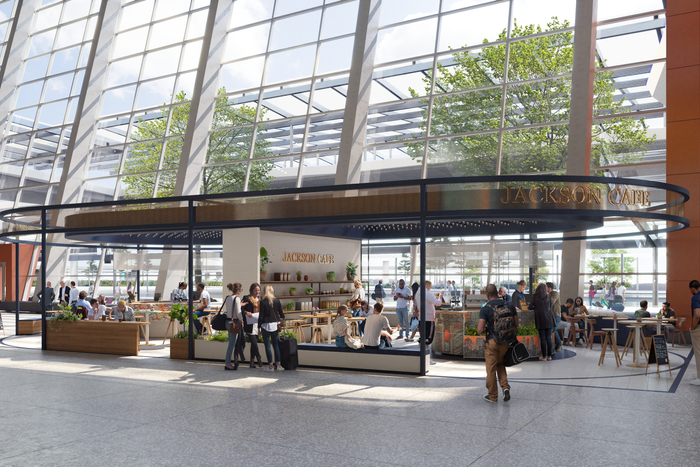
The aim: to move beyond a transit facility toward a destination terminal, increasing dwell time for retail, enhancing brand value and boosting premium concessions. That’s a factor which real estate investors and concessionaires should note.
Real-Estate & Investment Implications
-
A major investment of $9.5 billion indicates strong long-term commitment by PANYNJ and its private partners; this scale signals substantial lease-up opportunities for concessions, commercial space, parking/PD (pickup/dropoff) zones and ground services.
-
Phasing (2026 + full 2030) means opportunity timing: early leases/operations may capture premium rates due to first-mover advantage.
-
The heavy art and experience investment improves the perceived quality and prestige of the terminal; this can raise valuations for adjacent parcels, concessions, retail and hospitality within the airport zone.
-
For landlords and brokers: anticipate spill-over gains in nearby properties (parking, hotel, logistics) due to increased passenger flows and upgraded infrastructure.
-
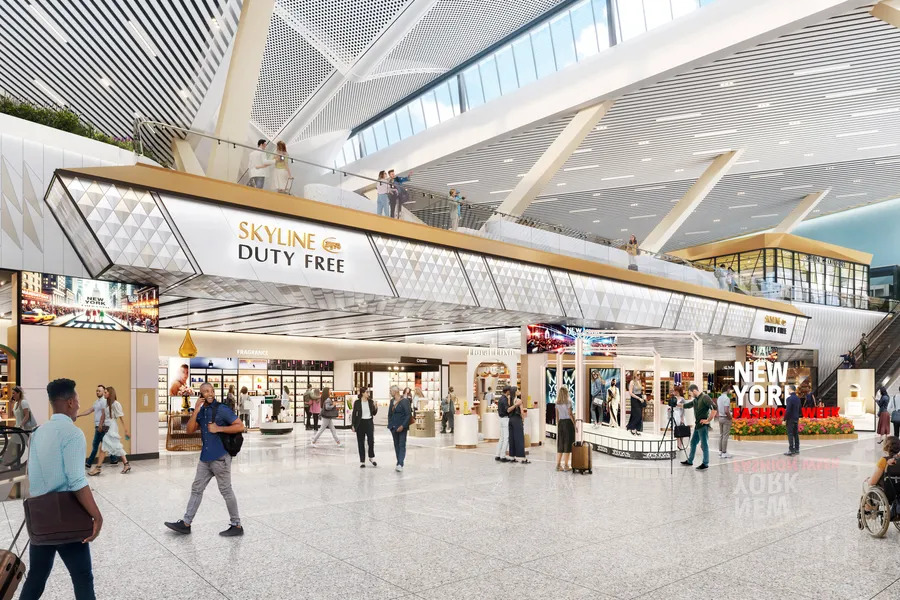
The sustainability features and major capex make this terminal more resilient and future-proof; for CRE players, tenant mix (amenities, F&B, luxury retail) becomes more strategic
Conclusion
The redevelopment of JFK’s New Terminal One is a textbook example of how airport infrastructure is evolving into premium real-estate platforms — combining scale, art/experience design and sustainability. For real-estate investors and landlords this means first-tier opportunities in long-term leases, concession spaces, ancillary hospitality and retail. Given the 2026 opening of its first phase and full 2030 buildout, now is the time to structure partnerships and position for the bump in value.