

Jun 27, 2025
🚈 $2.75B Interborough Express Approved — Could Unlock Over 100K Units Across Brooklyn & Queens
Recent approval of $2.75 billion for the Interborough Express (IBX) project introduces a significant real estate focus.

Traded Editorial
Key Points:
💵 Recent approval of $2.75 billion for the Interborough Express (IBX) project introduces a significant real estate focus.
🏙 An analysis forecasts potential development of 70,000 to 100,000 housing units near IBX stops.
🏘 Zoning challenges could hinder growth opportunities along the rail line.
The recent endorsement of a monumental $2.75 billion investment towards the Interborough Express (IBX) by Governor Kathy Hochul is indeed transforming the landscape of real estate in New York City. This new light-rail system is set to link Bay Ridge to Jackson Heights, aiming to serve an impressive 115,000 daily commuters. Spanning 14 miles with 19 planned stops, this project has the potential to ignite considerable urban development in the boroughs of Brooklyn and Queens.
Transformative Housing Opportunities
New projections from the New York Building Congress hint at the construction of approximately 70,000 to 100,000 residential units within a half-mile radius of IBX stations over the coming ten years, contingent upon necessary changes in land usage policies. This initiative represents an exceptional chance to address New York City's acute housing deficit, which currently sits at around 500,000 units short of demand. The proposal embodies a potential strategy to not only enhance transit options but also alleviate the critical housing affordability crisis.
Unlocking New Areas for Development
The IBX utilizes the historic Bay Ridge Branch, a freight rail line established in the 19th century that traverses various neighborhoods, including industrial areas and lower-income regions often neglected by real estate developers. Unlike earlier, more infrastructure-intensive projects such as the Second Avenue Subway, the IBX will not require extensive tunneling, which can often delay completion and inflate budgets, standing to benefit from a quicker and more cost-effective implementation. Neighborhoods previously isolated from the subway system, such as Flatlands, Middle Village, Brownsville, and Maspeth, now stand on the brink of becoming active markets for multifamily housing, mixed-use developments, and community facilities.
Developments Already Taking Shape
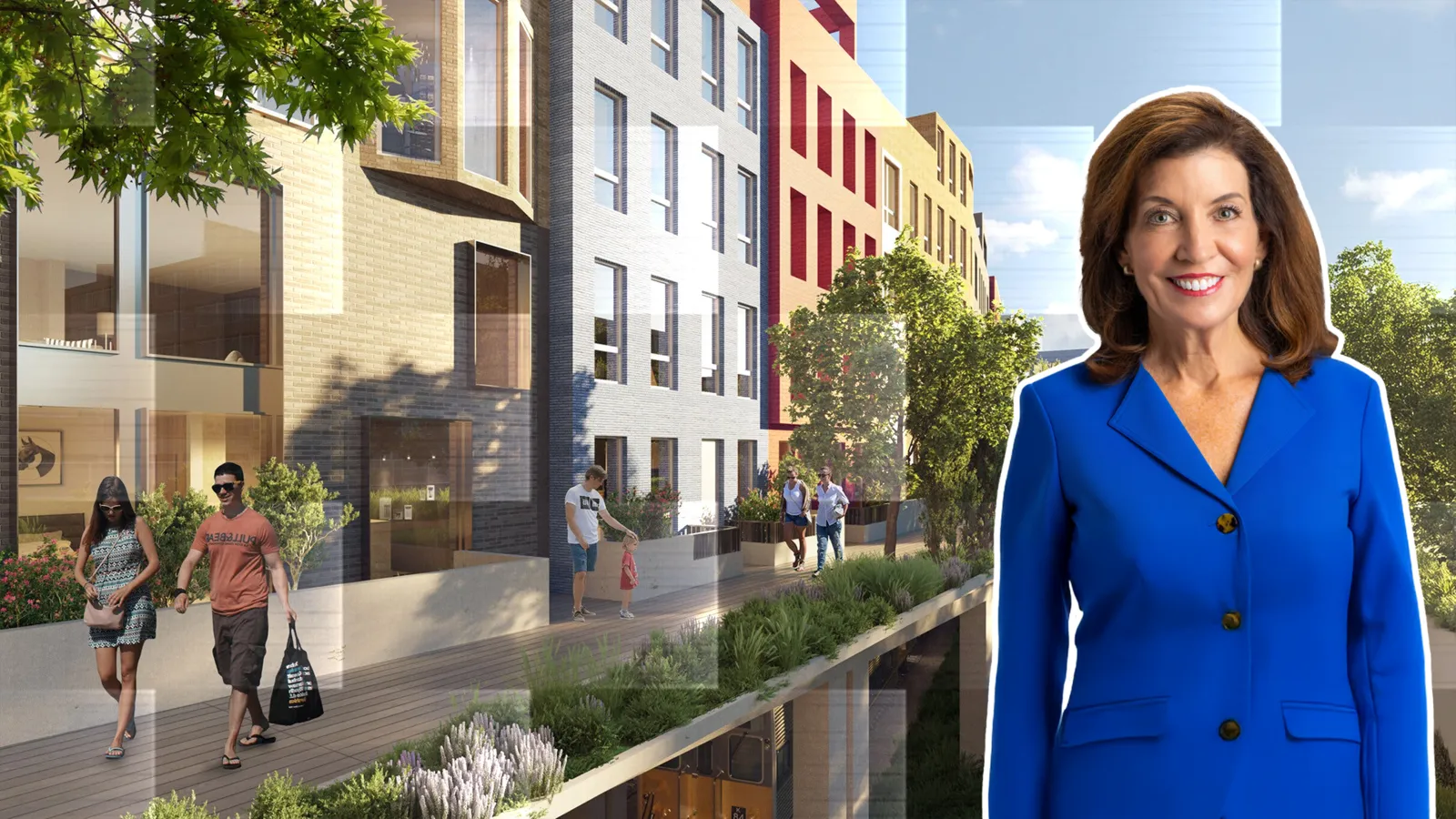
Initiatives have commenced, with Studio V Architecture proposing the BKLN Yards project, which aims to construct a complex of 14 buildings comprising 270 townhouse-style residences directly above a segment of the future IBX line in Borough Park. A portion of these residences will be designated as affordable, showcasing a forward-thinking approach toward community-oriented development that may set a precedent for future projects along the IBX corridor.
Challenges in Zoning Regulations
Nonetheless, significant hurdles remain, particularly concerning land use regulations. Many areas along the IBX route are categorized as low-rise, anti-growth districts, raising the likelihood of political opposition against any upzoning efforts. Local City Council representatives from districts that encompass IBX stops have expressed resistance to broad-reaching housing initiatives, creating additional layers of complexity for development efforts.
Visions for the Future
As the IBX aims for completion by the early 2030s, it offers a tantalizing prospect of aligning with long-term investment strategies. Stakeholders should keep a keen eye on zoning developments in station-adjacent areas, particularly in zones anticipated for increased density such as Atlantic Avenue and Roosevelt Avenue. It is crucial for developers to tactfully handle community opposition while emphasizing the necessity of affordable housing to gain the support needed for progress. The project's existing right-of-way allows for a more efficient return on investment compared to other extensive subway expansions.
In conclusion, the transformational potential of the IBX corridor rests heavily on the balance between necessary infrastructural improvements and responsive land use policies. Without proactive reforms, the dream of a dynamic housing and investment hub may remain just that—a dream, rather than a tangible reality.