

Oct 1, 2026
The Fixer: John Tashjian on Winning the Condo Deals Everyone Else Gave Up On
The founder and managing principal of Centurion Real Estate Partners explains how he turns stalled condo projects around, from Mandarin Oriental Residences, Beverly Hills to The Harland, working with institutional partne…
Courtesy of SHVO

Traded Editorial
By the time Centurion Real Estate Partners gets the call, the easy options are gone.
The lender or equity partner has already tried to sell the asset. The bids came back light, and selling the remaining units wholesale would give someone else a steep discount. So they call Centurion Real Estate Partners’ founder and managing principal, John Tashjian, with a different question: what can you get unit by unit, at retail?
“Can-kicking is a time-honored tradition, and a lot of the time it works itself out. When Centurion tends to get the call, it’s after a lender or an equity partner has said, okay, we’ve got a distressed asset. Let’s find someone who can maximize value for us rather than take a loss.”
John Tashjian, founder and managing principal, Centurion Real Estate Partners
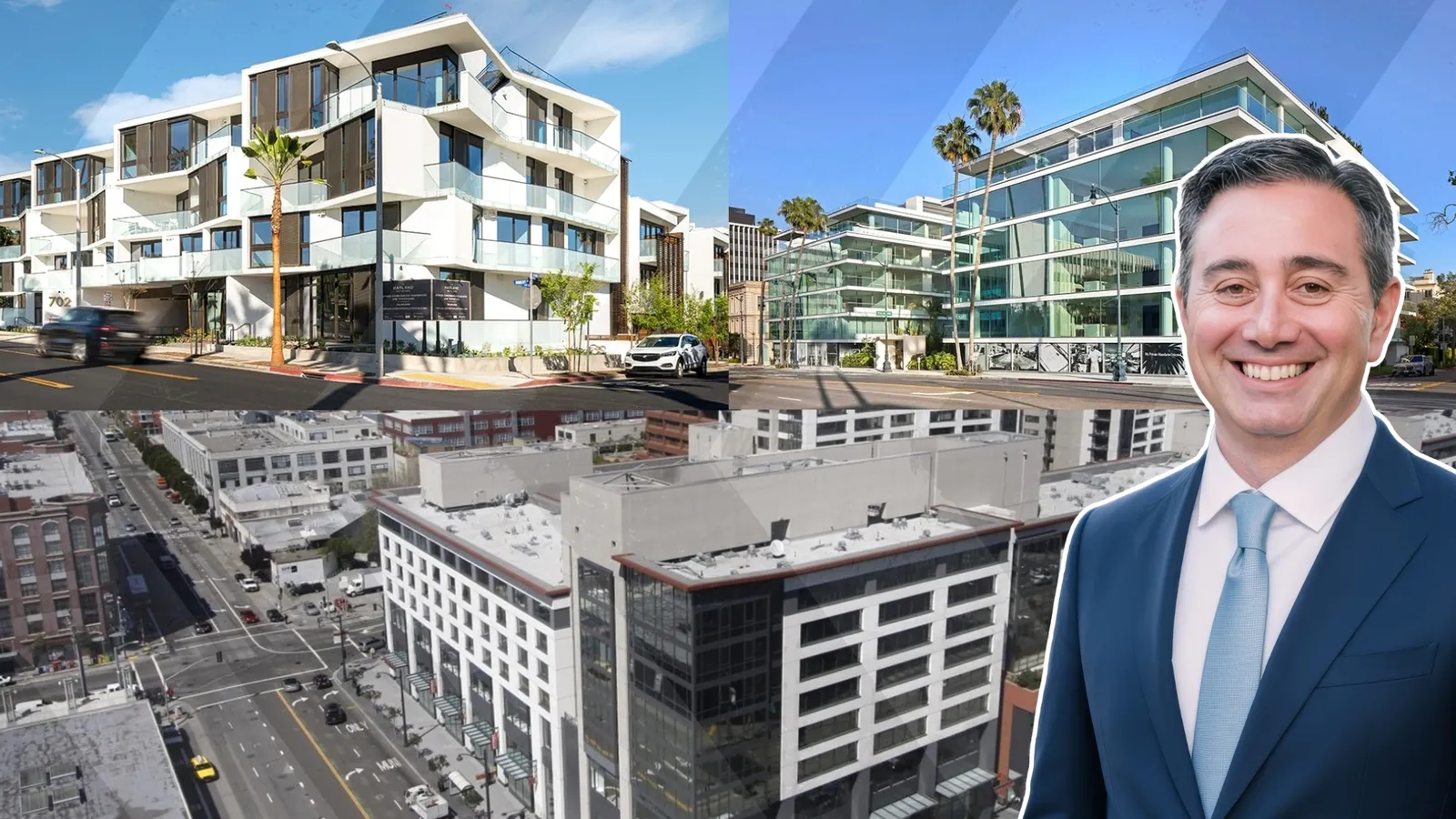
Over 23 years, those calls have made Centurion what Tashjian calls “the fixer.” Institutions bring the firm in when they end up owning an asset they never expected to own, or when they part ways with their original developer. Recent clients include HIG on several transactions, ACORE on Mandarin Oriental Residences, Beverly Hills, KKR on The Harland in West Hollywood, Machine Investment Group at 188 West Saint James in San Jose, and Keppel Capital at 200 East 59th Street in Manhattan.
Built Like an Institutional Investor
Tashjian didn’t set out to work in real estate. He joined Kidder Peabody’s investment bank to work in its media and entertainment group. The bank hired him in February, but by July, when he started, the media team had left. “One day someone was like, you’re in real estate now,” he said. “And it worked out.”
A career in private equity and real estate M&A followed, along with a recurring frustration. While working for a real estate opportunity fund on the capital allocation side, Tashjian kept looking for an operating partner who could analyze a deal like an institution. In the late ’90s and early 2000s, he mostly found developers “with that glimmer in their eye and a fast-talking narrative, but not a lot of analytical data to back up their thesis.”
So he founded Centurion Real Estate Partners with his favorite operating partner, Jeffrey Worthe, an office developer in Los Angeles and Centurion’s other founding principal. “In Centurion, I was hoping to create the operating partner that didn’t exist in 2003,” Tashjian said. “The idea was to combine Jeff’s real estate operating expertise with my knowledge of capital markets and financial analysis. We designed Centurion to be a “super operating partner,” one that would bring every deal already packaged with a business plan, market study, and the financial acumen that a bank or private equity looked for.” The logic behind Centurion was simple: if a deal made sense to someone with his private equity background, it would make sense to a fund. “There’s no reason for us to go raise money, because there’s so much money chasing deals,” he said. “The theory was: If I found the right deal that passed our muster, the capital would be there for us.” Robert Schlesinger, an analyst with Tashjian at their prior real estate fund, became employee No. 1, and the two wrote Centurion’s business plan at Tashjian’s kitchen table. Schlesinger is now a partner at Centurion.
Centurion’s first deal was a purchase of the remaining sponsor units in the Concorde Condominium, a building two blocks from Tashjian’s home. The firm planned to buy the package, renovate the units, and sell each condominium unit to individual buyers. Lehman Brothers put up the equity and the units sold quickly. “We structured the transaction to allow us to market the units while we waited for approvals. We were nearly sold out by the time the transaction closed,” Tashjian recalls. The deal put Centurion on Lehman’s map.
The second deal was much bigger. In 2004, with Lehman’s real estate opportunity fund as equity, Centurion bought 595 apartment units in a two-tower high-rise complex in San Francisco’s Mission Bay neighborhood. The firm converted the rental units into a condominium project it renamed “The Beacon,” and sold the units well ahead of schedule. It returned about a 2.8x multiple on equity in a very short period, with an IRR “in the hundreds.”
That deal also taught Tashjian his favorite lesson about capital structure. Units were selling so fast that the lender, HypoVereinsbank, called with a proposal: recut the loan so Centurion could take equity out, and the bank could keep its money out longer. “Obviously our answer was yes,” he said. If he could change one thing about how condo projects are financed, it would be to include mechanisms in debt documents to rebalance when things go well. “Lenders tend not to contemplate the very good or the very challenging scenarios,” he said.
Lehman later ranked Centurion one of its highest-performing operating partners. The ranking wasn’t about deal count. Tashjian credits the firm’s track record, its responsiveness and “the thought process and intellectual capital that we brought to each deal.”
The Turn Toward Turnarounds
Centurion’s distressed business dates to 2010. The Lehman team behind the Concorde and Beacon deals formed Silverpeak Real Estate Partners and took some assets with them. One was Riverhouse; the other, one Rockefeller Park, a Battery Park City condominium they had taken back from an equity partner. They asked Centurion to take a look.
At Riverhouse, Centurion led a two-year turnaround, changing nearly everything about how the building was positioned. The firm changed the marketing, pricing, building systems, amenities, and even some of the layouts to capitalize on current market conditions. Centurion sold out the remaining units and returned more of Silverpeak’s equity than anyone had projected at the start. “The Riverhouse deal launched Centurion’s distressed capital partner program,” Tashjian recalls.
Mark to Market, Not to Memory
When Centurion begins a turnaround assignment, it takes a holistic approach to analyzing the distressed project. “We try to look at a turnaround like a management consulting assignment,” Tashjian said. “We look at all aspects of the project and try to recommend changes that allow our repositioned offering to capitalize on the project’s strengths while mitigating its challenges.”
Of course, pricing is typically an issue. Centurion prices a project from a different starting point than the original sponsor did. At Mandarin Oriental Residences, Beverly Hills, for example, it relaunched sales at roughly 20% to 30% below the original pricing. In March 2026, a penthouse sold for $13.3 million, or $3,852 per square foot. In August 2026, the second penthouse sold for the same price. According to The Real Deal, the Mandarin’s two penthouse sales achieved the highest price per square foot for a condo in Los Angeles County.
For Tashjian, the price cut was never about selling inventory fast. It was about basis.
“Our job is to protect our client’s basis and maximize value for them. We’re not necessarily in the business of protecting the previous developer’s equity position, nor are we married to their previous pricing thesis. What we’re trying to do is mark the asset to market based on its strengths, its challenges, and where it is positioned in the broader market.”
Los Angeles condominiums add a different psychological hurdle. “If I said I bought a place in New York City, you’d immediately imagine an apartment, a co-op or a condo,” he said. “But if I said I bought a place in West Hollywood or Beverly Hills, your mind would immediately go to a single-family home.” In his view, luxury high-rise living in LA is still in its infancy, and some early projects that launched at ambitious prices have had to come back down to earth.
The Excel Problem
Ask Tashjian about the most common mistake he inherits, and he names two. Both start in a spreadsheet.
First, developers tend to build units too big for their target demographic. Second, they assume the highest price per square foot they can find in the market will hold for their own project.
The two mistakes compound. A buyer will pay a strong price per square foot only up to the point where the extra space stops being useful. A family that needs 2,300 square feet won’t pay $2,000 a foot for a 3,000-square-foot, three-bedroom home. They price the last 700 square feet at a lower value.
“There’s the law of diminishing returns, and it’s not linear. We call it ‘the Excel problem.’ You can convince yourself of anything in Excel, but the market is very different.”
His LA example is pointed: if a developer sees what Aman is getting and starts to pencil in $6,000 a foot for their own project, “it won’t translate.”
Narrative Repair
Every turnaround starts with the building’s story and its buyer demographic. Then Centurion invests in the services and physical upgrades that bring that story to life for prospective residents.
At Mandarin Oriental Residences, Beverly Hills, the work focused on delivering the brand’s promise of world-class service through the building’s spa, the staff, and the overall amenity offering. The location shaped priorities too. Beverly Hills is known as a very secure enclave, so Centurion emphasized safety compared with other Los Angeles neighborhoods. The Mandarin’s buyers also skew toward second-home owners and Mandarin loyalists, including buyers from Asia, where the brand is strong, and people who already own a Mandarin Oriental residence in New York or Florida.
The Harland in West Hollywood needed a different playbook. Centurion started by restoring the building’s landscaping, exterior, and lobby, and adding amenities, including a screening room that prospective buyers have well received. Centurion also positioned the building for buyers seeking the privacy of townhome living with luxury condominium-level services. The Harland offers the best of both worlds, letting residents enter through the lobby or go straight home from the street or garage. The target buyer wants a West Hollywood lifestyle, which Tashjian calls “a little edgier” than Beverly Hills.
“The two projects are within a mile of one another but really attract completely different buyers,” he said.
Pricing, Capital or Character?
Is distress a pricing problem, a capital structure problem or a character problem? “Yes, is the answer,” Tashjian said. “It comes in all flavors.”
Sometimes the debt stack is too aggressive. A mezzanine lender might have come in on a loan-to-own basis where the business plan needed everything to go right, and now the lender likes its basis enough to take over. Sometimes the market exposed blind spots in the product, and the developer pushed ahead instead of adjusting their product. And sometimes the price just isn’t there.
The hardest part is often psychological. “Developers have to be true believers, and cutting prices can feel like admitting the business plan failed,” Tashjian said. Many hold their prices because once pricing drops to where the market will buy, they realize there’s no equity left. Lenders often give developers more time than they need or deserve, partly because most don’t have the in-house expertise to take an asset back.
“I don’t think any lender, especially on the senior side, makes a loan thinking they’re getting the asset back. And I don’t think any equity partner really thinks about ever having to break with their partner. But it happens more times than any of us would like to admit. That’s where Centurion comes in.”
That gap is where Centurion is most valuable. Owners facing a high cost of equity capital rarely want to sell at a discount and hand the upside to someone else. Centurion can step in for a fee or bring in equity to participate. Sometimes its arrival alone changes a negotiation. Tashjian recalls one developer was very confident about his operational leverage over his capital partner “until we showed up at the table. He quickly realized he was replaceable.”
High Conviction or No Deal
Centurion looks at far more deals than it accepts. The first number it checks is the gap between current asking prices, the prices deals have actually closed at, and where Centurion thinks the market really is. Next comes salability: what the project is, where it stands in its market, and whether it delivers the lifestyle its target buyer wants.
Only then does Centurion build a pricing model to discuss with their lender or equity partner client. “By the way, it doesn’t always make sense,” he said. “Sometimes we recommend that they just cut their losses and sell.”
That conservatism costs Centurion some deals, and Tashjian accepts that. “We lose a lot of deals, perhaps because we know too much, or we’ve seen too much. I am fine with that.”
What’s Next
On the residential side, Tashjian sees a shift toward branded residences. Centurion believes in the branded residence value proposition. While brands take a cut of the deal and cost more to manage, buyers feel they get that back in service and brand value. The open question is how deep the demand goes, especially as brands with no hospitality history put their names on towers. “I don’t intuitively know what a Porsche tower or an Aston Martin tower necessarily means as a residential lifestyle,” he said, “but buyers seem to identify with the brand and assume it has something to do with style and design.”
Over the next five to 10 years, Tashjian wants Centurion to keep growing with its institutional clients that share its vision and business practices, and to keep studying how people live. He recalls that one of the first books in the firm’s now vast library was about Rosario Candela and J.E.R. Carpenter, the architects who redefined apartment living in New York City. In prewar buildings, bathrooms were small, the best units were on lower floors, and the top floors housed the help. Technology, room sizes, and new ways of using space keep rewriting those rules. “We like being students of that evolution,” he said.
Advice for a Developer With a Stalled Project
“Time is your enemy,” Tashjian said. His advice starts before a project ever stalls: when you raise the money, be prepared to carry the project. A developer who is already stuck needs to answer two questions: where is the project headed, and how long will it take to get there? “Be realistic, both in terms of your pricing and your costs.”
The Number That Matters Most
Of Centurion’s big numbers (23 years, $3 billion and 1,500 units), Tashjian picks the units, because each one represents a personal story. The most satisfying part of the job, he said, is returning to a project years later and seeing children running through a fountain Centurion spent “meetings and meetings and meetings” planning. “In its purest form, residential development is about creating places where life’s most important moments take place,” Tashjian said.
That instinct goes beyond the portfolio. He spoke with Traded from Tidalholm, his house in Beaufort, South Carolina, his wife’s hometown. It’s an antebellum home that was literally falling apart before his family restored it. “Perhaps not the best economic decision I made,” he said. “But it has been so rewarding to watch it come back to life.”
His advice to young professionals is simple: find something you love, be the first one in the office and the last one to leave, ask questions, learn everything you can, and make yourself indispensable to those you can learn from. He recalls that many of the doors that opened in his career came from being in the right place at the right time, and many of those moments started in the office. He worries that people entering the workforce now miss the in-person time where trust gets built with clients, equity partners, and banks. “Without that trust,” he said, “it’s very hard to succeed.”