

Oct 15, 2026
Startup Founders Can Swap Equity for Rent at Former Academy of Art Buildings
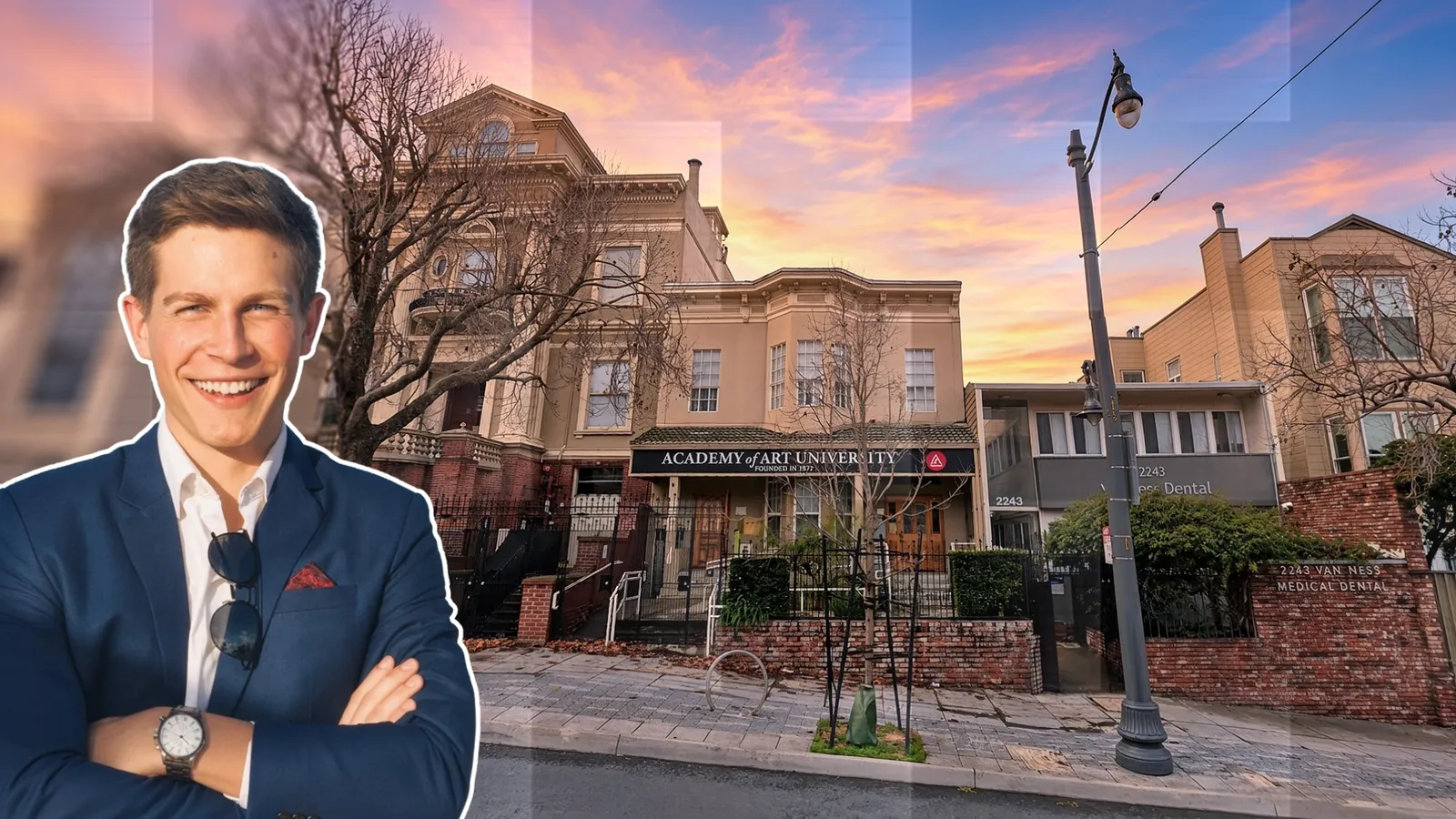
The Residency has leased three former Academy of Art University properties in San Francisco, accommodating around 60 startup founders, researchers, and academics through a live-work program.

Traded Editorial
- Three buildings repurposed: The Residency has leased former Academy of Art University properties at 1916 Octavia Street, 2209 Van Ness Avenue and 1153 Bush Street in San Francisco.
- Around 60 residents: Each location houses approximately 20 startup founders, researchers and academics for three-month stays.
- Equity-for-rent option: Residents can pay about $2,000 monthly or exchange equity in their startups for a place in the program.
- Real estate pivot: The leases come as the university continues shrinking its San Francisco property portfolio following a roughly $58 million legal settlement.
What Is The Residency Bringing to San Francisco?
Three former Academy of Art University buildings are getting a new use as live-work hubs for startup founders, researchers and academics. The Residency, a startup founder hostel and research program, has leased properties at 1916 Octavia Street, 2209 Van Ness Avenue and 1153 Bush Street. Each location accommodates roughly 20 residents for three-month stints focused on developing companies and research projects. The model combines housing, workspaces and a startup-focused community. Residents pay approximately $2,000 per month to participate, with an option to exchange equity in their companies for accommodation through the program.
The Residency organizes three cohorts annually, culminating in demo days where participants can present their work. Neftali Velez of The Residency told the San Francisco Standard, “We have a big footprint in San Francisco. We’re looking at The Residency as a campus based on the proximity of the homes.”
What Does the Startup Hostel Model Mean for Landlords?
The arrangement illustrates how landlords and property owners can explore alternative uses for buildings originally designed for other purposes. At the Octavia Street property, former dorm rooms have been converted into video studios, while a sunroom now houses robotics equipment. The combination of residential accommodation and specialized work areas gives the buildings a distinct purpose beyond traditional student housing or standard multifamily rentals. For property owners, niche housing concepts can potentially attract tenants willing to pay for a built-in professional network and shared resources. However, operating these properties also requires careful attention to occupancy rules, permitted uses, building codes and the costs of maintaining shared facilities. The model is not a universal solution for underused buildings, but it highlights how specialized operators can create demand for properties that may no longer fit their original purpose.
What Is Happening With Academy of Art University's Real Estate Portfolio?
The leases come as the university continues to reduce its extensive San Francisco real estate holdings. In 2016, the city sued the university over alleged unpermitted building conversions and violations affecting housing and other properties. The dispute resulted in a settlement valued at approximately $58 million, including affordable housing commitments and requirements to bring properties into compliance with city regulations. The university subsequently moved to sell a portfolio of roughly 375,000 square feet across nearly a dozen properties, with an initial asking value reported at approximately $120 million to $130 million. Several transactions have followed in 2026, including the sale of a Fisherman's Wharf building for $18.3 million, St. Brigid Church for $4.7 million and a former First Congregational Church building for $15 million. Leasing the three properties to The Residency offers another way to put existing buildings to use while the university continues its broader real estate retrenchment.
What Does This Mean for San Francisco Investors?
The Residency joins a growing ecosystem of alternative housing and work concepts aimed at entrepreneurs. Another former Academy-associated property, the Commodore Hotel at 825 Sutter Street, was sold and rebranded as the Superhero Hotel, targeting startup founders with packages that include access to Frontier Tower. For investors, these projects demonstrate the potential for specialized residential and hospitality concepts to serve niche demand in expensive urban markets. Success will depend on sustainable occupancy, operating costs and compliance with local housing regulations. As San Francisco property owners look for new uses for existing buildings, startup-oriented housing offers one alternative to conventional leasing, particularly where a property's layout and location support a live-work environment.