

Nov 9, 2026
Pagani Residences Installs 3D-Printed Living Seawall as Miami Invests in Coastal Resilience
Pagani Residences has installed a Living Seawall along Biscayne Bay, featuring 33 3D-printed panels developed by Kind Designs to support marine habitats while addressing flood risks in Miami.
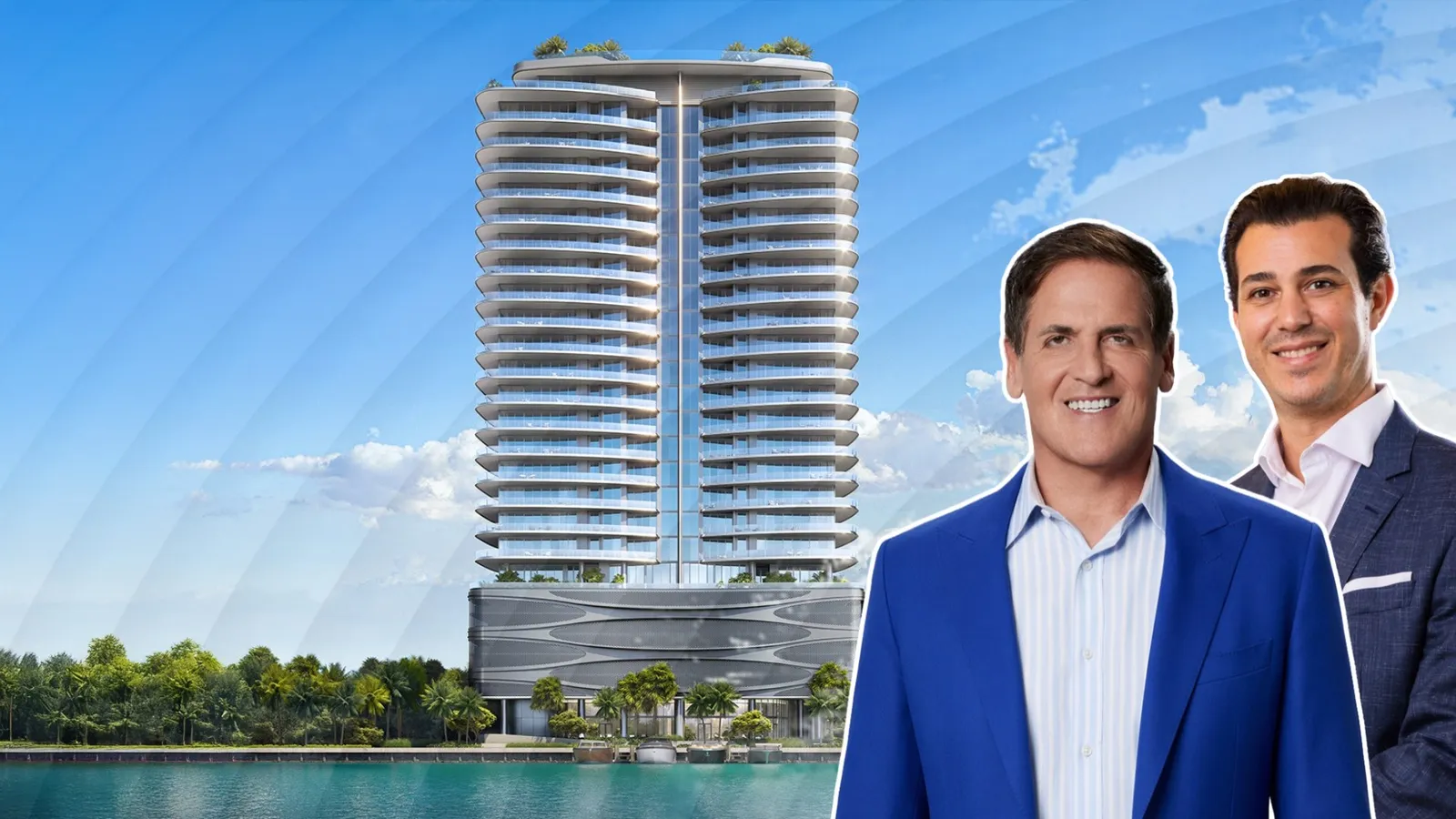

Traded Editorial
- Pagani Residences in North Bay Village has installed a Living Seawall featuring 33 custom 3D-printed panels developed by Miami-based climate-tech company Kind Designs.
- The panels mimic mangrove roots, creating textured surfaces intended to support marine habitats while protecting the waterfront.
- The installation comes as Miami confronts rising flood risks, with a citywide resilience plan estimated at $3.8 billion and plans for miles of new six-foot seawalls.
What Pagani Residences Is Adding to Its Waterfront
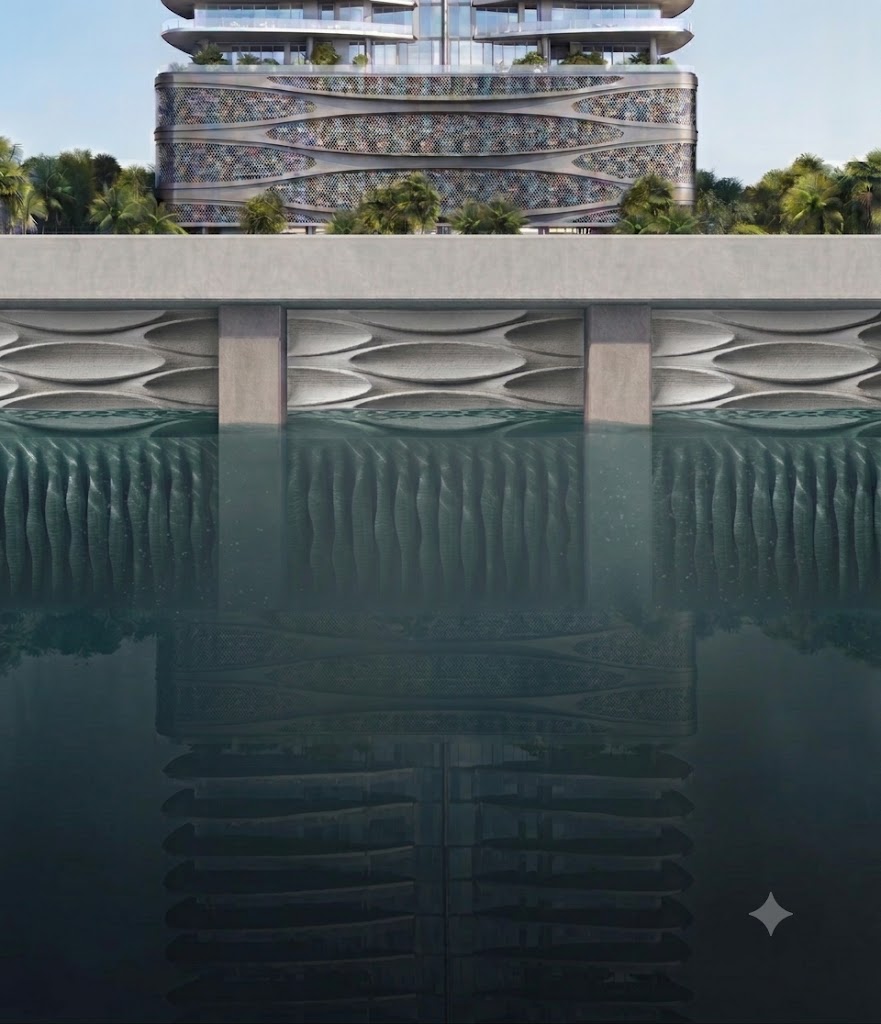
Pagani Residences is incorporating environmental infrastructure into its waterfront development with the installation of a Living Seawall along Biscayne Bay. The system was created in partnership with Kind Designs, a Miami-based company developing 3D-printed coastal protection products.
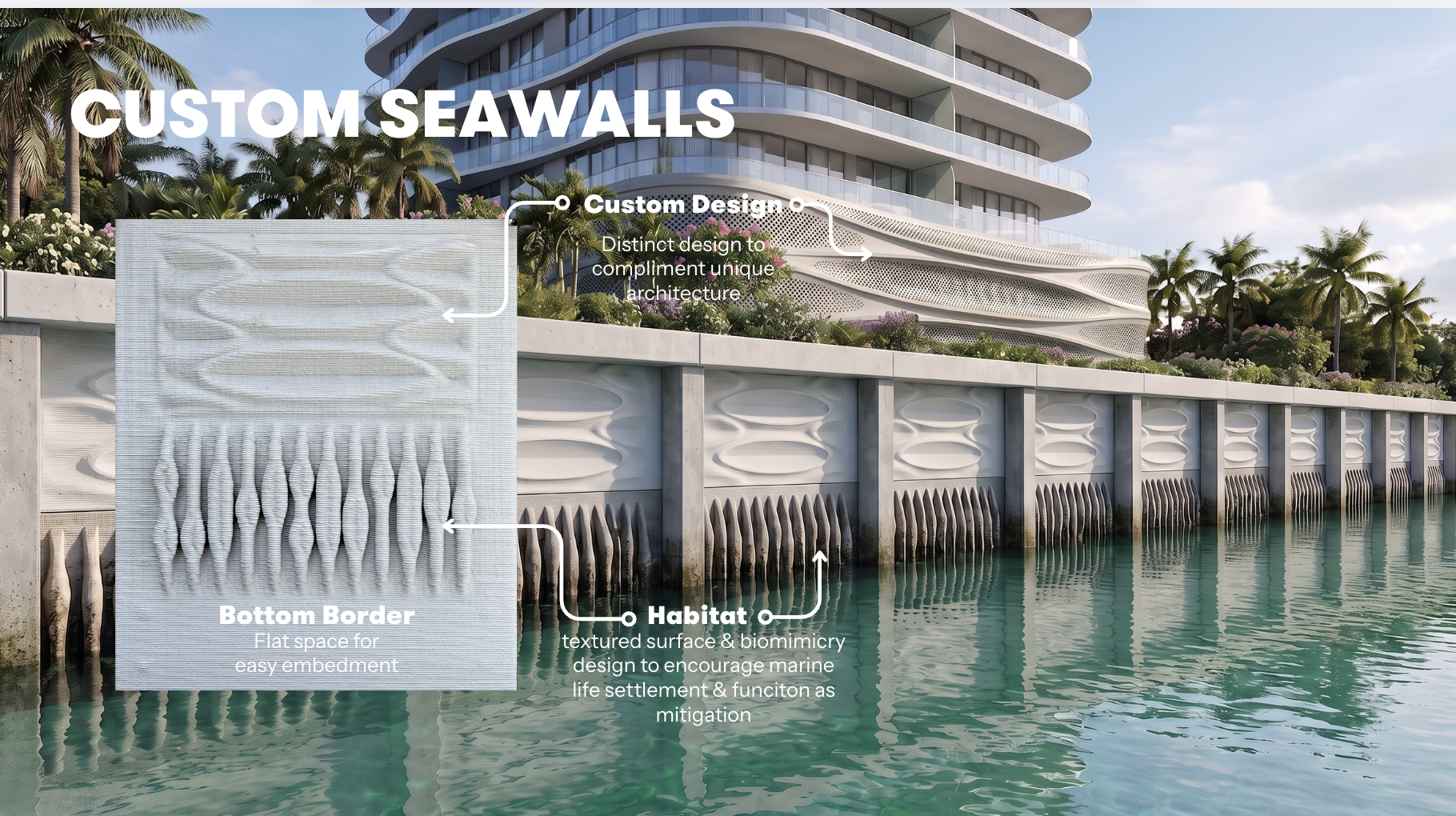
The installation features 33 custom panels inspired by mangrove root systems. Their textured surfaces are designed to create spaces where marine organisms can attach, grow and find shelter.
The panels also incorporate elliptical shapes that reflect the design language of Pagani, extending the automotive brand's aesthetic into the property's waterfront infrastructure.
Pagani Residences is a 30-story, 70-unit condominium development at 7940 West Drive in North Bay Village. The project is being developed by Riviera Horizons, with architecture by REVUELTA.
What Kind Designs' Technology Brings to Seawall Construction
Traditional concrete seawalls are generally designed to protect properties from water and erosion, but their flat surfaces provide limited habitat for marine organisms.
Kind Designs' Living Seawalls use 3D-printed concrete panels with complex textures inspired by natural coastal environments. The company's system is engineered as a replacement for conventional precast seawall panels, combining shoreline protection with habitat creation.
The technology has attracted investment from notable backers, including Mark Cuban. Kind Designs has also secured funding and research opportunities connected to coastal infrastructure and resilience.
What FIU Research Reveals About Marine Biodiversity
Research conducted by Florida International University provides early evidence of the ecological potential of the technology.
According to Kind Designs' published monitoring results, FIU researchers documented 91 unique marine organismsliving on, in or around the company's Living Seawalls during a 12-month study. Researchers also recorded 36 benthic taxa and 30 fish species during formal surveys.
The study found that marine biodiversity increased over time, with the textured surfaces providing habitat for algae, invertebrates and fish. Coral and other marine organisms were also observed colonizing the structures.
These findings suggest that seawall design can influence the ecological value of urban waterfront infrastructure. However, biodiversity results should not be confused with proof that the technology eliminates flooding or prevents seawall overtopping.
What Miami's Flooding Challenges Mean for Waterfront Development
Recent king tides have highlighted the vulnerability of South Florida's waterfront properties. Miami-Dade County identifies king tides as a recurring seasonal flood risk, while sea-level rise is contributing to higher and more persistent coastal water levels.
Miami's long-term flood resilience plan carries an estimated price tag of $3.8 billion and includes stormwater pumps, underground infrastructure and miles of six-foot seawalls. Even with those investments, some neighborhoods are expected to remain vulnerable.
For developers and waterfront property owners, the challenge is increasingly twofold: protecting real estate assets while addressing the environmental impact of hardened shorelines.
Pagani Residences' installation illustrates one approach to combining those objectives. As more waterfront infrastructure requires replacement or upgrades, technologies that incorporate habitat creation could become an increasingly relevant part of coastal development.