

Jul 29, 2026
Both Sides of the Equation: How RCS's Spence Mehl Helped Steer Claire's Through Chapter 11 and Into Growth
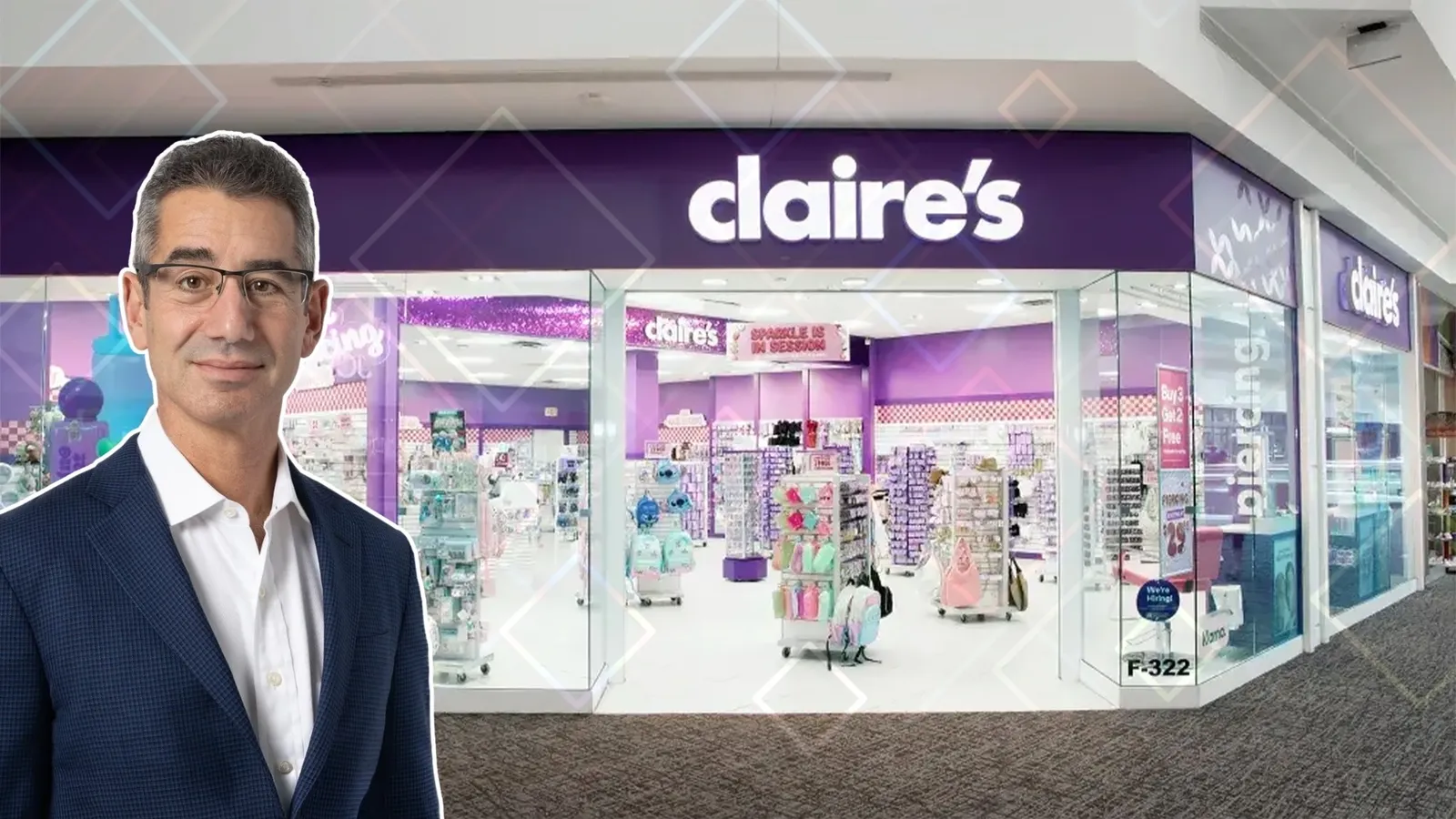
RCS Real Estate Advisors negotiated over 1,300 leases for Claire's during its Chapter 11 bankruptcy, ultimately preserving around 950 stores across the U.S. and Canada.

Traded Editorial
RCS Real Estate Advisors Partner Spence Mehl on negotiating more than 1,300 leases against the clock, the story that won over landlords, and why the work didn't stop when the bankruptcy ended.
"We had to move quickly and forcefully," Spence Mehl said. "We even had to pivot strategy a few times, but we never lost focus on what would be best for the business' long-term growth."
That's how Mehl, a partner at RCS Real Estate Advisors, sums up the Claire's engagement, one of the highest-stakes retail real estate assignments of the past year. When the global accessories retailer entered Chapter 11, RCS was tasked with evaluating a portfolio of more than 1,000 locations on a severely compressed timeline. By the time Claire's emerged, under new owner Ames Watson, the team had negotiated over 1,300 leases and preserved roughly 950 stores across the U.S. and Canada.
Real Estate as a Strategic Tool
RCS has advised retailers for more than four decades, through economic cycles, industry disruption, and changing consumer behavior. What hasn't changed, Mehl says, is the core premise.
"The core approach of RCS through the decades is to treat real estate as a strategic tool," he said. "We've constantly helped retailers align their real estate decisions with their overall business goals, whether that's navigating a downturn or capitalizing on growth opportunities."
The firm has worked on some of the largest and most complex retail bankruptcies in the industry while also advising chains that are expanding their portfolios. "We see both sides of the equation," Mehl said. Claire's would end up requiring both.
1,300 Leases on the Clock
The biggest challenge of the Chapter 11 process, in Mehl's telling, was simply time. Every lease required its own negotiation, with different landlords, different economics, and a court-imposed timeline hanging over all of it. Negotiating more than 1,300 of them in a short window meant quickly identifying which stores were crucial to the brand's recovery, then getting landlords on board.
The team's strategy centered on working collaboratively with the landlord community, securing favorable terms while preserving Claire's most profitable and highest-traffic locations. And RCS had a story to tell: Ames Watson, the incoming operator, had a track record of success with Lids and other retail concepts.
"Between having Claire's, which was a well-known business that was in need of operational improvement, and having a really successful operator come in and take over the chain, those factors were critical to the story," Mehl said. "That created an opportunity for the RCS team to reduce rents and find a way to move forward."
The goal throughout was controlling occupancy costs and optimizing the store footprint. Stabilize the business first, Mehl says, and only then can growth begin.
From Stabilization to Growth
That sequencing is Mehl's answer to whether real estate makes or breaks a retail turnaround: stabilize first, then support expansion and optimization. And emerging from bankruptcy wasn't the finish line. It was the beginning of rebuilding the company's operating platform, and RCS turned next to the infrastructure behind the stores.
The firm advised the chain on relocating its office to Rosemont, Illinois, taking 43,000 square feet in a move designed to attract better talent and make commuting easier for employees. On the industrial side, Claire's took more than 240,000 square feet for a new warehouse in Elgin, a facility that has already opened.
"It's meant to improve inventory visibility, operational planning, and overall speed and accuracy in the supply chain, which is critical in today's world," Mehl said.
The old warehouse had become a liability. Claire's needed a modern facility and a new information system capable of moving inventory to the marketplace at the speed the business now demands.
The Store Isn't Going Anywhere
The Claire's engagement also reinforced a conviction Mehl has held for years.
"Everyone has been stating there's been doom and gloom for the last ten years with internet shopping, but retail brick and mortar is still very strong," he said. "The physical locations must complement the digital channels and serve as a hub for fulfillment and customer engagement."
The store, in other words, is no longer just a point of sale. It's part of a broader customer experience that spans physical and digital, and the real estate has to be chosen accordingly.
A Tighter, More Professional Market
The leasing environment itself has shifted under retailers' feet. Immediately after the pandemic, Mehl says, chains enjoyed unusual flexibility because no one knew which direction retail would go. That window has closed.
With little new construction being delivered, space is scarce, and the landlord community has responded. Landlords today operate far more professionally than in the past, Mehl notes, and negotiate hard on every dollar. The counterweight is data: negotiations on both sides are now more data-driven than they've ever been.
That same data is reshaping the stores themselves. "We're seeing smaller format stores," he said. "Retailers see that they don't need to pay for the amount of space that they have in the past. They can see what's selling at what margins, and they can be a lot more focused on the exact format of the store. That's based on data we never had in the past."
The Lesson Is Agility
Looking back on the Claire's project, Mehl's takeaway for retailers facing their own transformations is the one he started with: agility. Move quickly, move forcefully, pivot when the strategy demands it, and never lose sight of long-term growth.
With Claire's now operating from a new headquarters, a modern distribution facility, and a preserved fleet of roughly 950 stores, the assignment illustrates Mehl's central point: emerging from Chapter 11 was never the end of the work. It was the moment real estate could begin driving growth again.