

Mar 28, 2024
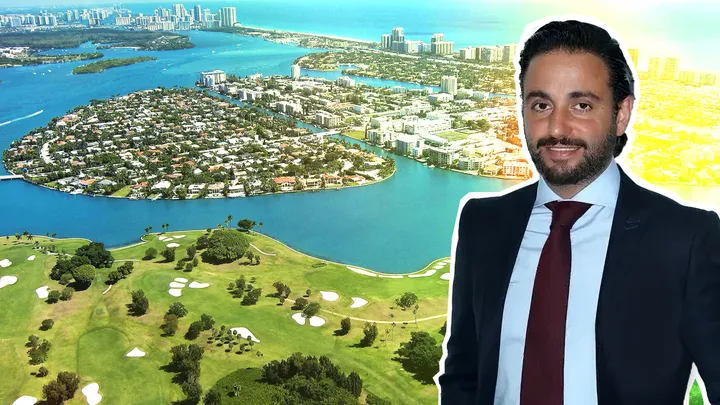
Arash Gohari of 27 Capital Shares Insights Into Recently Acquired Bay Harbor Portfolio

Traded Editorial
What attracted you to the deal?
In Miami, there are a few distinctive markets, and I refer to one as Miami's Golden Triangle, encompassing Bal Harbour/Surfside, Bay Harbor, and Indian Creek. Bal Harbour and Bay Harbor stand out as pedestrian-friendly communities, a rarity in Miami beyond places like Brickell. These areas have witnessed significant price appreciation, with Bal Harbour particularly unique for its blend of high-end retail options like Bal Harbour Shops, Harding Avenue and Kane Concourse, alongside access to top-notch private and public schools. Moreover, there's convenient proximity to various religious institutions within walking distance, catering to the community's needs. These markets have experienced a surge in demand, evident in the development of luxury condo projects to meet this growing interest. Prominent developers like The Continuum Group and PPG Development are actively involved in constructing a subset of these upscale condo projects, two of which sit directly across the street from our sites, underscoring the insatiable demand to reside in these areas. Many individuals, including those migrating from New York, are drawn to the Miami lifestyle, characterized by favorable weather, beach access, and urban amenities within walking distance. Bay Harbor's allure extends to its safe, family-friendly environment, complemented by excellent schools, retail options, and religious centers.
How did you go about securing financing for this deal?
We acquired properties with below-market rents and secured a bridge loan to facilitate renovations and rent increases. Our strategy involves upgrading units to market standards, thereby enhancing property value. Once renovations are complete and rents are adjusted, we plan to refinance the bridge loan, positioning ourselves for permanent financing.
How do you plan to increase the value of the portfolio?
We acquired contiguous blocks at 92nd to 93rd and 101st to 102nd on the dry side of East Bay Harbor Drive, envisioning what we term "affordable luxury." Recognizing the market's dichotomy - older, under-maintained buildings juxtaposed with high-end luxury condos - we aim to cater to individuals seeking Bay Harbor's amenities without the hefty price tag. By renovating units to high standards and offering them at competitive rental rates, we provide an affordable housing option within Bay Harbor's upscale milieu. Our scale allows for cost efficiencies in renovation and management, ensuring a superior living experience at attractive price points.
Who are the key partners or collaborators involved in this deal?
Adam and Josh Sasouness, co-founders of Dwight Capital, whose expertise in multifamily debt financing is invaluable. Additionally, our multifamily fund is invested in the deal, comprising myself, Adam, Josh, Stephen Garchik and Sydne Garchik. Stephen and Sydne bring a wealth of experience and insight. Stephen's extensive real estate development background, particularly in self-storage and large-scale projects including an ongoing project in downtown Miami, and Sydne's expertise in affordable housing development, enhance our capabilities and contribute to
the deal's success.
What’s your fund called and what is its focus?
The fund, the 27 South Florida Multifamily Opportunity Fund, targets residential value-add properties in the $3 to $12 million range in South Florida. We leverage institutional expertise to capitalize on opportunities traditionally overlooked by larger investors. By focusing on smaller- scale buildings, we avoid competition from institutional players, enabling quicker acquisitions and implementation of value-adding strategies. Despite being operational for less than a year, the fund has acquired six properties totaling $30 million capitalization, with a targeted annual net returns to investors of 25%. With the progress made on these first six acquisitions and the value we have created, we are confident we will either hit or exceed those return expectations.
What are your key takeaways or significant learnings from the deal?
My transition from New York to Miami parallels market shifts I witnessed in Manhattan, underscoring the importance of timing and market dynamics. In my view, a similar transformation occurred in New York with the inauguration of Giuliani as Mayor. The city underwent a notable increase in safety, resulting in the sharp rise in value of various neighborhoods that were previously considered unsafe. I believe we are witnessing a comparable positive shift taking place in Miami. When discussing this with my partners, I often liken it to saying, "we have seen this movie before”. Ten years back, Bay Harbor became recognized through its being the setting for Dexter's apartment (the television show). It is now one of the most coveted addresses in Miami. Through early recognition of Bay Harbor's potential and strategic acquisitions at advantageous valuations, we positioned ourselves for success. Our efforts have been bolstered by fostering positive relationships with local municipalities, viewing them as partners rather than obstacles, which has proven instrumental in our endeavors.
How did you get started in real estate?
I attribute much of my journey to my parents. While attending law school at Penn, I reached a pivotal moment where I realized law might not be my true calling. My parents, immigrants who fled Iran during the revolution and settled in New York, harbored dreams of their eldest son becoming an Ivy League lawyer. Despite their sacrifices, I made the difficult decision to pursue a career in finance after consulting with friends and legal professionals. When I informed my parents of this change, instead of reacting negatively, they encouraged me to follow my heart. Leaving law school behind, I secured a position at Lehman Brothers, where I served as the associate to the chief investment strategist. This role afforded me a macro view of global markets and the discernment to identify lucrative investment opportunities.After departing Lehman Brothers in the early 2000s, I ventured into the pharmaceutical industry, co-founding a generic pharmaceutical company with three partners. Thankfully, we later sold the company to a public entity, providing me with the initial capital to transition into real estate. I strategically timed my entry into the real estate market in 2010, capitalizing on the market's recovery from the 2008 crash. Approximately a decade later, I founded 27 Capital upon relocating from New York to Miami amid the pandemic. Soon after moving to Miami and during a lunch meeting with a friend and business partner in Surfside, I was struck by the area's resemblance to a "Jewish Riviera". Rather than merely considering purchasing a house, I expressed a desire to acquire all available properties in the neighborhood. Subsequently, in 2020, we acquired numerous houses in Surfside, and our endeavors proved to be highly successful. Transitioning our focus to small multifamily properties, as originally planned, I observed parallels to the rapid development witnessed in Manhattan's Soho, Chelsea, and Flatiron neighborhoods, which sparked my interest in the Miami market. Embracing a dual exit strategy, I aim not only to enhance property value through rent increases but also to identify properties with future development potential. This approach guides our investments, anticipating prime development opportunities in areas like Bay Harbor, South Beach, and other ongoing projects. Ultimately, my foray into real estate was facilitated by the freedom and support provided by my parents.
What advice would you give a CRE pro starting in the industry?
When seeking real estate advice, the common refrain is that if you stumble upon a fantastic opportunity, the necessary funds will materialize. Typically, individuals making large real estate investments worth millions may not possess the full capital upfront. Instead, they often rely on equity raised from various sources, piecing together amounts from multiple investors. My perspective diverges from this conventional wisdom. I believe that having access to the appropriate financial resources enables one to uncover lucrative deals. Therefore, my suggestion is to immerse oneself in the industry by working for established professionals, gaining expertise, and cultivating a reputation for reliability and integrity. Once you've established yourself, seek out trustworthy backers. Personally, I've been fortunate to cross paths with the Garchik family and other early equity partners who believed in my capabilities. With their support, you can then pursue promising opportunities. This advice may seem contrary to the norm, which often emphasizes finding the deal first and then securing funding. However, this approach has proven effective for me.
Traded Student Ambassador Program
This interview was conducted through Traded’s Ambassador Program in collaboration with Thomas DeRuvo and Hope Mullane of Rutgers University.