

Inside Vesta Home: How Julian Buckner Built America's Largest Luxury Home Staging Company
Julian Buckner founded Vesta Home over a decade ago, growing it into the largest luxury home staging, interior design, and custom furniture company in the U.S.
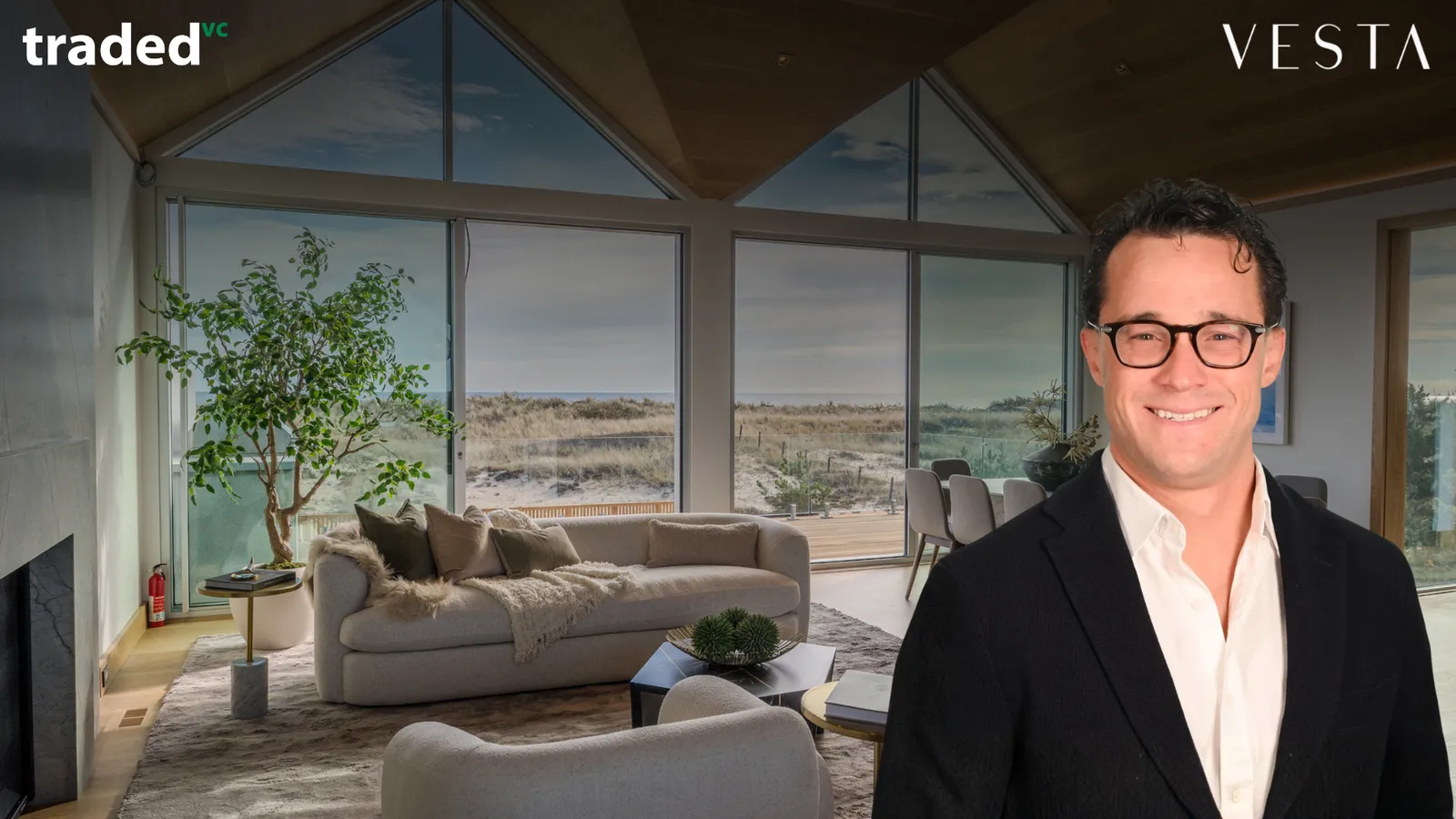
Julian Buckner, founder and CEO of Vesta Home, has spent more than a decade building the nation's largest luxury staging, interior design, and custom furniture company, a business that in 2025 alone designed roughly 2,500 homes, staged more than 5.2 million square feet nationwide, and influenced $13.7 billion in annual real estate transactions.
Buckner sits at the intersection of luxury real estate, design, consumer behavior, and entrepreneurship. Through Vesta Home, he has helped redefine staging from a marketing tool into a lifestyle business, creating fully realized living environments that buyers increasingly purchase along with the home itself. That approach has positioned the company behind some of the country's most significant residential transactions, including the $149 million penthouse at Central Park Tower, as well as residences associated with LeBron James, Travis Scott, Stephen and Ayesha Curry, Gleb Savchenko, Harry Styles, and Jonah Hill.
Unlike much of the venture-backed consumer landscape, Buckner built Vesta Home without institutional capital, a decision that traces directly back to an earlier startup failure that nearly cost him his entry into the industry altogether.
"There's a big opportunity here. This is going to exist. It's too important to real estate, the multi-trillion-dollar-a-year real estate market, for this not to exist."
- Julian Buckner
The Genesis of a Luxury Design Powerhouse
Buckner's path to Vesta Home didn't start with staging at all. After college, he spent a couple of years at McKinsey before joining a venture-backed startup called Showroom, which built software for interior designers. At 25, with no background in real estate and no personal experience buying or selling a home, Buckner watched the company raise a large round of venture funding and burn through it until the business collapsed.
It was during that unraveling that Buckner, and his now-business partner Brett Baer, spotted the opening that would become Vesta Home. Two things stood out to him. First, home staging companies were generating tens of billions of dollars in value for the real estate industry by helping homes sell faster and for more money, yet the industry itself was almost entirely unprofessionalized, fragmented, mom-and-pop, and ripe for consolidation. Second, he identified a broader thesis about broken distribution across the trillion-dollar home goods and services industry, spanning everything from IKEA to Restoration Hardware to the plumber and the HVAC technician. His insight was that brick-and-mortar retail carried high overhead through commercial landlords, while e-commerce distribution had simply shifted that overhead to Google and Meta. Staging, by contrast, offered a more convenient purchase funnel than either: the furniture is already sitting in the buyer's future living room, and they can sit on it before deciding to buy.
"There's no more convenient way to purchase furniture. It's more convenient than e-commerce because it's already in your living room, but you have the benefit of sitting on the sofa and seeing if you like it."
- Julian Buckner
That thesis became the founding idea behind Vesta Home: stage homes beautifully, then sell that same furniture directly to the buyers who fall in love with it while touring the property. Coming out of a startup that had been sunk by too much venture capital moving too fast, Buckner deliberately took the opposite approach with Vesta Home, building the company to be profitable from day one at a moment when competitors were raising hundreds of millions of dollars.
"Let's build a real business that can last generations, not just pump it full of venture money and hope that someone buys us before the till runs dry."
- Julian Buckner
Quality of Life Over Status: How Luxury Buyers Have Changed
Buckner says the biggest shift he's observed in more than a decade of working across thousands of luxury properties is the declining importance of status symbols like zip code prestige, replaced by a focus on quality of life. He points to wellness, family accommodations like guest wings, entertaining spaces, privacy, and outdoor living as the new priorities driving affluent buyer decisions, a shift he ties directly to the amount of time people now spend inside their own homes.
"We have seen a dramatic shift really since COVID, in it shifting from luxury being about status to luxury now being about quality of life."
- Julian Buckner
He describes the modern luxury home as having evolved into a full life-cycle product for its owners rather than simply a place to sleep, with buyers now investing specifically in ways that enhance day-to-day living and wellness rather than signal wealth.
The ROI Case for Staging: An 800% Return
Buckner maintains that design and staging represent the single highest-ROI investment a seller can make in a property, and he walks through the math using a $5 million home as an example. Between an 8% mortgage, taxes, and maintenance costs, every month a home sits unsold carries a real carrying cost. Staging, he says, does two things simultaneously: it lifts the achievable sale price by a conservative 3% (roughly $150,000 on a $5 million home) and cuts time on market by around 30% (about a month and a half off a 120-day sale, worth roughly another $75,000 in avoided carrying costs). Against a staging cost of roughly $30,000 on that same property, Buckner calculates the combined benefit at close to $250,000.
"There is an 800% return on a $5 million house for staging it, using pretty conservative assumptions. That's the power of design."
- Julian Buckner
The Rise of Turnkey Living
Buckner sees turnkey living as a direct response to how high-net-worth buyers, especially those who own multiple homes, value their time. While Vesta Home maintains a full custom interior design arm, complete with a residential design team that partners with architects from the ground up on fit, fixture, and finish selection, Buckner says most owners of second, third, or fourth homes don't want an 18-month design process for a property they'll use a few weeks a year.
"Time is the ultimate luxury."
- Julian Buckner
Vesta Home's turnkey offering sources found items, antiques, and local retail and artist pieces to give each property a sense of place, requiring as little as five to ten hours of buyer feedback across a compressed timeline, compared to a full custom build. The goal is to create a complete lifestyle that buyers can immediately step into, where the furniture, artwork, lighting, and accessories work together to create an emotional connection from the moment they walk through the front door. Buckner is careful to note that this isn't a wealth-tiered offering.
"How much money you have does not determine who buys this product, who benefits from this product. It's very much about what sort of experience you want to have."
- Julian Buckner
Building a Vertically Integrated, Three-Part Business
Buckner describes Vesta Home as fundamentally three businesses under one roof: a furniture design and manufacturing operation, an interior design and creative services team of roughly 75 people, a logistics and operations business responsible for physically moving furniture in and out of properties, and an AI-powered technology platform that helps support everything from design workflows and inventory management to operational efficiency. He views the operational complexity of running all three together as the company's core competitive moat rather than a liability.
"It's hard to build because we're really three businesses in one. But that's also what makes it hard to replicate."
- Julian Buckner
He credits much of Vesta Home's growth to deep empathy for its actual clients: real estate agents running their own small businesses, and developers who personally guarantee tens of millions of dollars in construction debt, and to building services around what actually helps those clients succeed rather than adding complexity for its own sake.
"How we do anything is how we do everything."
- Julian Buckner
What's Next for Vesta
Looking ahead, Buckner says geographic expansion is underway but is less exciting to him than deepening Vesta Home's share of the value chain with existing clients. The company is preparing to launch a preferred partnership program for real estate brokerages that reward top-performing brokers and educate the broader market on the value of staging, which Buckner believes shouldn't be a competitive secret reserved for top producers.
Vesta Home's enterprise direct furniture and turnkey residence program has also expanded rapidly, with active projects in Barbuda, Costa Rica, Mexico, Montana, Miami, New York, Louisiana, and San Francisco. Buckner says one of his biggest personal areas of focus right now is upgrading the design and aesthetic of Vesta Home's in-house furniture line to keep pushing the company's product forward.
"We want to keep the look fresh, and we want to continue to push the envelope forward aesthetically."
- Julian Buckner
ABOUT THIS STORY
- Desk
- Articles
- Filed
- Jul 14, 2026
- By
- Traded Media