

May 19, 2026
Mixed-Use Apartment Project Planned on Venice Boulevard

Traded Editorial
- A seven-story mixed-use apartment project has been proposed at 8871 West Venice Boulevard in Los Angeles.
- The development would include 96 residential units and ground-floor retail space.
- Plans include affordable housing units through Los Angeles’ Opportunity Corridor incentive program.
What the Venice Boulevard Project Includes
A new mixed-use housing proposal has been filed for 8871-8879 West Venice Boulevard in Los Angeles. The project is being developed by CityPads with Albert Group Architects serving as the architect. Plans call for a seven-story apartment building featuring 96 residential units above ground-floor commercial space. The proposed unit mix includes 72 studio apartments and 24 one-bedroom units. According to project filings, 15 apartments would be reserved for very low-income households through incentives tied to Los Angeles’ Citywide Housing Incentive Program and its Opportunity Corridor provisions. The development would replace existing structures on a 10,200-square-foot site.
What the Building Design Features
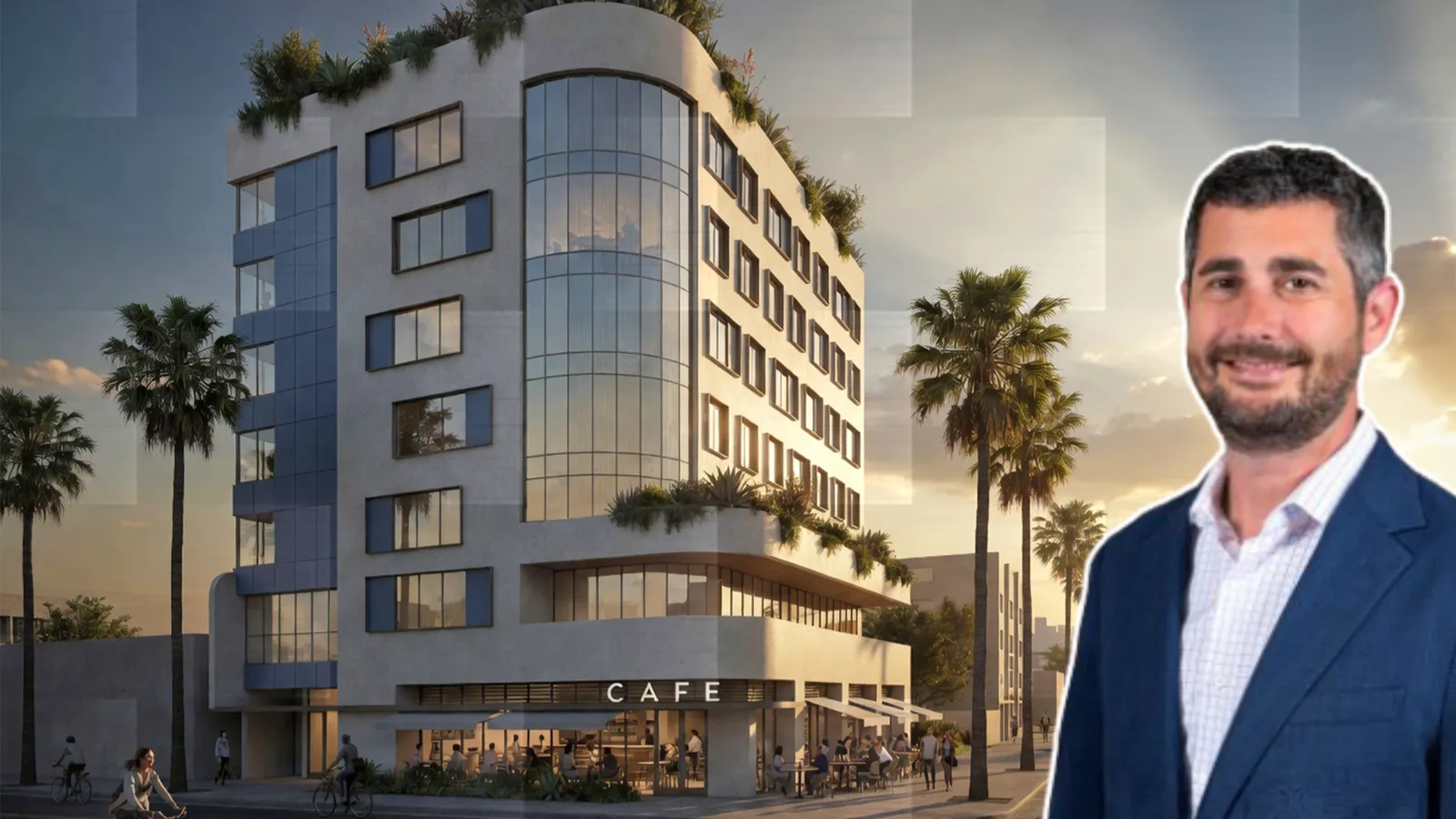
Renderings show a contemporary mid-rise structure with rounded corner elements, white plaster finishes, blue glazed tile accents, and dark-framed windows. A curved glass architectural feature facing Venice Boulevard serves as one of the project’s primary visual elements. The ground floor is designed with commercial storefront frontage and outdoor seating areas intended for retail and restaurant tenants. Upper residential levels follow a more uniform window grid pattern, while rooftop amenities and landscaping are planned above the residential floors. The proposal also includes approximately 3,490 square feet of commercial space.
What Amenities and Parking Are Planned
The development would provide nearly 4,000 square feet of open space, including rooftop common areas and a coworking lounge positioned at ground level. Parking plans include five vehicle spaces and 80 bicycle parking spots, reflecting the city’s continued push toward transit-oriented and lower-car-density development models. Projects using Opportunity Corridor incentives often reduce parking requirements in exchange for affordable housing commitments and increased residential density.
What This Means for Los Angeles Housing Development
The proposal reflects the ongoing shift toward higher-density mixed-use housing along major Los Angeles commercial corridors. Developers continue targeting transit-accessible and mixed-use zones for multifamily construction as the city pushes to expand housing supply while encouraging more walkable development patterns. Affordable housing incentives tied to programs like the Opportunity Corridor initiative have become a major tool for increasing residential density across Los Angeles neighborhoods where traditional zoning may otherwise limit project scale. At this stage, an official construction timeline for the project has not yet been announced.