

Dec 23, 2025
Cammeby's Advances FiDi Office-to-Resi Shift with 823-Unit Filing
Traded
Traded Editorial
Key Points
- Scale of Conversion: Three office towers in NYC’s Financial District are slated for transformation, delivering 823 new residential units as landlords pivot away from post-pandemic office vacancies.
- Prime Zoning, Prime Returns: Assets at 42, 39, and 32 Broadway benefit from C5-5 zoning and high FAR allowances, creating an efficient path for residential redevelopment.
- Capital Stack Signals Confidence: $335M in Citibank financing backs the portfolio, with current revenues of $36 to $38 per square foot, underscoring viable repositioning economics.
What’s Happening in FiDi
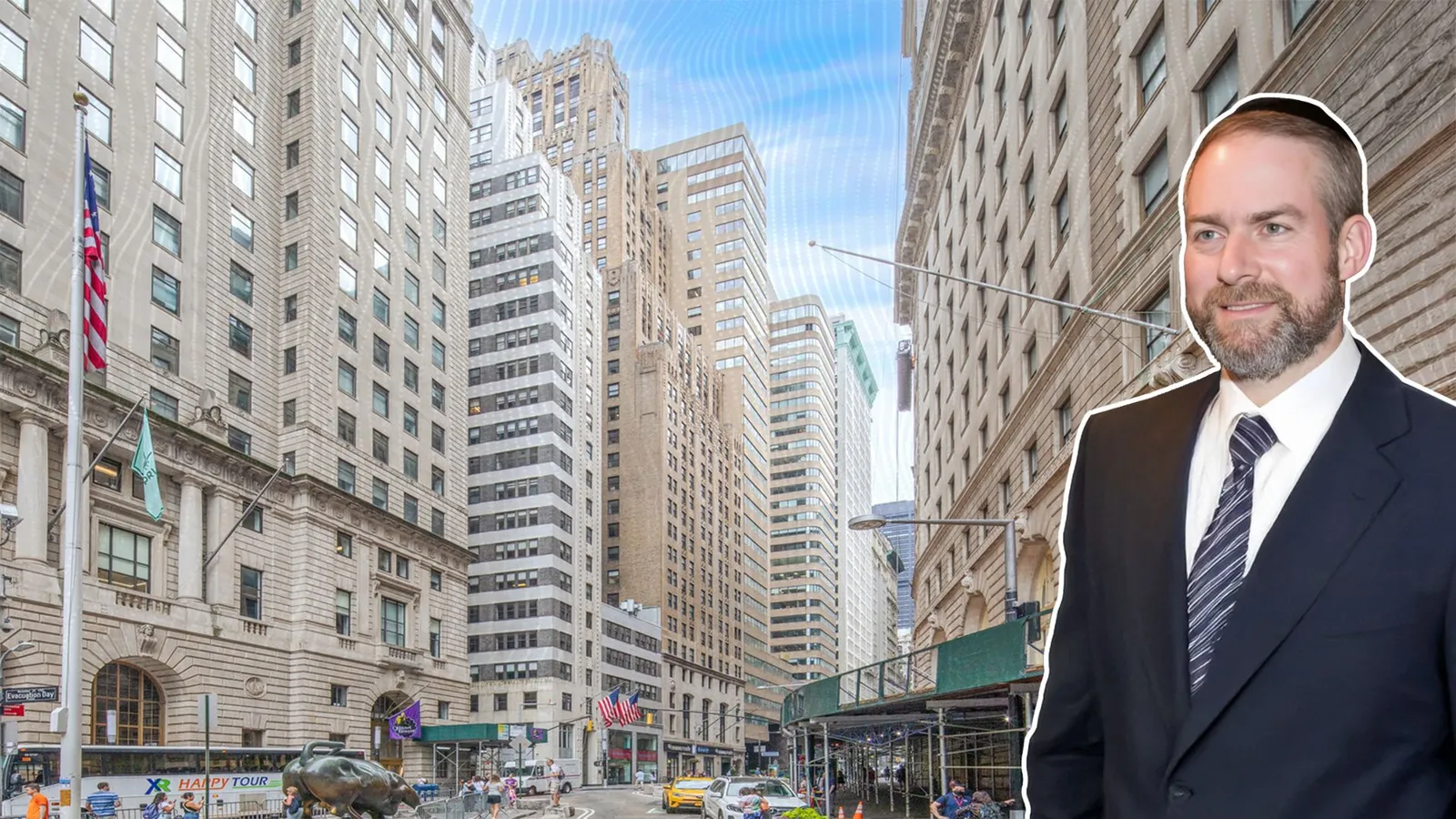
On December 19, 2025, Cammeby’s International Group, led by Avi Schron, filed plans to reposition three Financial District office buildings as residential properties, adding 823 units to New York City’s housing pipeline. The filing reflects a broader landlord response to elevated office vacancies and growing regulatory support for adaptive reuse, offering a clear roadmap for owners seeking value in legacy office assets.
The Assets at the Center of the Play
The applications cover three longtime office towers: 42 Broadway, a 22-story, 389,927-square-foot building planned for 370 residential units; 39 Broadway, a 40-story, 447,452-square-foot tower planned for 332 units; and 32 Broadway, an 18-story, 143,000-square-foot property planned for 121 units. All three sit on irregular lots zoned C5-5, allowing up to 15 FAR commercial or 10 FAR residential with inclusionary housing. The strategy relies on rehabilitation and selective enlargement rather than ground-up construction, accelerating timelines and controlling costs in Lower Manhattan. With FiDi still roughly 74 percent office, these filings signal sustained momentum for residential growth amid 17.4 million square feet of construction activity across the district.
Capital Structure and Operating Health
The properties carry a combined market value of roughly $166 million, including $71.3M for 42 Broadway, $73.9M for 39 Broadway, and $20.9M for 32 Broadway. Citibank provided $335M in loans, split across $125M at 42 Broadway, $85M at 39 Broadway, and $125M at 32 Broadway. Current income remains solid for legacy office product, with $14.9M at 42 Broadway or $38 per square foot, $16.8M at 39 Broadway or $38 per square foot, and $5.1M at 32 Broadway or $36 per square foot. Operational risk appears limited, as violations over the past year resulted in less than $53K in penalties total, with no lawsuits or bankruptcies tied to the assets in the last 24 months.
Why FiDi Keeps Winning Conversion Capital
Financial District sales have topped $1.9B over the past two years, driven by office repositioning activity that accelerated after July 2024. Zoning flexibility, aging office stock, and rising residential demand continue to funnel capital toward adaptive reuse strategies, reinforcing FiDi’s role as a proving ground for large-scale residential repositioning.
The Investor Takeaway
For landlords, this deal highlights a clear strategy focused on repositioning well-located office assets where zoning and debt structures support residential upside. In districts like FiDi, conversions offer a path to stronger long-term cash flow while reducing exposure to office market volatility. As permitting advances, owners should expect more filings of this scale, with FiDi remaining one of the strongest markets to execute this playbook.