
Nov 28, 2025
Building Communities with Purpose: A Conversation with Matthew Linde, CEO of People Restoring Communities (PRC)
People Restoring Communities is one of the most established affordable housing developers in the United States, backed by more than five decades of family history and a clear mission to elevate the standard of living for…
Traded Media

Traded Editorial
A Company Rebuilt Around Mission
“People Restoring Communities is a vertically integrated affordable housing developer with property management, GC, and design services in house.” - Matthew Linde, Principal and CEO of People Restoring Communities (PRC)
PRC's roots stretch back to 1971, when Matthew's grandfather, Jerome Chatzky, first founded the company. For decades, the firm operated as Property Resources Corporation, focused on housing and preservation while staying intentionally out of the spotlight.
When Matthew and his brother, Benjamin Linde, took over the business from their father and uncle, they immediately chose to rename and reposition the company.
“Historically our company wanted to be below the radar. Not really interested in press or putting ourselves out there. Our generation is taking the company in a different direction, including expanding nationally and focusing exclusively on affordable housing.” - Matthew Linde
The rebrand from Property Resources Corporation to People Restoring Communities was both symbolic and strategic. It tied the firm's identity directly to its mission and gave this generation of leadership something they could fully own and champion.
Third Generation Leadership
What Changes and What Stays the Same
Matthew grew up with his grandfather's philosophy in the background.
“He had a saying that the whale that floats too close to the surface gets harpooned. That was the company’s ethos for a long time, staying under the waves and out of the limelight.”
Despite the shift in visibility and scale, the underlying values remain stable.
What stays the same
-
A focus on housing first
-
A priority for vulnerable communities
-
A culture of putting partners and residents ahead of the family's short-term gain
What changes
-
A willingness to speak to the press and share the PRC's mission publicly
-
A deliberate push toward national expansion
-
A stronger desire to lead by example and influence others to view affordable housing as a meaningful, scalable career path
“One thing I really like about affordable housing is that even our competitors root for our success and we root for theirs. If they are successful, it just means more people are off the streets and one less family is worrying about where they will sleep next month.” - Matthew Linde
The Structural Bottlenecks in Scaling Affordable Housing
Time, Approvals, and Capital Alignment
When asked about the biggest bottlenecks in scaling, Matthew pointed directly to approvals and financing, and especially the impact of time.
“If you are in the affordable housing business, you need a thick skin and a stomach that can handle a lot of bureaucracy. You need to position your business and your transactions so they can absorb a lot of time.”
Key friction points
-
Long delays in agency approvals at the city, state, and federal levels
-
Land and acquisition carrying costs over extra months or quarters
-
Deals that trip up for small or random reasons that still cause significant slippage
-
The challenge of matching capital duration to project timelines
PRC often sees deals that require extensive checks for short periods, or patient capital that may sit for 3 or 4 years before generating returns. Very few investors naturally fit these profiles, which makes capital alignment one of the defining skills of an affordable housing developer.
Preservation Versus New Construction
Why PRC Leans Toward In-Place Rehab
PRC works on both new construction and preservation, but Matthew is clear about where the firm's heart and expertise lie.
“We really like the in place rehab space. We have created over the past 20 years a deep knowledge set on how to do rehabilitation while tenants are still living there, in the most minimally disruptive way to their lives.”
PRC's ideal balance
-
A majority of businesses are allocated to in-place rehabs
-
Continued capability and readiness to execute ground up where it makes sense
-
Flexibility to follow state-level incentives and programs while staying true to the mission
Why preservation matters
-
Lower relative risk than many ground-up projects, even with significant complexity
-
Direct improvement to existing communities that have lived with issues for years
-
The ability to address severely deferred maintenance in public housing and legacy assets
Matthew emphasized the emotional and human payoff.
“In a month we can go into someone’s unit and fix an issue that has been keeping them up at night or impacting their ability to use their bathroom. A couple of weeks of renovation can significantly improve someone’s quality of life.”
Inside a $600 Million East New York Rehabilitation
NYCHA, Historic Tax Credits, and Mold Remediation at Scale
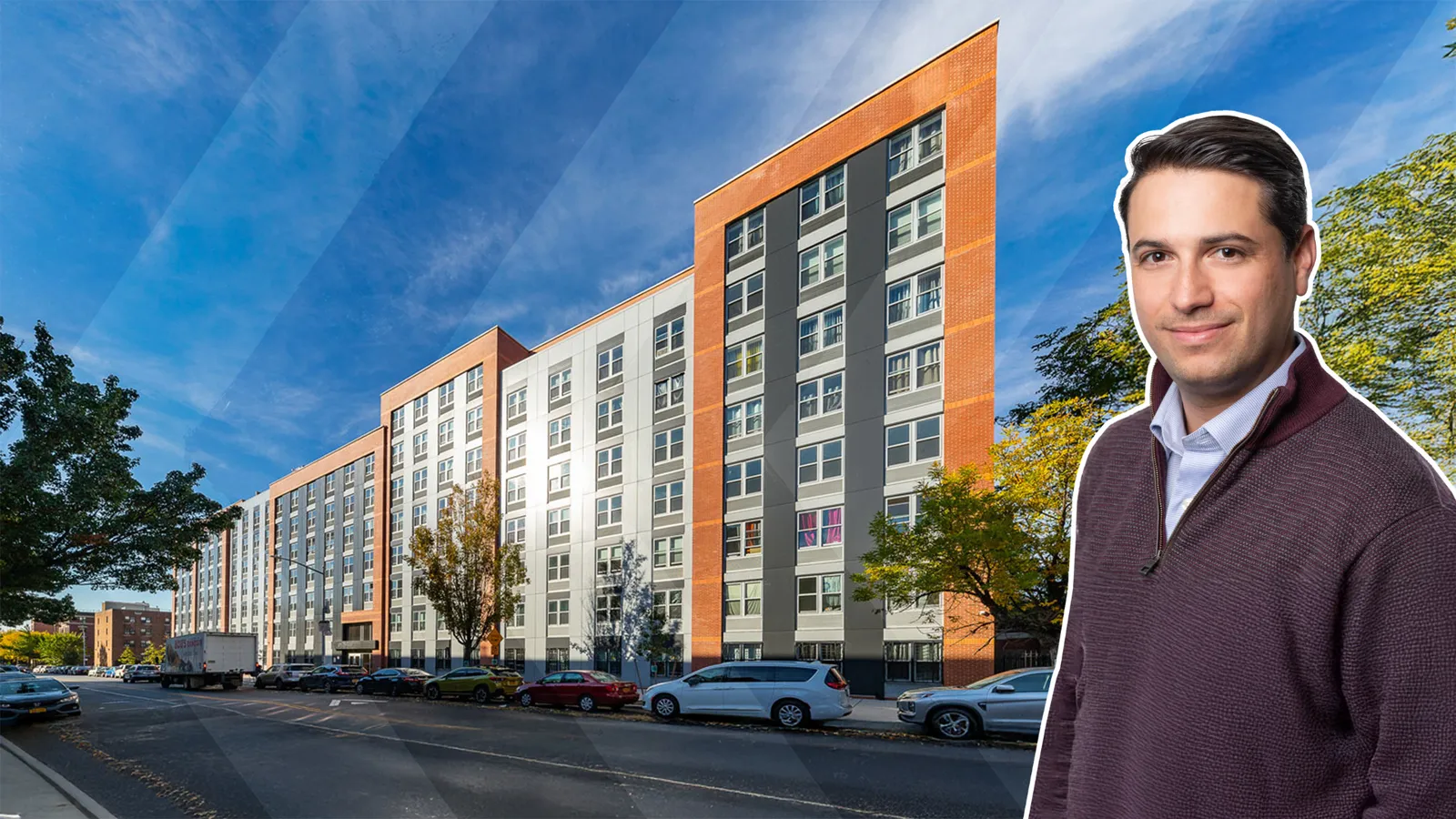
One of the most challenging and rewarding projects in PRC's history is a NYCHA PACT transaction in East New York, a $600 million rehabilitation that layered multiple complex structures.
“It was probably the most difficult and most complicated deal I have ever been a part of.”
Key elements included
-
A ground lease from NYCHA to PRC
-
A historic tax credit structure using a master lease pass-through
-
A RAD and Part 200 framework combined with historic tax credits
-
Mold, moisture, asbestos, and lead paint issues that required a significant strategy shift
Initially, PRC planned an in-place rehab. As the scope of environmental issues became clear, the team pivoted to vacate buildings in phases, temporarily relocate tenants, and complete deeper, more invasive work.
The result
-
Washer-dryers added in units.
-
Overhead lighting installed
-
New insulation and building systems
-
A level of transformation that made the buildings feel essentially new while preserving their structure
“Seeing the tenants’ faces when they came back into these newly renovated units was really satisfying. It was one of the most difficult yet most rewarding projects of my career.” - Matthew Linde
Capital Structure and Tools
How PRC Thinks About the Ideal Capital Stack
The low-income housing tax credit remains the industry's core engine.
“The low income housing tax credit is the fuel to the entire industry. It is what makes the industry run.”
PRC's typical stack
-
State allocated tax credits.
-
A senior construction loan
-
An agency such as Fannie, Freddie, or private activity bonds
-
A bridge to tax credit rehab structure when acquisitions move faster than allocations
On top of this, PRC actively searches for soft debt, grants, and targeted programs at every level of government.
Examples
-
Utility incentives for electrification and conversion from oil
-
Additional support for buildings that achieve passive house energy-efficient standards
-
Programs targeted at specific demographics or resident services
Beyond LIHTC, Matthew highlighted the potential of historic tax credits as an underrated and powerful tool, especially for existing buildings that have more historical significance than their appearance suggests.
“In New York, you can get about 40 percent of your entire budget funded through historic tax credits if your project qualifies.”
Vertical Integration as a Strategic Advantage
Design, Construction, and Management Built Around Residents
PRC is vertically integrated, with in-house development, construction, design, and property management. Matthew sees the design arm as especially critical.
“Most projects have this weird dynamic where the GC and architect work together but still point fingers. We want everyone on the same team and working for the same client, which is the tenant.”
Benefits of PRC's integrated model
-
Reduced conflict between design and construction
-
A smoother feedback loop between management and design
-
Early planning for operations, maintenance, work orders, and circulation
-
Better selection of materials and systems for long-term durability and ease of management
Internal coordination enables the PRC to move faster and deliver a more coherent final product that truly serves residents.
Measuring Impact Beyond Units
Community Outcomes, Not Just Counts
Matt is careful not to treat "units delivered" as the only metric that matters.
“You want happy tenants. There will always be issues, but if people are generally comfortable and safe and dignified in their housing, that is something we hang our hat on.”
Impact for PRC includes
-
Youth programming that provides structure and safety between school and home
-
Sports programs, especially in portfolios like the Bronx, that build community and belonging
-
Financial literacy classes for adults that help residents manage personal finances and build a pathway out of poverty
Housing is the foundation, but the goal is mobility and opportunity, not permanent stagnation.
PRC by the Numbers
Scale, Cost, and Pipeline
PRC's long-term commitment is evident in the numbers.
-
The firm has developed or preserved 20,343 apartment units throughout its 54-year history.
-
In the past decade alone, PRC has rehabbed 4,062 units with a total budget of 1.13 billion dollars, for an average cost per unit of approximately 277,000 dollars.
-
PRC currently has two active projects and nine additional projects in its pipeline, representing 1,786 extra units that will be preserved or developed.
These figures underscore both the scale of the PRC's work and the capital intensity of meaningful affordable housing production and preservation.
The Skill Set of a 2030 Affordable Housing Developer
Political, Economic, Social
When asked to complete the sentence,
"A successful affordable housing developer in 2030 will be world-class at X, Y, and Z."
Matthew chose three pillars that already define the field today.
“Affordable housing sits at the nexus of political, economic, and social.”
To succeed, developers must
-
Navigate politics at every level.
-
Master the numbers, capital stack, and risk
-
Care deeply about the social impact of their projects
This is not a business that can be approached as a purely financial exercise.
“If it is only dollars and cents, it is very hard to have the patience to deal with the ups and downs. You need pride and ownership in the good these communities can do.”
Leadership, Lessons, and Underrated Advice
Delegation, Documentation, and Live Transactions
Best advice as CEO
“You cannot do everything if you are going to run the business.”
Matt loved being a junior analyst, building models and digging into rent rolls, but leading a scaling, national platform requires letting go and trusting the team.
On pre-development
“Do not rush reading the documents. Term sheets, loan docs, operating agreements. Take the time to read and truly understand what you are signing.”
On learning the business
“It is very hard to really learn this industry without working on live transactions.”
Matt encourages young professionals to put themselves in roles where they see as many deals and structures as possible, read everything, and talk to as many professionals as they can.
The Trenton Choice Neighborhoods Project
A Turning Point for PRC's National Strategy
One of PRC's most exciting upcoming efforts is in Trenton, New Jersey, where the firm is working with the City of Trenton and the Trenton Housing Authority under the federal Choice Neighborhoods Program.
The project
-
Centers on the Donnelly Homes public housing complex
-
Will be redeveloped across five phases
-
Uses a shuttered and fire-damaged school site to build new multifamily housing that becomes the first step in relocating residents and repositioning the neighborhood
“It is an unfortunate reality in public housing that sometimes the cost to repair is greater than the cost to build new. Trenton gives us a chance to create a new community, kick off a multi phase redevelopment, and be part of changing an entire neighborhood.”
This will be PRC's first awarded project outside New York and a key milestone as the company proves its model on a national stage.
What Drives PRC Forward
Legacy and Kindness
Matthew often returns to the idea of family legacy and the motto he grew up with.
“Our family motto as long as I can remember was be kind.”
For PRC, that means
-
Treating tenants with respect and dignity
-
Supporting employees as the company grows and scales
-
Making sure that each project has a positive impact beyond the capital stack
The long-term vision is a national company that continues to build and preserve affordable housing with kindness front and center.