


Trump Signs Executive Order Adding $100,000 Annual Fee to H-1B Visas
Trump’s new executive order slaps a $100,000 annual fee on H-1B visas and introduces a costly “Gold Card” fast track, forcing Big Tech and startups to rethink their hiring strategies. With Amazon, Infosys, Google, Met…
Former President Donald Trump signed a sweeping executive order on Friday imposing an annual $100,000 fee on all H-1B visa applications, a dramatic shift in U.S. immigration and labor policy.
The move, part of Trump’s broader effort to restrict foreign labor inflows, is designed to push American companies to prioritize domestic hiring and training.
Commerce Secretary Howard Lutnick explained the administration’s stance bluntly:
“If you’re going to train somebody, you’re going to train one of the recent graduates from one of the great universities across our land. Train Americans. Stop bringing in people to take our jobs.”
The Financial Impact
-
A $100,000 fee per year for every H-1B holder.
-
Applies to both new applicants and renewals.
-
Visa holders would need to pay annually for a maximum of six years, the standard H-1B duration.
With 85,000 H-1B visas issued annually, the order could create billions in new fees — effectively reshaping the economics of hiring foreign engineers, developers, and other highly skilled workers.
The “Gold Card”
Trump also unveiled a second program: the H-1B “Gold Card”, which offers expedited processing.
-
Individuals can pay $1 million for priority treatment.
-
Companies can sponsor candidates for $2 million per applicant.
-
Trump framed the initiative as a revenue engine, saying it would generate “hundreds of billions of dollars” for debt reduction and tax cuts.
Corporate Exposure: Who Relies on H-1Bs Most?
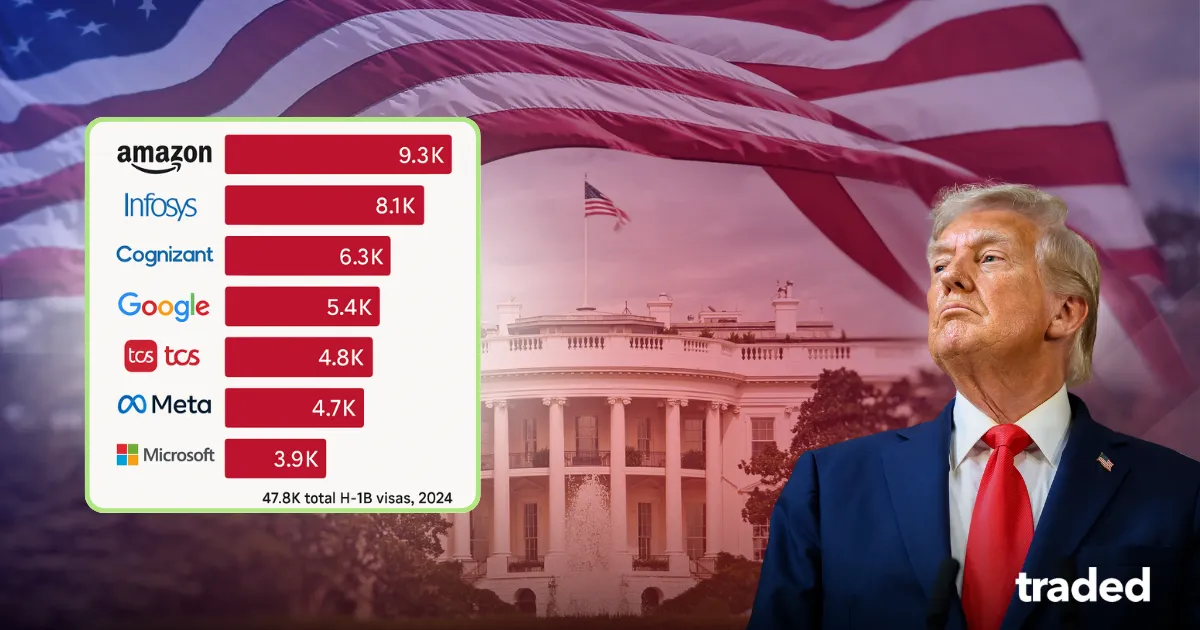
According to U.S. Citizenship and Immigration Services (as of Sept. 30, 2024), top companies sponsoring H-1B visas include:
-
Amazon: 9.3K
-
Infosys: 8.1K
-
Cognizant: 6.3K
-
Google: 5.4K
-
TCS: 5.3K
-
Meta: 4.8K
-
Microsoft: 4.7K
-
Apple: 3.9K
Combined, these eight firms account for 47.8K visas — more than half of the total annual cap.
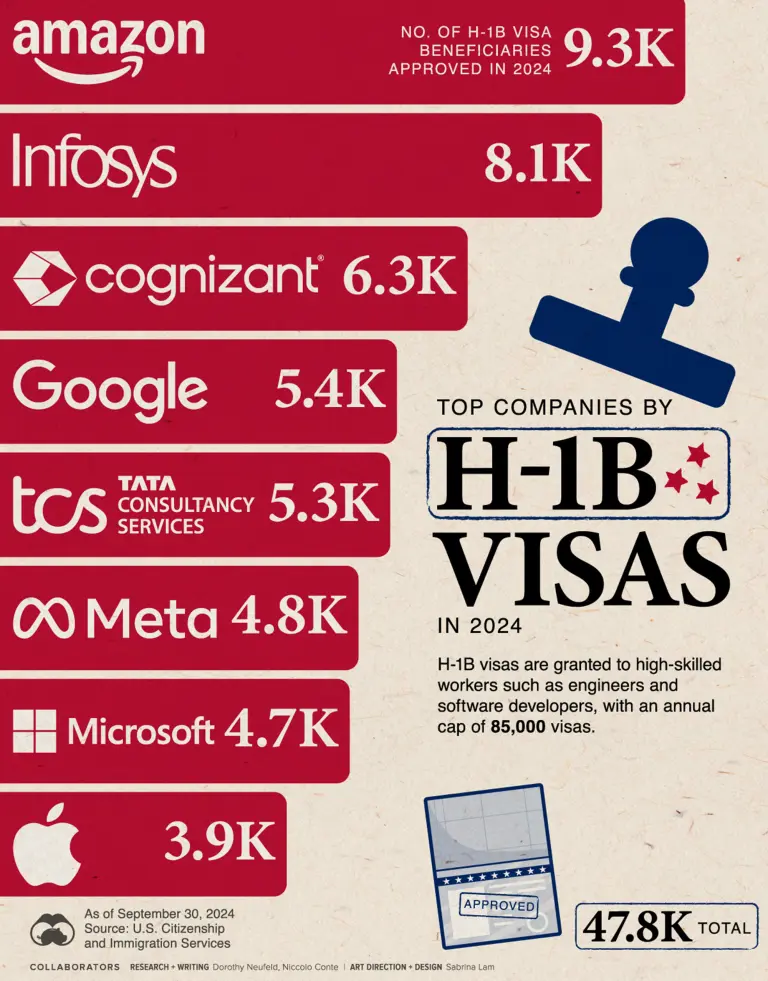
This places Big Tech and IT consulting firms at the center of the policy debate, as the new fees could add billions in annual labor costs.
The Administration’s Rationale
The Trump team has long argued that the H-1B program allows corporations to suppress domestic wages by importing lower-cost workers.
“Either the person is very valuable to the company and America, or they’re going to depart and the company is going to hire an American,” Lutnick said.
The policy also comes amid concern that U.S. students are being discouraged from entering STEM fields due to perceived foreign competition.
What Comes Next
-
Tech giants and outsourcing firms will likely challenge the order, given its enormous financial impact.
-
Startups and mid-sized companies could be disproportionately hit, lacking the capital to absorb $100,000+ per employee in recurring costs.
-
The “Gold Card” may create a two-tier immigration system, where only the wealthiest applicants and corporations can participate.
This executive order could reshape America’s tech talent pipeline, alter global labor mobility, and spark a new chapter in the fight between Silicon Valley and Washington over the future of skilled immigration.
ABOUT THIS STORY
- Desk
- Articles
- Filed
- Sep 19, 2025
- By
- Traded Media