

Inside Zacua Ventures: Why the Next Wave of Innovation Will Come from the Physical Industries
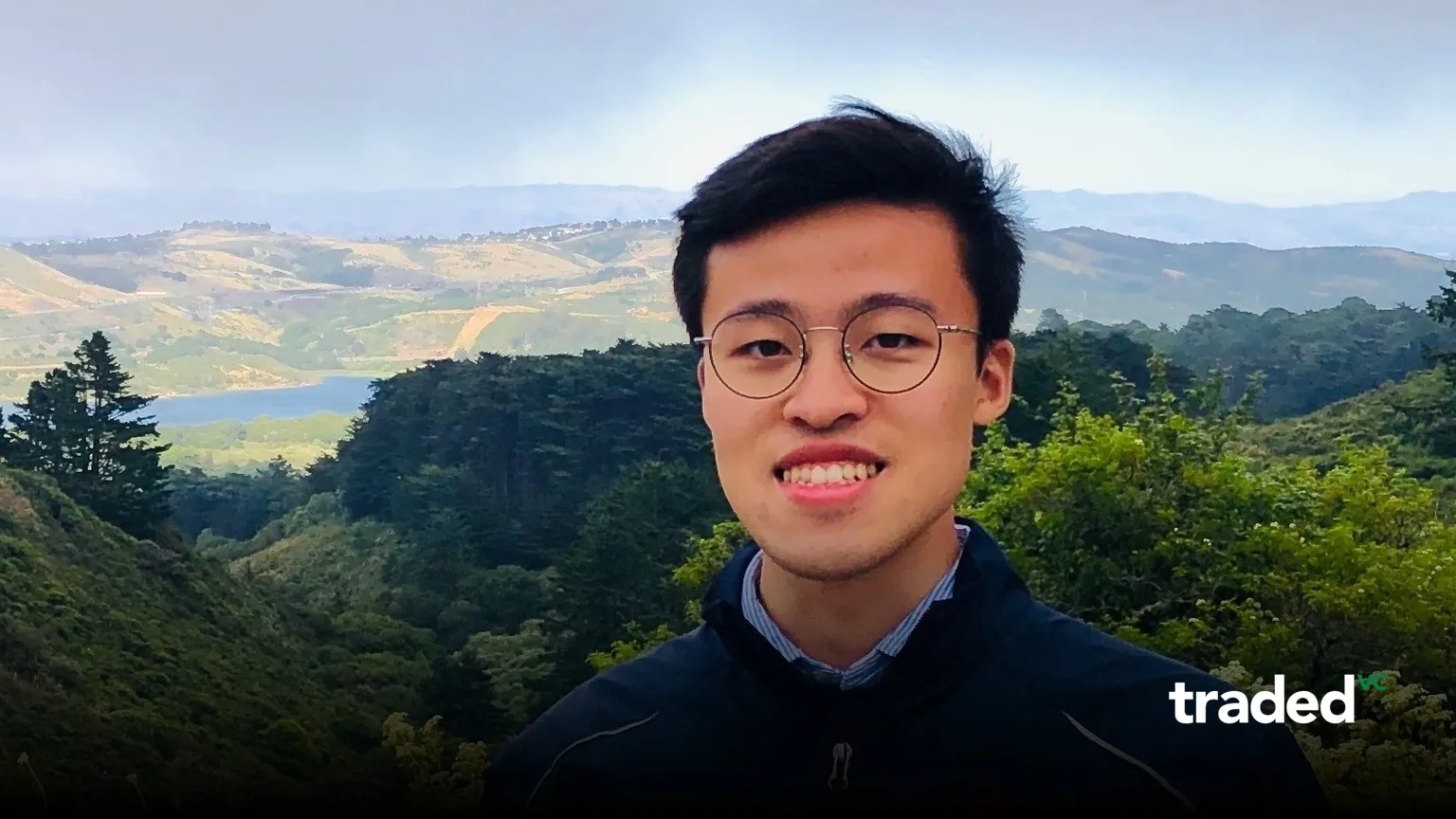
Vivin Hegde is one of the co-founders of Zacua Ventures , a venture capital fund built on capital from billion-dollar construction and industrial corporations, dedicated to backing startups reshaping the built environ…

Vivin Hegde is one of the co-founders of Zacua Ventures, a venture capital fund built on capital from billion-dollar construction and industrial corporations, dedicated to backing startups reshaping the built environment. His path into venture capital spans nearly every layer of the industry: he trained as a robotics engineer in India, spent seven years in McKinsey & Company's industrials practice working across infrastructure, automotive, metals and mining in markets spanning four continents, and later joined Hilti, where he moved from corporate strategy into frontline operations, visiting ten to twelve job sites a day before eventually leading the company’s corporate venture arm. That operator background, Hegde says, is central to Zacua’s thesis.
As Hegde put it:
“You can’t invest in these industries from a spreadsheet. You have to understand how the work actually gets done. Spending time on job sites taught me that construction isn’t slow because people resist change. It’s slow because failure has real-world consequences.”
That experience shaped Hegde’s view that construction was only the entry point to a broader opportunity. At Hilti, he went on to build the company’s corporate venture arm and lead its joint venture with Trimble. Throughout it all, one idea kept resurfacing: from housing affordability and infrastructure resilience to energy security and climate adaptation, the physical industries sit at the center of some of the world’s biggest challenges, yet the industries responsible for solving them have historically attracted only a fraction of the venture investment directed toward software.
In 2022, Hegde and partners Juan Nieto Villamandos and Mauricio Tessi Weiss, both of whom held leadership roles at Cemex’s Shanghai and European operations, set out to close that gap. Zacua Ventures was built on a specific thesis: combine deep operator expertise with a global network of strategic industry partners to help startups achieve commercial validation, not just raise capital. The firm’s corporate investors, including companies such as Hilti, Volvo and DPR Construction, provide founders with access to real customers, operational feedback and deployment opportunities that help de-risk the earliest stages of company building.
Hegde said:
“You don’t earn the right to disrupt an industry until you’ve earned the right to understand it. The best founders aren’t trying to force technology into a market. They’re solving problems the industry already knows it has.”
That philosophy has become Zacua’s defining investment lens: backing founders who pair world-class technical expertise with a deep understanding of how critical industries actually operate, creating technologies that can scale in environments where reliability, safety and measurable outcomes matter far more than novelty alone.
The Operator’s Edge
Ask Hegde what separates Zacua from a traditional venture firm, and it isn’t proprietary software or a sourcing strategy. It’s decades of operator experience. The team’s investment decisions are shaped by firsthand experience working across construction, manufacturing and the broader physical industries, giving them pattern recognition that is difficult to replicate from outside the sector.
As Hegde explained:
“We’re not learning the industry after we invest. We’ve spent our careers inside these businesses. We understand the workflows, where the bottlenecks are and why they exist. That allows us to spend less time figuring out the problem and more time identifying founders with technologies that can actually solve it.”
That familiarity cuts both ways. It lets Zacua’s team stress-test a startup’s technology directly, leveraging its network of strategic partners to validate solutions in real operating environments, from active job sites and robotics research facilities to material testing labs and industrial operations. The feedback not only sharpens Zacua’s investment conviction but also gives founders an early path toward commercial validation. Once Zacua invests, that same network becomes a growth engine, opening doors to the customers who matter most.
It’s also how Hegde evaluates founders in the first place. He looks for two things above all: a founder’s grasp of the problem they are solving, and the technical expertise to build a differentiated solution.
“Technology evolves quickly. Markets evolve. Founder-market fit is much harder to fake. When founders genuinely understand the customer and the workflow, they’re much more likely to build something people will actually adopt.”
That framework also explains why he has watched so many outside founders stumble in construction tech. A few years ago, he said, it was common to see entrepreneurs arrive convinced the entire industry was broken and ripe for wholesale disruption. It rarely worked, he explained, because construction is built the way it is for a reason.
Hegde explains:
“These industries are building homes, bridges, factories and energy systems. When you’re responsible for critical infrastructure, you don’t get to move fast and break things. You have to understand why existing workflows evolved the way they did before you can improve them.”
The Neuron Factory Playbook
One of Zacua’s clearest examples of what founder-market fit looks like in practice is Neuron Factory, a startup building an AI-driven platform for pre-construction workflows. What set it apart, Hegde said, wasn’t just the idea, it was the caliber of the team behind it. Its CTO, Salil, was an early engineering manager at Waymo. Co-founder Zaid came from LinkedIn and Microsoft, where he helped establish the company’s OpenAI partnership. Both brought a depth of technical understanding, particularly around knowledge graphs, that Hegde said he had rarely seen matched by other founders in the space.
Just as important was how fast the team absorbed an industry they weren’t originally from.
“The ability to learn about the workflows was exceptional. They didn’t assume they had all the answers. They spent time with customers, learned how decisions actually get made and built around those realities.”
Neuron Factory’s early traction came from an unusual source: investors who became customers, and customers who became investors. Cordeel Group backed the company before it was even a client, betting on the team’s talent and giving them full access to job sites and data. Suffolk came in after directly observing Neuron Factory’s progress, concluding the technology was more advanced than anything else on the market. That combination of capital, customer access and commercial validation created a powerful flywheel for growth.
“Once you prove value with one customer, others start paying attention. That’s when momentum builds. It becomes a snowball effect because customers trust solutions that have already been validated by their peers.”
In his view, Neuron Factory is close to hitting that inflection point. Rather than trying to transform an entire organization overnight, the company focused on solving a specific pain point for a small group of estimators, demonstrating measurable ROI before expanding into adjacent workflows. That strategy, he said, reflects a broader lesson for enterprise AI: adoption happens one workflow at a time, but success can scale quickly once customers see tangible value.
Why Pre-Construction Is the Entry Point for AI
Hegde is bullish specifically on pre-construction as the highest-leverage phase for AI to enter the industry.
As he put it:
“It’s much easier to make changes in pre-construction as opposed to construction and operation.”
He described the cost differences between project phases as an order of magnitude apart. Just as important, information refined during pre-construction can flow forward through the entire life of a project, feeding into scheduling and execution and making the whole process more efficient, provided the right integration work is done to keep that information transparent across phases.
Neuron Factory fits neatly into this thesis, but it’s just one piece of a broader map Zacua has built across the construction tech stack. The portfolio also includes Outbuild in scheduling, Document Crunch in contract and document management (recently acquired by Trimble), Field Materials in procurement, and Augrade in design. Together, these investments reflect Zacua’s broader thesis that AI and software can transform the physical industries by improving how complex projects are designed, built and operated.
Beyond Construction: The Next Frontier
Asked which lesser-known companies in Zacua’s portfolio deserve more attention, Hegde pointed to a handful of bets outside the traditional construction tech mold. Flexnode is building modular data centers that can go up in nine to twelve months, compared with the five to seven years a traditional build typically takes, a response to surging demand for AI infrastructure paired with real constraints on energy, land and permitting in dense metro areas. In Europe, Cemvision is developing zero-carbon cement, and Vateris is working on more sustainable binders for concrete. In Munich, a company called CONXAI, which Hegde described as “the Palantir for construction,” is already deployed across forty to fifty different use cases despite being an early-stage startup.
For Zacua, these companies represent the next evolution of the physical industries: a convergence of AI, robotics, infrastructure and industrial innovation. As global demand for new infrastructure accelerates, the firm believes the biggest opportunities will emerge from technologies that can make physical systems more efficient, resilient and sustainable.
These bets reflect where Zacua is headed. The fund’s second vehicle broadens well beyond its original “core construction” mandate from Fund I to include data centers, the intersection of mining and construction, and building materials more broadly.
That shift is shaped in part by the fund’s LP base, roughly 90 percent of which comes from billion-dollar corporations spanning owners, builders, subcontractors, suppliers and manufacturers across nearly every region in the world.
A Global, Hands-On Model
Zacua’s structure mirrors its global ambitions, and Hegde was explicit that this isn’t a firm run out of one office that happens to write checks abroad. The team itself is distributed, with people based in Madrid, Mexico, Australia, Japan and the Middle East, and three partners dividing the world between them. Hegde covers North America and India, one partner handles Asia and part of Europe, and the third covers the Middle East, Latin America and the rest of Europe. All three travel extensively, but each treats their home region as the place they are meant to spend the bulk of their time.
That local presence isn’t just a staffing choice. It changes how Zacua evaluates deals. In Hegde’s view, construction problems rarely translate cleanly across borders, so the firm’s diligence process bends to the geography rather than applying one global rulebook. Looking at a startup in Berlin, for instance, means first asking whether it’s solving a problem specific to Germany or one with genuine global reach, then sizing the local market and pain point on its own terms. He pointed to India versus the United States as a sharper example: the two markets differ in labor rates, regulatory environment, how fragmented the industry is, and even how willing customers are to pay for software at all. Rather than judging every deal through a U.S. lens, Zacua indexes its expectations to whatever market the founder is actually selling into.
“It has to work for them. It doesn’t have to work for everyone.”
That, combined with market size and how well the founder understands the local landscape, is really all that matters when the fund is deciding whether a geography-specific bet can become a large company.
This global footprint also shapes where Zacua finds its deals. The firm draws inbound interest from founders, LPs and other generalist investors who prefer that Zacua lead deals in the space, precisely because there are so few specialists globally who do. It cultivates relationships with universities including Stanford, MIT and RWTH Aachen, sometimes teaching guest lectures, and participates in the world’s largest construction startup competition, reviewing 700 to 800 startups a year. It also partners with organizations like the Singapore government and Greentown Labs to stay embedded in regional ecosystems rather than parachuting in. Underpinning all of it is original research, including quarterly reports on robotics and AI that take three to six months of thesis building to produce, often drawing on the in-house R&D teams of Zacua’s corporate investors around the world.
Building the Team, Not Just the Portfolio
Hegde’s operator philosophy extends to how he builds his own team, though he’s careful to note the traits aren’t fundamentally different from what he looks for in founders, just weighted differently. A startup founder lives inside one problem and is judged almost entirely on execution. A venture investor, by contrast, is constantly context-switching: talking to dozens of startups, doing research, sitting through conferences. Networking and relationship-building matter far more on the investing side, while analytical ability matters for both, just to different degrees depending on the role.
That operator mindset is particularly important in specialist investing, where understanding the realities of building and scaling companies in complex industries requires more than evaluating a market from the outside. Zacua’s team brings together experience across venture, engineering, consulting and industrial ecosystems to help founders navigate challenges beyond capital.
Even within Zacua, the skill set shifts by seniority. An analyst mostly evaluates deal flow, does financial modeling and helps build the pipeline. A principal is expected to also manage LP relationships and provide hands-on portfolio support once a check is written. It’s a reminder, Hegde suggested, that hiring for venture isn’t one job description. It changes depending on what stage of the career, and the fund, someone is stepping into.
The Current Landscape: AI and What’s Underrated in Venture Right Now
Even with decades of industry experience, Hegde says the past year has demanded an unusual amount of catching up.
As he described it:
“It’s like going back to school right now. The amount of learning I’ve had to do in the last eight to twelve months has exceeded what I’d done in the first few years.”
Zacua has responded by running internal AI training sessions for its entire team. Some members have even picked up programming. The culture, Hegde said, runs on shared learning: whoever on the team develops expertise in a given area teaches the rest.
Asked what he thinks the venture world consistently undervalues, Hegde didn’t hesitate.
“Everybody thinks about the big idea, everybody thinks about founders. But execution is what delivers results.”
He also pointed to a structural gap in who ends up in venture capital: plenty of consultants, bankers and founders-turned-investors, but relatively few operators who never founded a company themselves moving into VC roles. That’s not a fatal flaw across the industry, he said, but it can matter significantly in specialist investing, where deep sector and technical fluency shapes how quickly and confidently a firm can underwrite a deal.
Looking Ahead
Pressed on where he wants Zacua to be in five years, Hegde framed it less in terms of fund size than mandate.
“We want to be an agent of change.”
That could mean deeper investment in areas adjacent to construction, like mining, building materials, or energy generation and distribution. The common thread, he said, is a preference for hard problems over popular ones.
“Not things that typically most people invest in, but things which are really hard and where we can make an impact.”
As for Zacua’s biggest challenge right now, Hegde’s answer was refreshingly unglamorous.
“Not enough hours in the day.”
Between fundraising, publishing research, hiring and staying high-touch with both founders and LPs, the fund runs, in his own words, like a startup itself. But Hegde doesn’t sound tired talking about it. If anything, the pace seems to energize him, proof that the industry he’s spent his career inside is finally getting the attention, and the capital, it deserves. For an investor who has spent two decades watching the built environment quietly shape modern life, that shift alone feels like a kind of validation. The hard problems, he’s convinced, are exactly where the biggest opportunities live.
ABOUT THIS STORY
- Desk
- Articles
- Filed
- Jul 31, 2026
- By
- Traded Media