


Inside Visible Ventures: How Lori Cashman and Carolyn Everson Are Betting on Gen Z
Visible Ventures founder Lori Cashman and thought partner Carolyn Everson on backing Gen Z, coaching founders, and why they think most of venture capital is misjudging AI and each other.
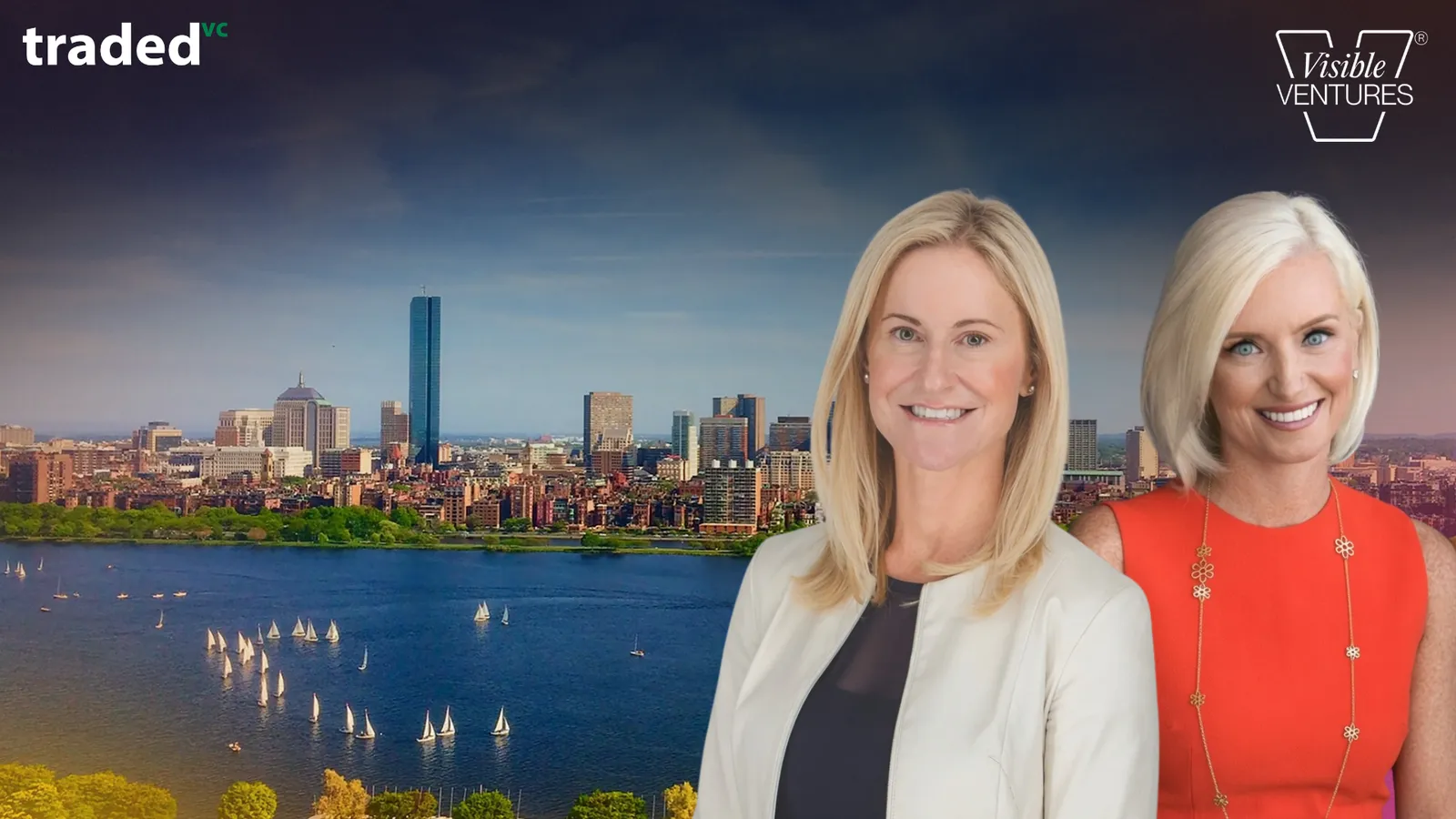
Visible Ventures is an early-stage venture firm built on a simple thesis: the biggest market opportunities of the next decade sit where the generational wealth transfer meets the rise of Gen Z, and it invests across the future of work, wealth, and health and longevity. Founder Lori Cashman and Senior Advisor and Thought Partner Carolyn Everson talked about how they built the firm, what they look for in founders, and why they think most of venture capital is still misjudging AI, Gen Z, and each other.
Who They Are
Lori Cashman is the founder and Managing General Partner of Visible Ventures, based in Boston. A Duke public policy major, she earned her CPA at KPMG before an emerging growth-equity firm hired her as its third employee, launching her investing career. Today, she leads a firm with 20 active portfolio companies and roughly $40 million deployed across funds and SPVs, all built around a thesis centered on Gen Z and the generational wealth transfer. She remains closely tied to Duke, including as a current member of the Duke Alumni Board and a former chair of the Duke Public Policy Board of Visitors, and mentors students through both formal and informal programs each year.
Carolyn Everson advises and supports Visible Ventures alongside a resume most operators would envy: VP of Global Business at Meta for a decade, Corporate VP of Global Advertising Sales at Microsoft, COO at MTV Networks, President of Instacart, and now Senior Advisor at Permira. Across nearly three decades, she helped companies navigate one technology shift after another - the digital transformation of media at MTV, Microsoft's cloud and advertisement evolution, and Meta's mobile transformation. Her path there was never mapped out in advance - she moved from traditional media into big tech and eventually into her current "portfolio life," picking up board seats at Disney, Coca-Cola, and Under Armour along the way, alongside CEO advisory work with firms like Boston Consulting Group. At Visible Ventures, her work runs deeper than an advisory title suggests - she works closely with Cashman and the investment team on opportunity sourcing, founder development, leadership coaching, executive hiring, organizational design, and strategic questions across the portfolio.
How They Connected
Cashman had Everson on her radar for years - from her time at Meta, from CNBC appearances - before spotting her name on a Duke volunteer list and getting a warm introduction in early 2023. Everson was a "Duke mom," her daughter had attended the university, which gave the outreach an extra thread of connection beyond the professional one."I was very protective of her time," Cashman said, "and then after spending more time together, I started suggesting it would be great to have her more deeply involved."
Everson, at the time building her portfolio of board seats and advisory work, wasn't looking for another commitment. What changed her mind was Cashman's investing philosophy - not just writing a check, but actually “rolling up her sleeves:” helping with strategic counsel, building out leadership teams, and working through culture questions. "Lori's approach to investing was how to add real value and not just write a check, because lots of people can write checks," Everson said. "I loved the approach... Lori and I just clicked. I felt like I had known her for many, many years."
That "not just writing a check" line turns out to be the thread that runs through nearly everything else Cashman describes about the firm - and it starts, for Everson, with a career that never had much of a script to begin with.
Carolyn's Path: No Plan, Just Curiosity
Everson is upfront about the fact that none of her career was mapped out in advance. "If I were following a plan from the early days of graduating from college, I never would have wound up at a company like Facebook - it didn't even exist when I graduated from college in 1993," she said. Her original ambition was to be a broadcast journalist in the mold of Katie Couric.
What she credits instead is intellectual curiosity - one of the biggest lessons of her career was to "have your pulse on trends" and stay open to possibilities rather than settle into a traditional path.
Looking back across her roles, Everson sees one throughline: helping companies "either reinvent themselves during moments of enormous technological change or build with enormous technological change." At Viacom/MTV, that meant evolving a traditional media company into the digital age. At Microsoft, it meant helping the company catch up after missing the early mobile wave. At Meta, it meant navigating the mobile revolution that forced every business to become mobile-native almost overnight.
She’s operated through nearly every major technology cycle of the last three decades - desktop, internet, search, social, mobile, cloud, and now AI. Each one looked different on the surface, she says, but the underlying leadership patterns tend to repeat: how founders handle ambiguity, how they build culture under pressure, how they communicate through disruption. That pattern recognition, sharpened across nearly thirty years of operating through those cycles, is the core of what she brings to founders today.
She's just as deliberate about the qualities that got her there in the first place: reputation, built on “real deep human qualities of leadership - kindness, humility, generosity, vulnerability" - paired with a track record of building teams and delivering results. "Once you get some positive momentum, it can really build," she said. "It can also work in reverse." Her summary of what actually survives every wave of disruption: "Leadership, customer obsession, execution - those remain timeless."
The AI Gap
That same instinct, pattern recognition across cycles, is exactly what Everson brings to the cycle everyone's living through now.
Her read on the AI divide starts with a distinction she draws between how big companies and startups frame the same question. "Large companies are asking, 'how do we use AI inside our existing business?' while startups are asking, 'how do we build an entirely new business?'" What large companies really need to be asking, she argues, isn’t how to bolt AI onto what already exists, but how to rethink the business from scratch because AI exists at all.
She points to just how fast that rethinking has to happen. At the Allen & Company Sun Valley Conference, she relayed a comment from a prominent tech CEO: companies that launched as recently as 2024 as "AI-native" would, only two years later, build themselves entirely differently if they were starting today. Her takeaway was that the label itself has a short shelf life - the definition of AI-native would change with time, and today’s AI native company can be disrupted by one that launches next year with none of the same assumptions baked in. For investors, it’s "exhilarating" because the opportunities keep compounding, but also "daunting" because "the moats that we typically want to invest around can get dried up very quickly."
Cashman sees the same dynamic play out concretely in her own portfolio, not just in industry commentary. Visible Ventures has directly wrestled with whether an AI-native challenger to a large incumbent has a durable moat - a hard call, since some portfolio companies have had to re-platform their tech stacks within the last six months alone. In other words, Everson's point about moats dissolving isn't hypothetical for the firm; it's something Cashman has watched founders live through on a six-month cycle. Her anchor through that churn is to start from the actual problem being solved, and stay close enough to the customer to know who you're really building for. One founder's example stuck with her - older users wanting a traditional dropdown menu, younger users wanting to just talk to a chatbot.
That same pressure to keep re-learning in real time is why both of them describe their own AI habits less as tooling choices and more as discipline. Cashman says the starting point is simply to interact with AI as much as possible and repeat what works. She ran a spring "AI sprint" with interns and has built an internal platform, with an in-house AI engineer, that pulls and enriches data across every sourcing channel the firm uses, notably shifting the firm's entire workflow off a commonly used automation platform and directly onto Claude. Everson's approach is more advisory: she tries to use AI the way she'd coach a founder to, building herself "an army of chief-of-staff agents," and directly advises three early AI companies - one in physical AI, one in UK back-office automation, one in marketing insights. Neither treats their own AI usage as separate from the thesis; if the argument is that the ground keeps shifting under founders, staying credible on that argument means living inside the same shift themselves.
Why Cashman Started the Firm
Two things drove Cashman to launch Visible Ventures. First, she kept seeing founders solving real, overlooked problems, often from lived experiences, who couldn't find investors with genuine conviction in the idea. Second, and more personal: at some point, “a ton of bricks hit [her] over the head, that [she] never had a female mentor in [her] investing career." As a new mother, she wanted younger women to see someone her age allocating capital. "You need to see it to be it." It's a thread that runs through the whole conversation - two women, in an industry still overwhelmingly dominated by men, building and advising a firm together and, in turn, mentoring the next generation of women.
That instinct to represent an underserved group didn't stop at gender - it's the same lens Cashman turned on Gen Z, the generation the firm is actually built to invest behind.
The Investment Thesis
Visible Ventures is thesis-driven around two demographic trends. "The first is the generational wealth transfer," Cashman explained. "$30 trillion by the end of this decade, but $100 trillion in the next 20 years” - moving first into the hands of women, she says, and then into Gen Z and Gen Alpha.
The second is the sheer scale of Gen Z itself. "Gen Z is the largest generation ever,” with the youngest members still 8 years from entering the workforce,” she said - even as the U.S. tips toward having more people over age 65 than children in the U.S for the first time in its history, which is already true today in 11 states. For decades, a growing younger generation subsidized an aging population; that dynamic is now reversing, just as her own generation is living longer, higher-quality lives with a thinner safety net underneath it - Social Security, Medicare, and Medicaid all under strain. "In my opinion, it's an economic imperative that Gen Z is successful," she said.
Cashman says the real thesis is agency: "It's ensuring they can access the American Dream. And that requires agency." It's also personal. As a mother of Gen Zers herself, she's watched her kids' generation grow up overscheduled and scrutinized by social media in ways her own generation never was. "It's an obligation of our generation to do everything we can to ensure that the opportunities are there for them."
What They Look For in Founders
Everson and Cashman largely converge here, with each adding her own filter.
Everson looks at how a founder talks about talent and culture - whether she has to convince them that talent is the biggest differentiator, or whether they already get it. Beyond that: curiosity (asking more questions than they have answers for), humility, and enough trust and rapport for her pattern recognition to actually land.
Cashman's non-negotiables: domain expertise and a clear "why" - the reason and drive behind why they're building the company at all, whether they're "really going to run through a brick wall" to make it work; a growth mindset she tests by pressure-testing their assumptions in real time and watching how they respond; and, distinctly her own, rooted in her accounting background, whether the founder actually understands cash flow, what's driving their operating leverage, and how they intend to scale successfully.
Asked what actually convinces her she's found a founder worth building a decade-long relationship with, she comes back to the same qualities she looks for everywhere else in the portfolio: curiosity, humility, someone who treats culture with the same seriousness as the product, and a habit of getting more instinctively right than wrong when someone pushes back on their thinking. It's the same test whether she's sitting in on a first pitch or a fiftieth board update - not whether someone has all the answers, but whether they're still asking better questions than she is.
That pattern-recognition Everson mentions is the actual substance of the coaching she does once a company is in the portfolio.
Everson's Advising Philosophy
Everson's role at Visible Ventures isn't technical diligence - it's coaching founders, often one-on-one, to adapt and grow into a role that for most of them is their first time stepping into it, all while navigating moonshots that put their own capital, their friends' and family's capital, and their time on the line. "It's not an easy role. It's a lonely role. It's intimidating."
Concretely, that coaching spans hiring (she cites Zuckerberg's rule to hire people better than you), building an operating rhythm with an executive team, and the practical questions that follow: how often should they meet, and should it be in person? How do they think about building a board, and once it exists, how do they manage it? She also pushes hard on communication - helping founders distill a long, meandering pitch into something crisp enough to survive an elevator ride. "If I put a microphone in front of you and you're on CNBC right now, what's the sound bite?" Her bottom line: "Most companies don't fail because they're running out of ideas. They struggle because leadership can't evolve quickly enough.”
She plays a role in investment decisions, too, testing the same cultural and leadership qualities to assess whether a founder has what it takes to execute the idea in front of them, and whether the team around them will need to evolve as the company scales. Across the portfolio, that work extends well past any single check - into founder development, executive hiring, organizational design, and the strategic questions that come up long after the initial pitch.
Nowhere does that "leadership has to evolve quickly enough" idea get tested harder than in AI, where the pace of change is forcing founders - and Visible Ventures itself - to keep rewriting the playbook in real time.
Rethinking Gen Z
That same instinct - staying close to the people you're actually building for, rather than theorizing about them from a distance - is what drives Cashman's pushback on how Gen Z gets talked about in the first place.
Cashman pushes back hard on the "lazy, entitled" narrative - a common fallacy she runs into often enough that people sometimes shut the conversation down before she can make her case. "I find that Gen Z is incredibly resourceful and creative, and community-minded, perhaps a key distinction from my generation" she said. The willingness she sees in Gen Z to help one another succeed impresses her "over and over again," and she ties it directly back to the deep human qualities of leadership she and Everson both keep returning to. The firm builds its research around Gen Z ambassadors rather than assumptions, aiming to be "structurally embedded" with the generation rather than simply studying it from outside.
Asked where the biggest gaps remain, she points to wealth and the future of work, tied. On wealth, she connects it directly back to the coming transfer itself: "When that happens, the first thing that the heirs do is they sell the real estate. Then they fire the advisor." Financial literacy will determine what happens next, but she expects real disruption in how that money gets managed.
On work, she notes that most Gen Zers, when surveyed, say they want to be entrepreneurs - and cites Nvidia founder Jensen Huang's line that "the next generation of millionaires will be plumbers and electricians." The barrier, in her view, is friction: the fees, legal costs, and state and federal tax hurdles involved in simply incorporating a business. She expects stablecoins to serve as a lower-friction backbone for entrepreneurs' transactions in the coming years, reducing that cost.
Conviction in that thesis is one thing; getting other people's capital behind it is another - and Cashman is candid that this part of the job has been considerably harder.
Fundraising, Reputation, and the Network-as-Customer Mindset
Cashman doesn't sugarcoat how hard raising an emerging manager fund has been. "On the surface, there appear to be all of these sleeves of capital for emerging managers," she said. "But you peel back the curtain, what they really want is a long track record. It’s impossible to raise a huge fund without the track record - and impossible to build the track record without raising the fund.” That's why the firm started with smaller commitment sizes and people who already knew her - a dynamic that got harder still in 2022 and 2023, when liquidity dried up, interest rates rose, and LPs stopped allocating to anyone but the mega-firms.
She's also candid that fundraising is her least favorite part of the job. "I do not like talking about myself. I like talking about founders and raising for things I believe in," she said. She calls herself a "show, don't tell" person who builds trust in person rather than through soundbites - a strength with founders, but something she's had to work hard at when the job requires selling herself and the firm. It's also why she looks for tenacity in the founders she backs, the same quality she leans on herself when raising capital.
Her networking advice follows the same logic she and Everson both apply to founders: treat your network with the same obsession you'd expect a founder to bring to their customers. No fixed cadence, no transactional asks - just low-stakes, genuine touches: sharing an article that reminds her of someone, an update without any requests, offering coffee if she's in town. It's reputation-building applied person by person, the same instinct that makes her insist founders be "customer obsessed" rather than trend-chasing.
That instinct extends to Duke specifically, though her mentorship reaches beyond just Blue Devils. Beyond her own degree, Cashman currently serves on the university’s alumni board, is the recent past chair of the Duke Public Policy Board of Visitors. This past spring, she partnered with Duke Girls Into VC on an externship and ran an AI sprint that included many Duke undergraduates - treating the university less like an alma mater to name-drop and more like a network to actively reinvest in.
That same "show, don't tell" ethic is ultimately how Cashman wants the firm's success to be measured - not by how it talks about itself, but by what it actually does for the people around it.
Defining Success
For Cashman, personal success is "leveraging everything I have to create opportunity for others" - a belief rooted partly in her own history: many of the breaks in her career came from someone opening a door or believing in her, and she feels it's on her to carry that cycle forward. It's the same instinct behind her work with Duke undergraduates.
For the firm, success means building an enduring, multi-generational franchise that shows up for founders authentically. Ultimately, she says, venture is measured by capital returned - but echoing the same qualities Everson raised about leadership, she believes how the firm gets there matters just as much. Showing up with humility and the best of intentions to help others achieve their goals, she says, is how Visible Ventures will ultimately be measured and, she hopes, remembered.
What People Get Wrong About VC
Cashman's biggest myth to bust: venture is romanticized. It's fast-paced, full of interaction and relationship-building - but the reality, she says, is a lot of delayed gratification, long hold periods, and outcomes that depend on luck as much as diligence. "Certain things are way out of our control" - she points to geopolitical shocks, tariffs, and COVID as examples of forces that can derail an investment, no matter how thoroughly a firm did its homework. That unpredictability is harder to sit with, she says, when you're managing other people's money rather than your own: "Losing money is a different level of stress and anxiety than a lot of people realize."
Yet for all that uncertainty, Cashman and Everson keep coming back to something steadier. Ask them what actually holds up across a downturn, an AI cycle, or a bad quarter, and their answer lands in the same place: leadership, customer obsession, and execution - qualities that withstand the test of time. It shows up in how they invest as much as in how they talk about investing. It's in Cashman's insistence that a founder understand cash flow before she'll trust their growth story, in Everson's habit of asking whether someone talks about talent like it actually matters, and in the tenacity both of them have had to draw on just to get Visible Ventures off the ground in a fundraising market that wanted a track record before it would help build one. Even the firm's own thesis - betting on Gen Z's access to agency, wealth, and purpose - is a bet that the same human fundamentals win out no matter how the technology or the demographics shift underneath them.
ABOUT THIS STORY
- Desk
- Articles
- Filed
- Jul 16, 2026
- By
- Traded Media