


From a Toronto Backyard to the Upper East Side: How Othership Is Turning Wellness Real Estate Into a Hot Asset Class in NYC
Based on an exclusive interview with Robbie Bent, Othership, a social wellness concept built around communal saunas, ice baths, breathwork, and live programming, has signed a 10-year, 14,000-square-foot lease on Manha…
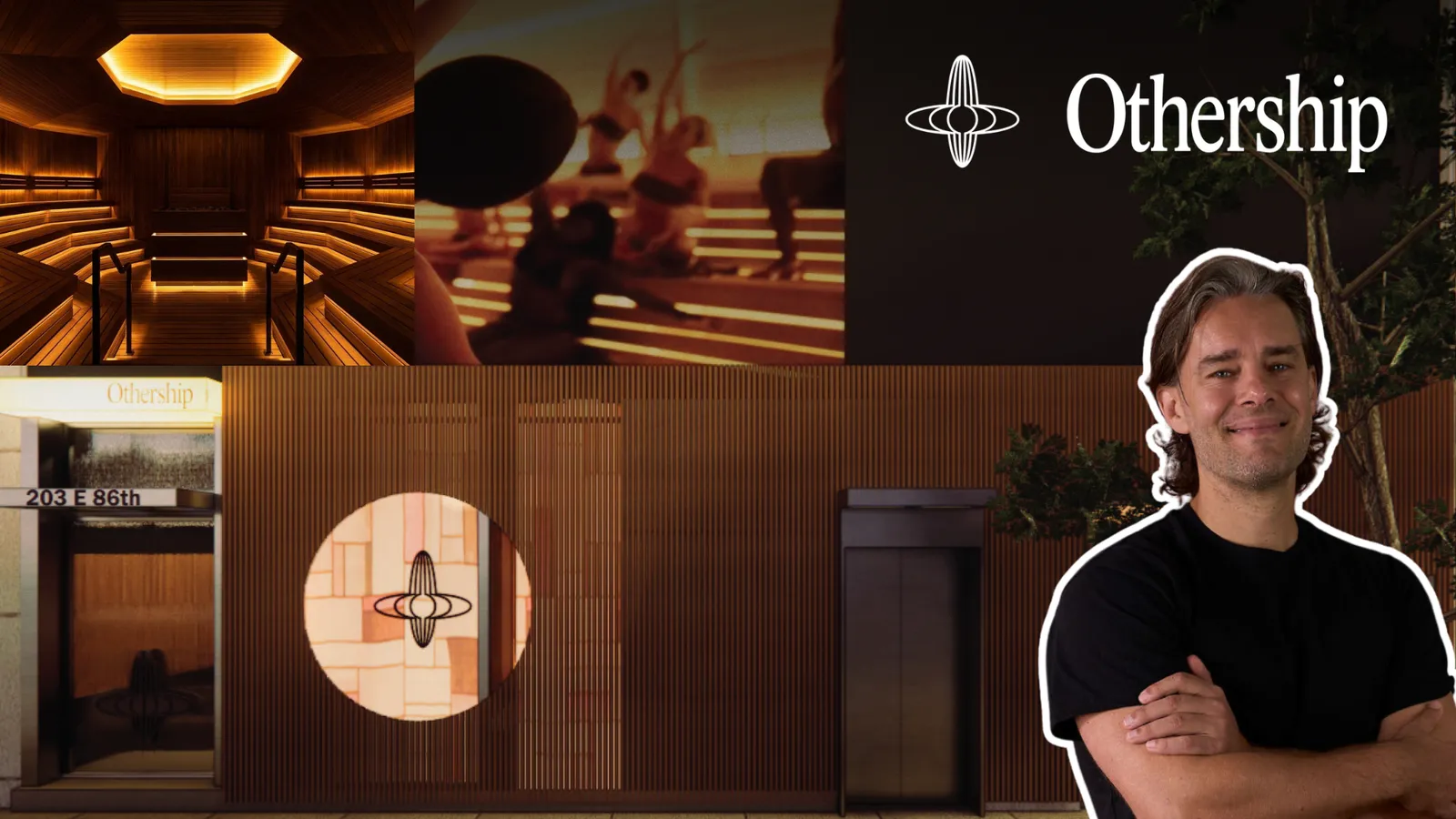
In December 2025, a Toronto-born wellness brand called Othership quietly signed a 10-year, 14,000-square-foot lease at 201 East 86th Street and Third Avenue on Manhattan's Upper East Side.

The landlord was Nuveen Real Estate. The brokers were CBRE's Cassie Durand and Aylin Gucalp, the same team running Othership's national expansion strategy. The building, known as The Colorado, is a 35-story residential tower built in 1987 that already counts Lululemon and NY Pilates among its retail tenants.
On paper, it's a commercial lease. In practice, it's a signal of something much larger happening at the intersection of real estate, mental health, and urban community infrastructure.

Othership isn't a spa. It isn't a gym. It's a social wellness concept built around communal saunas, ice baths, breathwork, live music, and emotional regulation. And its Upper East Side location, spanning three subterranean floors with a 4,000-square-foot "social spa" at its center, will be the largest and most ambitious buildout in the company's history.
"Our vision for the Upper East Side is to create an elevated bathhouse for New Yorkers where restoration and emotional connection are part of the same experience," said Robbie Bent, Othership's co-founder and CEO. "This social spa concept reflects everything we've learned about how people want to feel today." - Robbie Bent, Co-Founder and CEO
The location is expected to open in 2027.

The Origin: A Horse Trough, a Garage, and a Sobriety Story
To understand why Othership resonates, you have to understand where it came from.
Robbie Bent spent his twenties struggling with drugs and alcohol. After achieving sobriety through a patchwork of meditation, breathwork, and therapeutic experiences, he and his wife, Emily, started going to bathhouses every week. For eight years, across dozens of countries, the rhythm of hot and cold became central to Robbie's recovery.
When they moved back to Toronto in 2019, they built an ice bath in their backyard. The setup was primitive: a horse trough filled with 60 pounds of grocery store ice every night. Ten to twenty people showed up each evening. When winter arrived, they converted the garage into a speakeasy-style sauna. Within months, word of mouth alone had drawn over 1,000 members.
"We self-funded the first unit with $2 million, built it ourselves, and within a month it was profitable," Bent told Traded in a December 2025 interview. "We're focused on emotional wellness and community. That's what this comes from. My own sobriety journey. The hot and cold helped me stay sober."
That first unit on Adelaide Street in Toronto became the proof of concept. The model worked because it wasn't selling a commodity service. It was selling a third place, a gathering space outside of home and work where people could feel something, together.
The Real Estate Thesis: Why Wellness Tenants Are Winning Manhattan's Tightest Market in a Decade
The timing of Othership's Upper East Side expansion is not coincidental. It lands inside a Manhattan retail environment that is structurally favoring exactly this type of tenant.
Manhattan retail availability dropped to 13.7% in 2025, a record low since REBNY began tracking in 2017. Vacancies on Madison Avenue fell from 35 available storefronts two years ago to just 13 at the end of 2025. More than 4.1 million square feet of retail space transacted across the borough last year, and the leasing pipeline remains constrained heading into 2026.
The question for landlords is no longer whether to fill space but with whom. And the answer, increasingly, is service-based tenants. In 2025, service-oriented tenants leased over 50% of U.S. retail space for the first time ever, outpacing goods-based retailers. Fitness and wellness brands drove the charge, with fitness leases rising to 30% of all service-based leasing nationally.
The Upper East Side, in particular, presents a compelling case study. Luxury retailers have been migrating uptown as SoHo and West Village corridors approach full occupancy.
Average asking rents on upper Fifth Avenue surged from $2,085 per square foot in H2 2024 to $2,444 in H1 2025. But above 60th Street on the East Side, the wellness category remains underserved relative to population density.

"Manhattan's Upper East Side is one of the most significant opportunities for Othership's expansion nationally, given the sheer density of their core customer in the neighborhood," said Cassie Durand of CBRE, who brokered the deal. "The largest, most dynamic Othership location to date will be opening here."
Nuveen's willingness to commit to a 10-year lease with a wellness tenant in a pension-backed residential tower tells you everything about where institutional real estate capital is betting. This isn't a pop-up experiment. It's a thesis.
Wellness Real Estate: The Fastest-Growing Sector in a $6.8 Trillion Economy
The macro tailwinds behind Othership's expansion are staggering.
The global wellness economy hit a record $6.8 trillion in 2024 and is projected to reach $9.8 trillion by 2029, growing at 7.6% annually, well above global GDP growth. It is now larger than the IT, tourism, sports, and pharmaceutical industries. Wellness spending accounts for 60% of global health and medical expenditure.
Within that universe, wellness real estate is the breakout performer. The sector reached $584 billion in 2024, more than doubling from $225 billion in 2019.
It is forecast to reach $1.1 trillion by 2029 at a 15.2% compound annual growth rate, the fastest growth rate of any segment in the entire wellness economy. North America accounts for 44% of the global wellness real estate market, with the United States alone representing 41%.
Mental wellness, the category closest to Othership's core proposition, is the second-fastest-growing sector, with a 12.4% CAGR over the past five years.
These are not niche numbers. This is capital reallocation at scale.
For landlords and developers, the implications are material. Wellness tenants drive foot traffic, support premium positioning, and attract a high-income, community-oriented demographic.
They also tend to sign longer leases than traditional retail does because the complexity of the build-out (plumbing, ventilation, specialized HVAC, infrastructure for water features) creates high switching costs for both sides.
At 201 East 86th, Othership's build will include power supply upgrades, gas access, and the construction of three subterranean floors housing steam rooms, magnesium baths, cold plunges, and a sound sauna.
The projected construction timeline is two years, double the typical 12-month wellness buildout. That level of capital commitment from both tenant and landlord signals long-term conviction.

The Loneliness Economy: Why "Third Places" Are the New Trophy Tenants
There is a second, less discussed force behind the rise of concepts like Othership: the collapse of social infrastructure in American cities.
The U.S. Surgeon General has declared loneliness a public health epidemic. Fifty-eight percent of Americans report that no one truly knows them. Globally, one in six people experience loneliness, and the WHO estimates that loneliness contributes to approximately 871,000 deaths per year, roughly 100 every hour.
The disappearance of third places, spaces for gathering outside home and work, is a structural driver. Bars, churches, community centers, bowling alleys: the connective tissue of American social life has been thinning for decades. The pandemic accelerated the decline. What has emerged in its place is a generation willing to pay for curated connection.
Othership recognized this early. Its programming stack goes far beyond sauna sessions. Every location runs comedy nights, DJ-led sauna raves, live music performances, guided breathwork, and social events like "Lovership," an energy-forward dating experience that moves guests between a DJ-led sauna session and ice baths.
The Upper East Side location will introduce the full catalog of guided classes, including Music Discovery (live performance blended with sauna heat and towel-waving), Friendship evenings designed to spark meaningful connections, and expanded community programming tailored to a multi-generational UES demographic.
"We're targeting a multi-generational demographic with diverse programming," Bent told Traded. "Upper East Side was chosen for its high residential density and the lack of similar wellness spaces above 60th Street." - Robbie Bent
This programming density is what sets Othership apart from a standard spa or fitness studio in a landlord's eyes. A SoulCycle brings bodies through the door.
An Othership builds a community around the building. For residential towers like The Colorado, that distinction translates directly into tenant retention, foot traffic, and neighborhood positioning.
CNBC reported in March 2026 that wellness third spaces are becoming a booming business category nationally, with competitors like Bathhouse (founded in Brooklyn in 2019) projecting $120 million in run-rate revenue by year-end.
Othership has not disclosed its financials, but the company grew its employee count by 67% last year, raised $8.5 million USD in May 2025, and is actively scouting additional locations across the Northeast and San Francisco.
The Footprint: Five Locations and a Deliberate Growth Playbook
Othership currently operates five locations:
Toronto: Adelaide Street West (flagship) and Yorkville.
New York: Flatiron, Williamsburg, and the forthcoming Upper East Side.
The UES buildout at 201 East 86th will be the company's most design-forward to date. Othership partnered with Futurestudio, led by founding principal Ali McQuaid Mitchell, to develop the interior.
The aesthetic leans into natural materials, tactile finishes, and Othership's signature red-toned interiors, a visual identity consistent across all locations. New features unique to the UES include a neutral-temperature communal pool, a magnesium hot bath, a deeper cold plunge, a steam room, a sound sauna, experiential showers, and expanded art installations.
Newmark's Michael Paster and Benjamin Birnbaum represented the landlord, Nuveen, in the transaction.
"We're planning cautious, sustainable growth," Bent said. "Fifteen locations in five years, up to 30 to 40 in 10. The focus is on high-quality hospitality and product experience."
That 15-in-five trajectory, if executed, would make Othership one of the most scaled social wellness platforms in North America. The company's in-house app, which already hosts over 900 guided practices, adds a digital layer that extends the brand relationship beyond the physical location, a flywheel that strengthens as the footprint grows.
The Deal Sheet
| Detail | Data |
|---|---|
| Address | 201 East 86th Street & Third Avenue, Upper East Side |
| Building | The Colorado (35-story residential tower, built 1987) |
| Landlord | Nuveen Real Estate |
| Tenant | Othership |
| Lease Term | 10 years |
| Square Footage | 14,000 SF (three subterranean floors) |
| Centerpiece | 4,000 SF premium social spa + 4,000 SF traditional Othership — there are 8K sq ft of amenity space |
| Tenant Brokers | Cassie Durand & Aylin Gucalp, CBRE |
| Landlord Brokers | Michael Paster & Benjamin Birnbaum, Newmark |
| Projected Opening | 2027 |
| Co-Tenants | Lululemon, NY Pilates |
| Total Funding Raised | $18M |
| Latest Round | $8.5M USD (May 2025, SAFE) |
| Notable Investors | Vine Ventures, Shawn Mendes, Elizabeth Cutler |
| Current Locations | 5 (Toronto: 2, NYC: 3, including UES) |
| 5-Year Target | 15 locations |
| 10-Year Target | 30-40 locations |
The Bigger Picture
There's a version of this story that's just about a lease. A wellness brand takes 14,000 square feet on the Upper East Side. Noteworthy but not transformative.
The more interesting read is structural. Othership represents a new category of tenant that didn't exist five years ago: community-infrastructure-as-retail. It borrows the membership economics of fitness, the design sensibility of hospitality, the emotional resonance of therapy, and the programming density of a cultural venue. It wraps all of that inside a real estate footprint that institutional landlords are now actively courting.
When Nuveen, a $154 billion global real estate manager backed by TIAA pension capital, gives a 10-year lease to a company that started as a backyard ice bath in Toronto, that's not a lifestyle bet. That's a market signal.
The wellness real estate sector is on pace to become a trillion-dollar category by 2029. Manhattan retail is at a record-low vacancy. The loneliness epidemic is reshaping what consumers want from physical spaces. And a generation that grew up on screens is now paying premium prices to sit in a 180-degree sauna next to strangers, breathe together, and plunge into 39-degree water.
Othership didn't just find product-market fit. It found a structural gap in the urban landscape and filled it with something people didn't know they needed.
The Upper East Side is next.
Traded covered Othership's Upper East Side expansion based on an exclusive interview with co-founder and CEO Robbie Bent. Othership's next funding round is expected in 2026.
ABOUT THIS STORY
- Desk
- Articles
- Filed
- Apr 16, 2026
- By
- Traded Media