

Fifth Wall’s Betting Real Estate Becomes the Distribution Layer for Physical AI
From Neighbor to a $135 million bet on Travis Kalanick’s Atoms, Fifth Wall explains why robotics, autonomy, and edge infrastructure are turning buildings into distribution infrastructure.
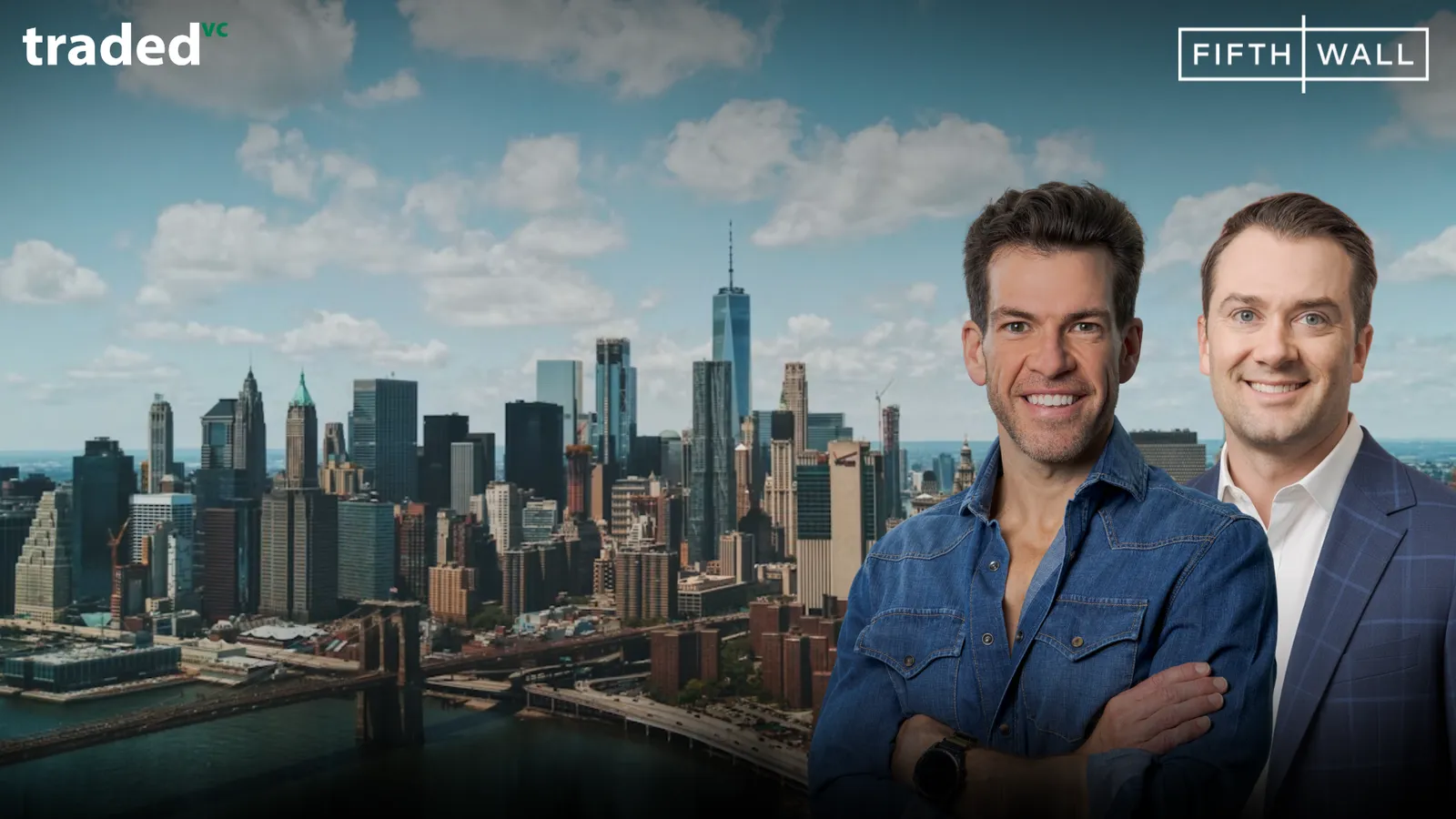
Dan Wenhold has spent nearly nine years at Fifth Wall looking for technology that changes how real estate works. Increasingly, he is looking for something bigger: technology that changes what real estate is worth.
Wenhold is a Partner at Fifth Wall, where he leads the firm’s early-stage investments. His current portfolio responsibilities include Neighbor, Wander, Belong, Higharc, Pacaso, and Pulley. Before joining Fifth Wall in 2017, he was the first employee and Director of Retail at The Black Tux, a growth equity investor at Battery Ventures, and a financial analyst at Robert W. Baird.
That combination of venture investing and operating experience has shaped Wenhold’s view of PropTech. His thesis today extends far beyond software for landlords. As AI, robotics, and autonomy move into the physical economy, he believes real estate will increasingly serve as the distribution infrastructure those technologies depend on.
“Real estate is acting as a distribution layer for a lot of what is happening in the physical economy as it relates to AI,” Wenhold told TradedVC.
From Battery Ventures to the Built World
Wenhold started his investing career at Battery Ventures during the early acceleration of cloud software. Battery was broad, spanning enterprise technology, consumer internet and infrastructure, which meant the investment process often started with mapping an entire market rather than waiting for an attractive company to appear. That discipline followed him to Fifth Wall.
After Battery, Wenhold wanted operating experience. He moved to Los Angeles in 2013 to join The Black Tux while the online menswear company was still in its earliest stages. As digitally native brands such as Warby Parker and Bonobos began moving into physical retail, Wenhold worked directly on real estate and store expansion.
That became the bridge to Fifth Wall. When Brendan Wallace and Brad Greiwe were building the firm, Macerich was among the strategic real estate investors interested not only in technology for its properties, but also in the new generation of digitally native brands becoming tenants. Wenhold initially joined Fifth Wall around its retail strategy before shifting into the firm’s core real estate technology business.
Today, Fifth Wall manages roughly $3 billion in commitments and capital and has built one of the largest strategic networks in real estate technology.
Neighbor and the Value Hiding in Unused Space
One of Wenhold’s earliest real estate technology investments at Fifth Wall was Neighbor, the marketplace that allows property owners to monetize unused space for storage. The simplest description, as Wenhold puts it, is the “Airbnb for self-storage.”
But the investment represented a broader idea. A garage, parking area or underutilized commercial property may have one value under its traditional use and a completely different value when connected to a marketplace capable of aggregating demand.
Fifth Wall led Neighbor’s $53 million Series B in 2021. The strategic overlap was already visible, with real estate owners using Neighbor to generate demand for underutilized space across their portfolios.
For Wenhold, Neighbor became an early example of a framework that now appears throughout his investing: find an underutilized physical asset, add a technology and distribution layer, and potentially create an entirely different economic use for the real estate.
His Diligence Starts Before a Company Raises
Wenhold prefers not to meet a company for the first time when a formal fundraising process begins. Instead, Fifth Wall develops investment themes, maps the relevant market and gets to know the companies inside it. A typical exercise may involve studying 10 to 15 businesses before narrowing that universe to two or three serious candidates.
“Ideally we’re ahead of the process, where we know the company prior to the fundraising,” Wenhold said.
Once Fifth Wall develops conviction around a company, Wenhold’s process becomes increasingly hands-on: meeting founders in person, examining financial statements and unit economics, understanding the competitive landscape, speaking with customers and testing the product against potential buyers.
The unusual part is who some of those potential buyers are. Fifth Wall’s network of real estate owners and operators gives the investment team a direct window into how large real estate organizations are allocating budgets, where operational pain points exist, and which technologies they might actually adopt.
Wenhold describes that as a source of asymmetric information. It allows Fifth Wall to diligence not only whether a product works, but whether the real estate industry is prepared to buy it.
The categories Fifth Wall invests in can look very different. The underlying question is similar: where can technology remove friction from a massive physical market?
Why Atoms Was Worth Fifth Wall’s Largest Check Ever
That framework reached its largest expression yet with Atoms. Fifth Wall invested $135 million into Travis Kalanick’s industrial AI company as part of a major financing, representing the largest single investment in Fifth Wall’s history. Atoms is building physical automation across the food, mining, and transportation sectors.
Wenhold said the opportunity checked the traditional venture boxes: an experienced founder, enormous addressable markets and an operating business with meaningful financial history. But the reason Atoms fits Fifth Wall goes deeper.
“Physical real estate, we’re seeing this increasingly, is acting as a distribution layer for a lot of what is happening in the physical economy as it relates to AI.”
Robotics need places to operate. Autonomous vehicles need places to charge, clean, maintain and stage. Drone networks need takeoff and landing infrastructure. Edge computing needs power and land close to demand. Automated food production requires facilities distributed near consumers.
In Wenhold’s view, those are not peripheral real estate considerations. They are part of the infrastructure required for physical AI to scale.
Atoms is already moving in that direction. The company recently announced a strategic partnership with Joby Aviation to develop next-generation vertiports where electric aircraft, autonomous ground vehicles and ridesharing can converge.
The Real Estate Market May Be Mispricing the Edge
Wenhold believes some of the most interesting opportunities now lie in what Fifth Wall broadly refers to as edge infrastructure. That can include:
- EV charging and servicing
- Batteries
- Edge data centers
- Autonomous vehicle infrastructure
- Drone delivery
- Micromobility
- Ghost kitchens
- Vertiports
Many of the underlying sites already exist. A parking garage in a dense urban market might be valued today based on parking income. Wenhold’s argument is that the same property could have a dramatically different economic profile if it becomes an autonomous vehicle hub, charging facility or vertiport.
“I don’t think real estate is priced today the same way it will be five to ten years from now.”
He compares the opportunity to the early development of cell tower infrastructure. Building owners initially viewed rooftop leases as incremental income. In retrospect, the infrastructure sitting on those sites became the foundation of an enormous standalone asset class.
Wenhold thinks the industry is entering another version of that transition. The opportunity is to identify the real estate required by emerging technologies before the market fully prices what those locations can become.
What Real Estate Owners Still Underestimate About AI
Wenhold also sees a more immediate transformation happening inside existing real estate organizations. His concern is not that owners are unaware of AI. It is that awareness is much easier than implementation.
“The easiest thing for them to do is, quite frankly, nothing.”
He expects AI to put significant pressure on operating cost structures, forcing real estate companies to become leaner. At the same time, AI can create revenue opportunities by automating functions such as leasing, customer communication, and lead qualification.
In residential real estate, for example, AI voice systems can respond to prospects, qualify leads and move renters through leasing funnels without requiring the same increase in headcount.
The larger implication is that AI is not simply another software category for real estate owners to test. Wenhold expects it to change both sides of the income statement.
The Best PropTech Founders Understand the Org Chart
Wenhold says one trait separates the strongest founders building for real estate: they understand that selling to a real estate company is fundamentally different from selling to a conventional technology company.
Real estate organizations are unusually layered. A technology can have an executive champion at headquarters, a budget owner elsewhere in the organization, regional leadership responsible for implementation and property-level employees who ultimately determine whether the product is actually used. Winning one layer does not guarantee adoption.
“They have to win the champion, but then they also have to win the person that’s at the operating level at the property itself.”
That is why promising PropTech deployments can stall after procurement. A product can be purchased without being properly integrated, deployed without achieving adoption or receive an initial budget and fail to renew the following year.
The best founders, in Wenhold’s view, design their go-to-market strategy around that organizational complexity rather than assuming the product will distribute itself.
ABOUT THIS STORY
- Desk
- Articles
- Filed
- Aug 25, 2026
- By
- Traded Media