

May 21, 2025
More Renters Are Saying: “This Is Our Forever Home”

Traded Editorial
In a housing market defined by high prices and rising interest rates, a growing number of renters are settling in for the long haul. Renting isn’t just a stepping stone anymore—for many, it’s the plan.
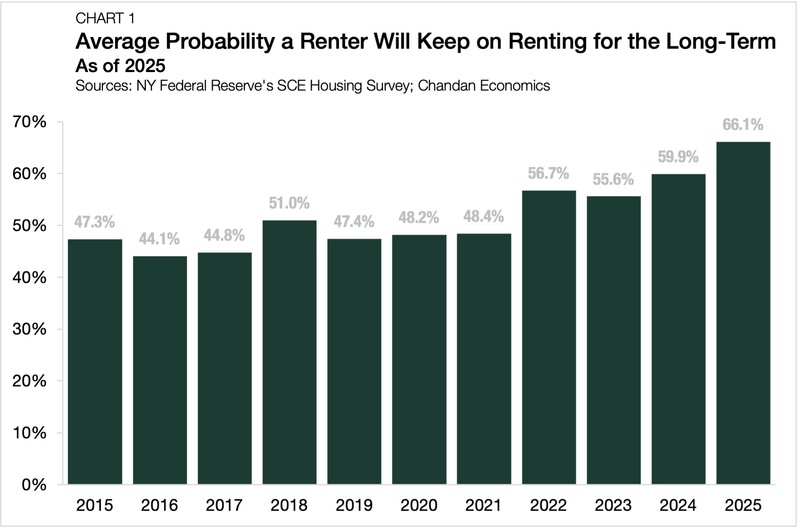
According to the Federal Reserve Bank of New York’s 2025 SCE Housing Survey, the average renter now believes there’s a 66.1% chance they’ll keep renting for the foreseeable future. That’s up from 59.9% in 2024 and just 44.1% in 2016—a significant 22-point shift in less than a decade.
Why Renters Are Rethinking Homeownership
Several factors are driving this change:
-
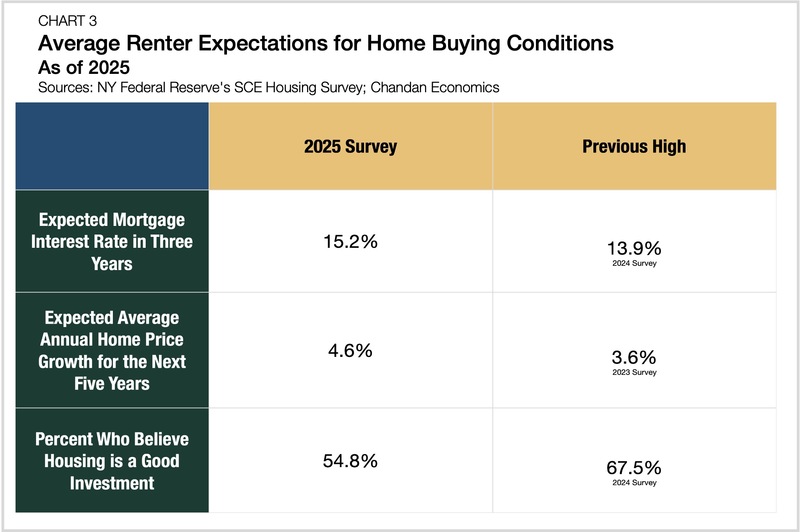
Home prices are expected to keep rising. Renters predict home values will grow 4.6% per year over the next five years—up from 3.6% in 2023.
-
Mortgage rates look daunting. The average renter expects national mortgage rates to hit 15.2% in three years, more than double current levels.
-
Financing remains a challenge. 66.8% of renters say it would be “somewhat” or “very difficult” for them to get a mortgage today.
-
Confidence in buying is dropping. Only 54.8% of renters think homeownership is a good long-term investment, compared to 67.5% last year.
These trends reflect more than just affordability concerns—they signal a fundamental shift in housing preferences.
Younger Renters Are Changing Their Minds
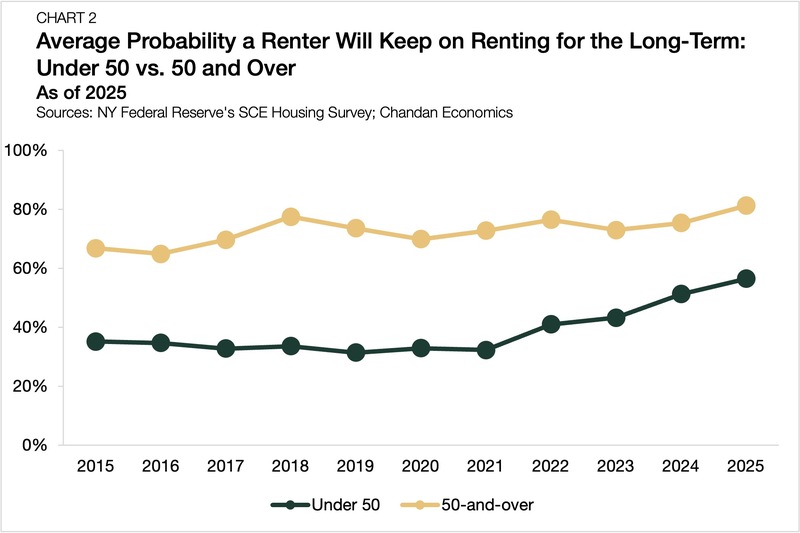
Renters under age 50 are seeing the biggest shift. In 2021, just 32.3% of them thought they’d be long-term renters. By 2025, that number has jumped to 56.5%—a more than 20-point increase in four years.
This age group, once expected to drive first-time homebuying demand, is now leaning into renting as a stable, flexible alternative.
Older Renters Already Settled In
Renters over 50 have long shown a preference for renting—and their commitment is growing. From 2021 to 2025, the likelihood that they’ll remain renters rose from 72.8% to 81.3%.
This signals a strong demand for rental options that cater to older adults—especially single-family rentals and purpose-built communities that offer lifestyle amenities like walkability, maintenance-free living, and social spaces.
Renting Is Evolving
What’s also changed is the quality and diversity of rental housing itself. Today’s renters have access to:
-
High-end multifamily developments
-
Single-family rental homes in suburban settings
-
Amenity-rich communities designed for comfort, convenience, and flexibility
As Chandan Economics, which partnered with Arbor Realty Trust for this research, notes: “Renters aren’t just reacting to the market—they’re making a lifestyle choice.”
The Big Picture
With more than two-thirds of renters expecting to stay put, it’s clear that the rental market is no longer a temporary solution for most Americans—it’s a permanent one. This growing base of long-term renters is reshaping the housing market, and real estate investors, developers, and policymakers will need to adapt.
Renting isn’t a waiting game anymore. For millions of Americans, it’s the future.